Your bag is empty
Add something beautiful to get started
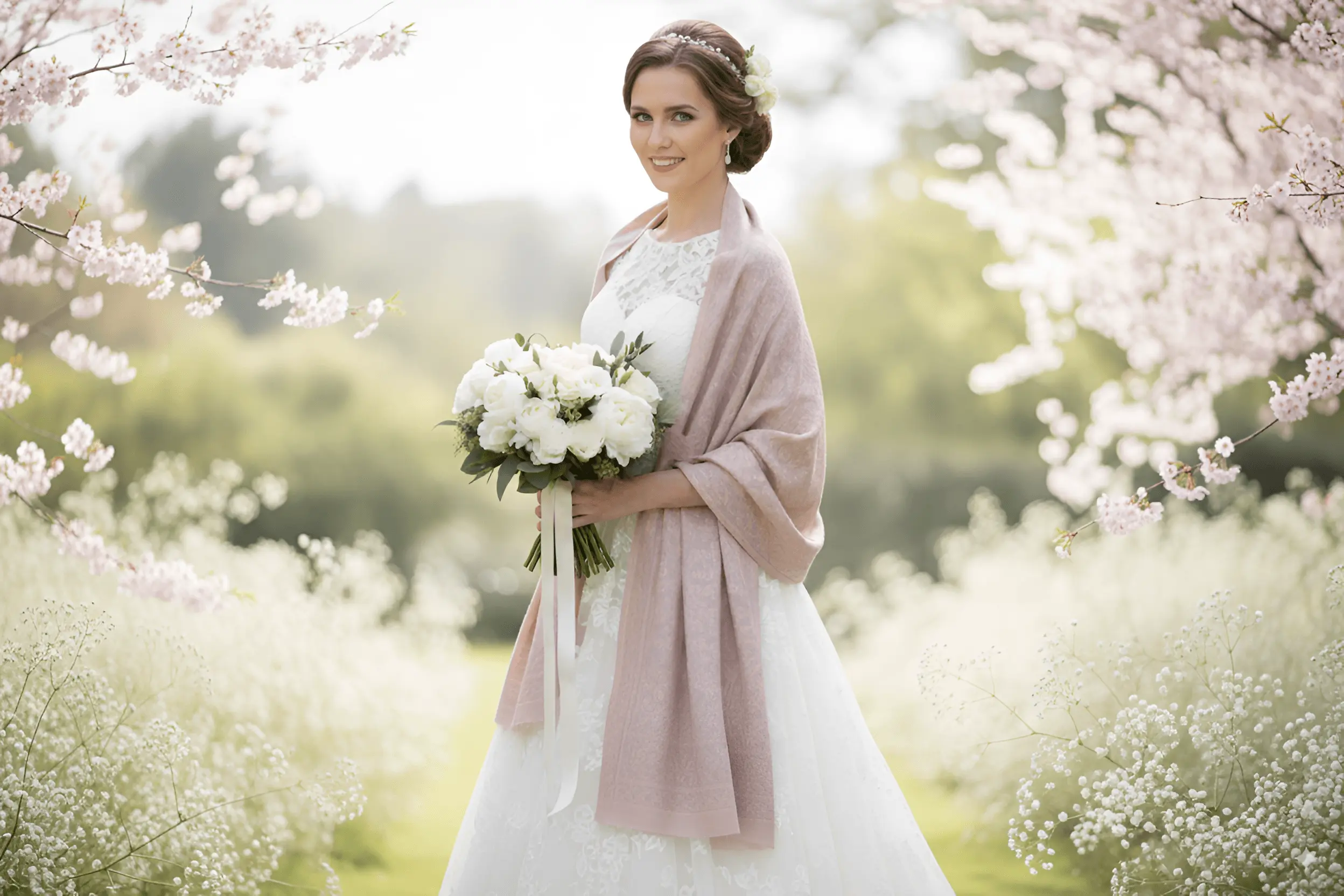
A bride wears a shawl over her dress, chosen against the gown fabric rather than matched to it. Ivory, champagne or the palest blush, woven fine enough to fold into one hand, it covers the shoulders for a church, carries the walk between buildings, and comes away for the aisle without disturbing anything underneath.
The decision looks like styling and is really a fabric match: a gown is one specific weave in one specific white, from crepe to duchesse satin to lace, and the cover has to sit beside it without competing. What follows is the order the choice gets made in the shop: fibre against the gown, width against the neckline, colour against the white, and the hours of the day it has to survive.
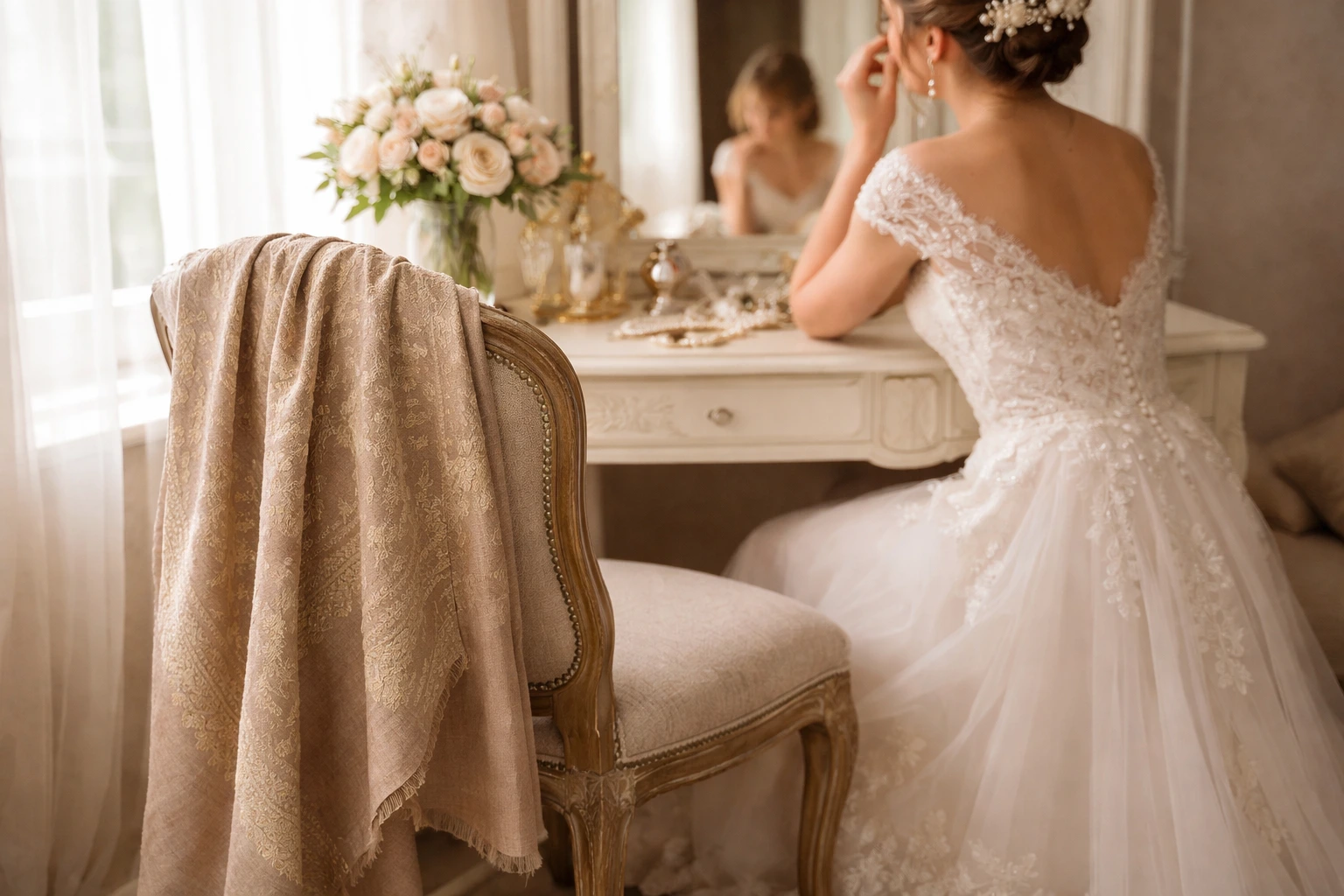
Bridal fabric divides into two families, and each one asks for a different cover. Matte gowns, crepe, heavy satin, plain silk, sit best beside a matte handloom: pashmina with no sheen at all, so the two surfaces read as one material story rather than two.
Gowns with light in them, duchesse satin, mikado, anything beaded, take a piece with a whisper of sheen. A merino wool and silk blend carries exactly that, and it keeps the shawl from looking like a blanket next to a fabric that reflects.
Lace is the exception that catches people out. Beside lace, embroidery competes and plain wins, which is why the finest plain pashmina is the standard answer for a lace bodice even when a worked piece is the more beautiful object on its own.
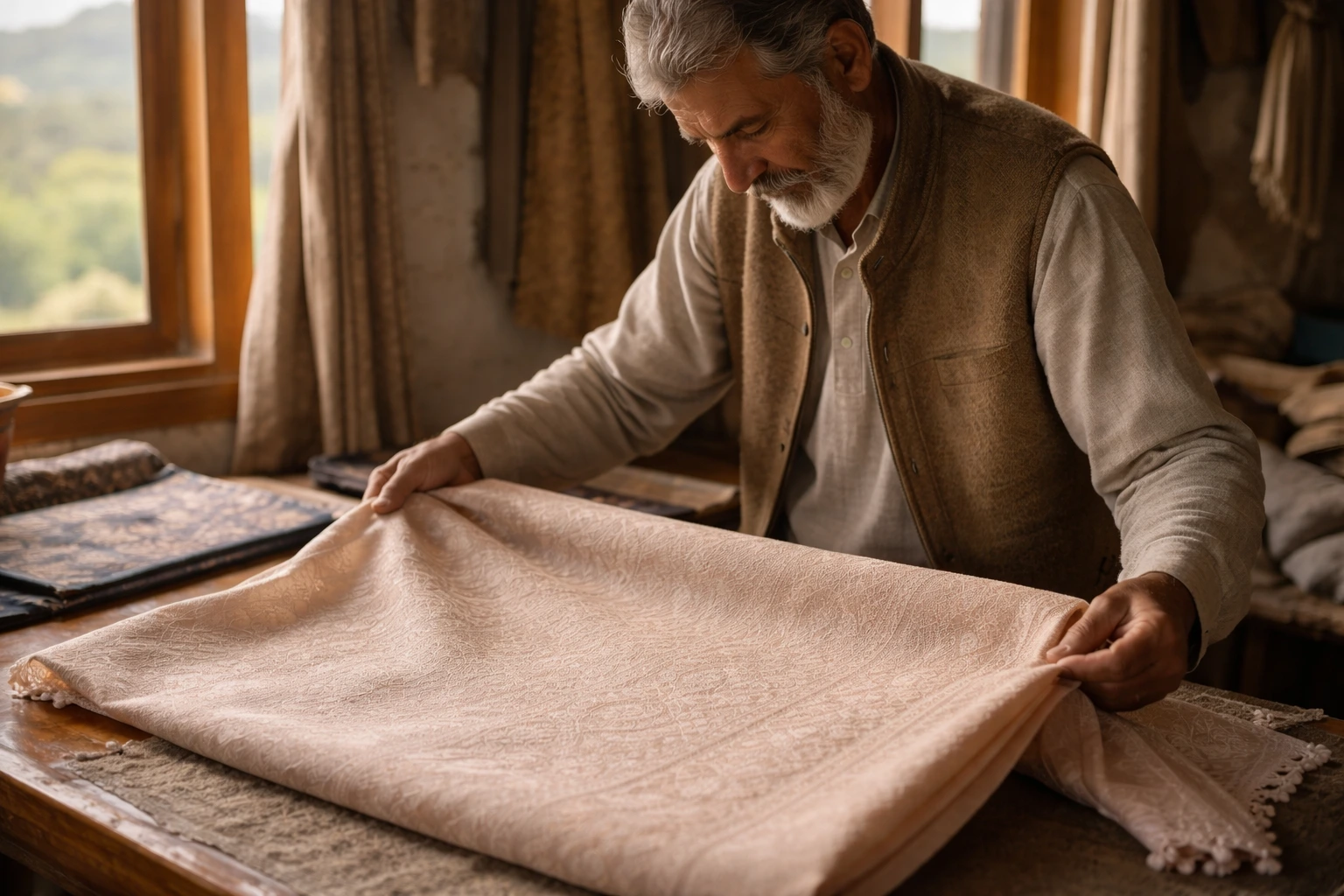
Pashmina is the fibre most often chosen here for a practical reason as much as an aesthetic one. Spun from the Changthangi fleece of Ladakh and handwoven in the valley, it gives warmth at a weight that leaves the silhouette of the gown untouched. Warmth without a change to the silhouette is the whole requirement.
“The shawl should disappear into the dress rather than sit on top of it. Bring the gown, or a swatch of it, and let the two fabrics decide.”
Kashmir Bloom, Birmingham
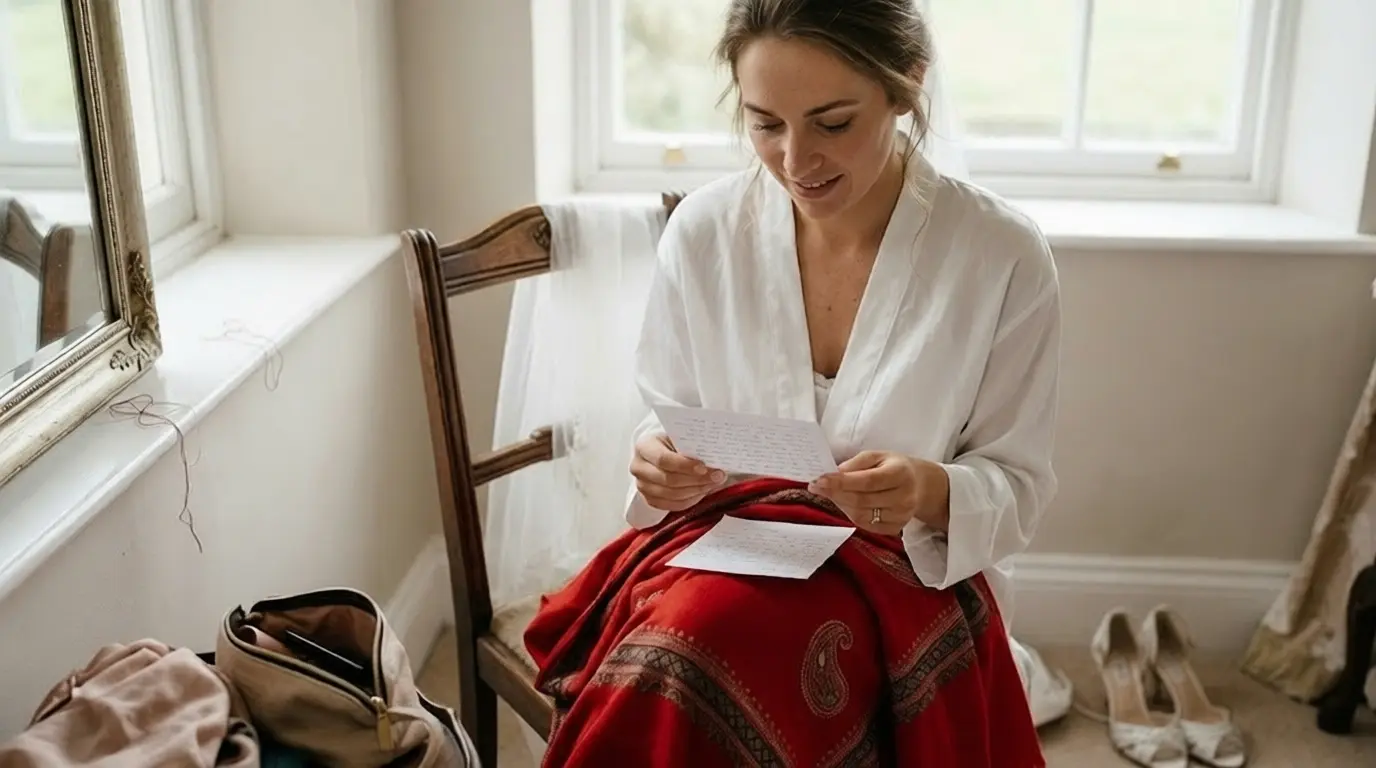
Bridal white runs from stark optic white through ivory, champagne and oyster to the palest blush, and the differences that are invisible on a screen are obvious the moment two fabrics touch. An optic white gown beside an ivory shawl makes the shawl look yellow. An ivory gown beside optic white makes the gown look tired.
The safe method is not to match. Choose one clear step warmer or cooler than the gown and let the difference read as deliberate: champagne beside ivory, ivory beside blush, oyster beside cream.
Judge it in daylight, never under shop lighting, and never from a photograph on a phone. Warm indoor light flatters every pairing and tells you nothing about a churchyard at three in the afternoon.
This is the single strongest argument for choosing in person, and it takes minutes rather than weeks. Our Birmingham shop keeps the bridal pieces to hand for exactly this: bring the gown or a swatch, stand near the window, and the decision usually makes itself.
The neckline of the gown sets the size of the piece, and getting this wrong is the most common mistake. A strapless or off-shoulder gown needs the widest piece available, and the largest heirloom shawls reach 225 by 115 centimetres. A narrow scarf slides continuously on bare shoulders and will be adjusted in every photograph.
A fitted, high-necked or long-sleeved gown takes a lighter piece, and often a scarf at 200 by 70 centimetres is enough, since the gown is already doing the covering and the cover-up is there for warmth and for the look of it.
Bias-cut and flowing gowns take a full width shawl, where the drape becomes part of the line of the dress rather than a layer over it.
Whatever the width, the drape should hold without a pin. An open drape across both shoulders, ends slightly uneven, is the ceremony position, and one end thrown over the opposite shoulder is the evening one. The rest of the method, including the head drape, is in our guide to draping a pashmina.
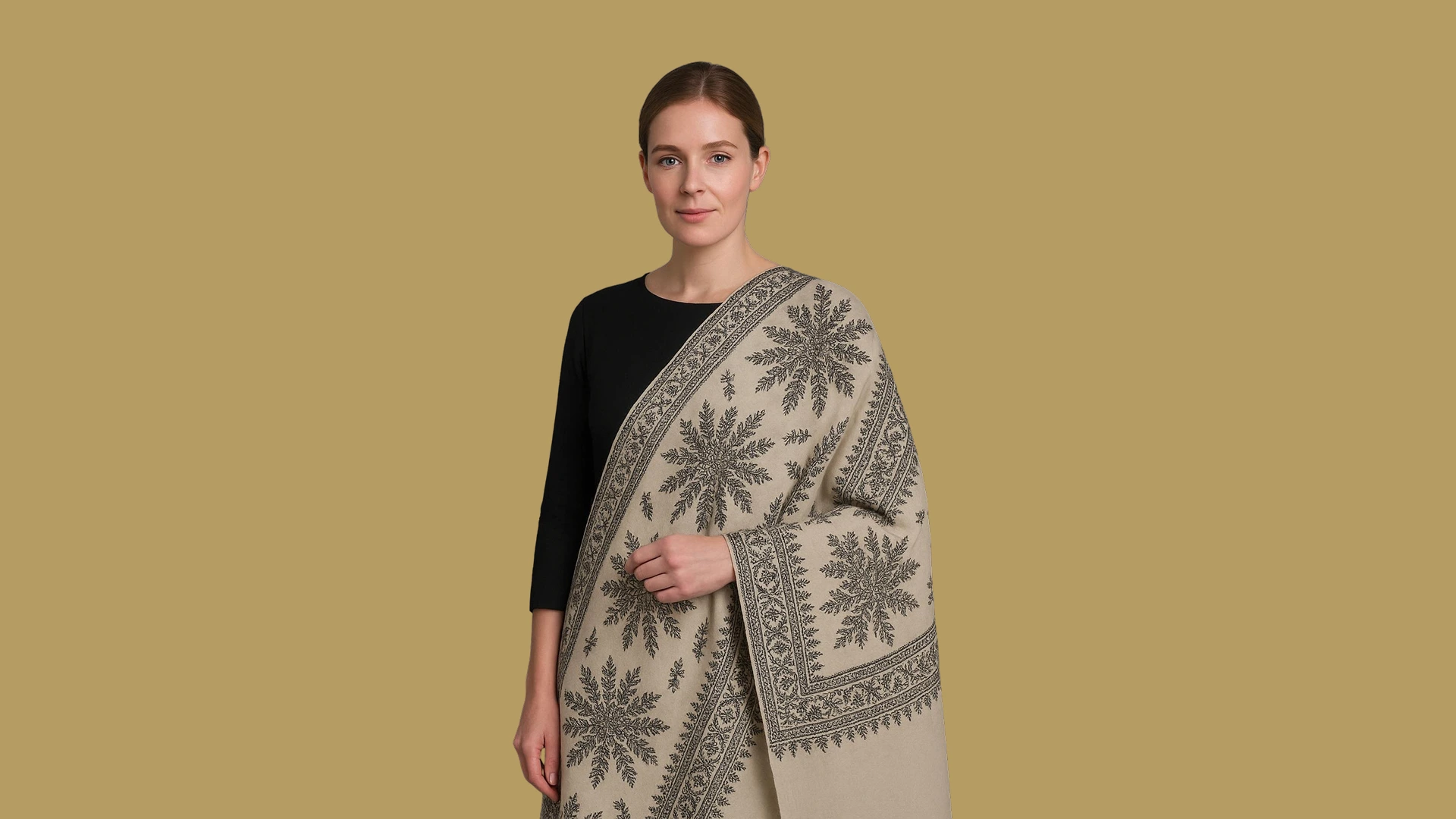
Worked pieces belong to a bride whose gown is plain. Sozni needlework lies flat against the ground cloth so the pattern sits inside the weave rather than on top of it, and a full Sozni shawl is counted in months of work. Over unadorned crepe or silk, it becomes the detail everyone remembers.
Kani is woven rather than embroidered, built on the loom with small wooden spools, which means a Kani border cannot be added to a finished piece. It has to be chosen from the beginning.
Against lace, beading or a heavily structured gown, both should be left alone. Plain is not the lesser choice there; it is the correct one, and it is what a fitting room proves within a minute of holding the two fabrics together.
A wedding dress is worn for twelve hours or more, and the cover-up is needed for perhaps four of them: the arrival, a cold ceremony, the outdoor photographs, and the end of the evening. It is not needed for the aisle, and it should come away in one movement without catching on a train or a veil.
That is a test worth running before the day. Put the gown on, take the shawl off as if handing it to someone, and see whether anything shifts.
For a winter date the cover-up stops being optional. The photographs happen in the coldest, lowest light of the afternoon, and whatever is being worn then is what appears in the album, which is the practical case for a wide shawl over any kind of coat. We cover the whole arc of a cold-weather day in dressing for a UK winter wedding.
For a summer wedding, the piece earns its place in the evening rather than the ceremony, once the marquee gives up its heat for the evening photographs.
Bridal pieces sit across a wide range because the work in them does. Shawls in the collection run from £25 to £2,100, with most falling around £160, and the five heirloom pieces run from £1,050 to £2,100, where the price is months of hand needlework rather than material.
The piece outlives the day, which is the part worth thinking about while choosing. A shawl in ivory or champagne is worn again at every winter wedding, every christening and every cold evening for decades, and it is the item most often handed on afterwards. That is a different calculation from a gown, and it is usually the argument for choosing one step better than planned. Our guide to what makes a shawl worth inheriting covers what to look for.
Orders are processed within one to two business days. UK delivery takes three to five business days and is free over £60; worldwide delivery takes seven to 21 business days and is free over £200. Returns are accepted within 14 days of delivery on unworn pieces with tags attached, and refunds are issued within five to ten working days once the return arrives.
For a wedding, allow more time than the delivery estimate. Two or three weeks gives room to see a piece against the gown in daylight, change your mind once, and still have it in hand well before the dress fitting that matters. If the date is closer than that, the shop at 1532 Pershore Road, Stirchley is the faster route: bring the gown or a swatch and the decision is usually settled in a single visit. Brides looking for the emotional case rather than the practical one may prefer the perfect wedding shawl for the bride.
Most often a fine shawl in ivory, champagne or the palest blush, chosen against the gown fabric. It covers the shoulders for the ceremony and the outdoor photographs, then comes away for the aisle and the dancing.
No. Matching whites rarely works, because bridal white runs from optic white through ivory to blush and two near matches make each other look wrong. Choose one clear step warmer or cooler and judge the pair in daylight.
It depends on the neckline. Strapless and off-shoulder gowns need the widest piece, and the largest heirloom shawls reach 225 by 115 centimetres. Flowing and bias-cut gowns suit a full width shawl. A fitted, high-necked gown can take a scarf at 200 by 70 centimetres. Each product page lists its own measurements.
Yes, when the gown is plain. Sozni or Kani work over unadorned crepe, satin or silk becomes the detail that photographs closely. Beside lace or beading, choose plain: embroidery competes with a gown that is already worked.
Yes. Pashmina insulates far beyond its weight, and a full width shawl covers the shoulders and back completely without adding bulk to the silhouette of the gown.
Allow two to three weeks. Orders are processed in one to two business days, UK delivery takes three to five business days, and the extra time leaves room to see the piece against the gown in daylight and change your mind once.
Yes. Bring the gown or a swatch of it to 1532 Pershore Road, Stirchley, Birmingham. Colour and drape are judged against the actual fabric in daylight, which is the only reliable way to settle it.