Your bag is empty
Add something beautiful to get started
How to wear
A pashmina drape holds when three things agree: the width of the piece, the grip of the fibre, and one deliberate anchor point. Get those right and every drape below survives a full day without re-arranging. Six of them cover almost every occasion, from a ceremony to a cold railway platform.
The instructions assume a full shawl unless a scarf is named. Handloomed pashmina grips itself softly, which is why these drapes hold in the real fibre and slide in anything with a synthetic sheen. None of the six drapes below needs a pin.
What a drape can do is decided before it starts, by the dimensions of the piece:
Our own scarves are cut to a standard 200 by 70 centimetres, which is a useful yardstick: anything at that width behaves like a scarf in the hand, and anything appreciably wider starts behaving like a shawl, whatever it is called on the label. Weight matters as much as width, and it works in the opposite direction to intuition. A fine handwoven pashmina holds a drape better than a heavy machine woven wrap of the same size, because the fibre catches against itself instead of sliding as one sheet.
This is the practical reason to care whether a piece is genuine. Our guide to identifying pure pashmina covers the tests that work in the hand, including the ring test, and they take seconds in a shop.
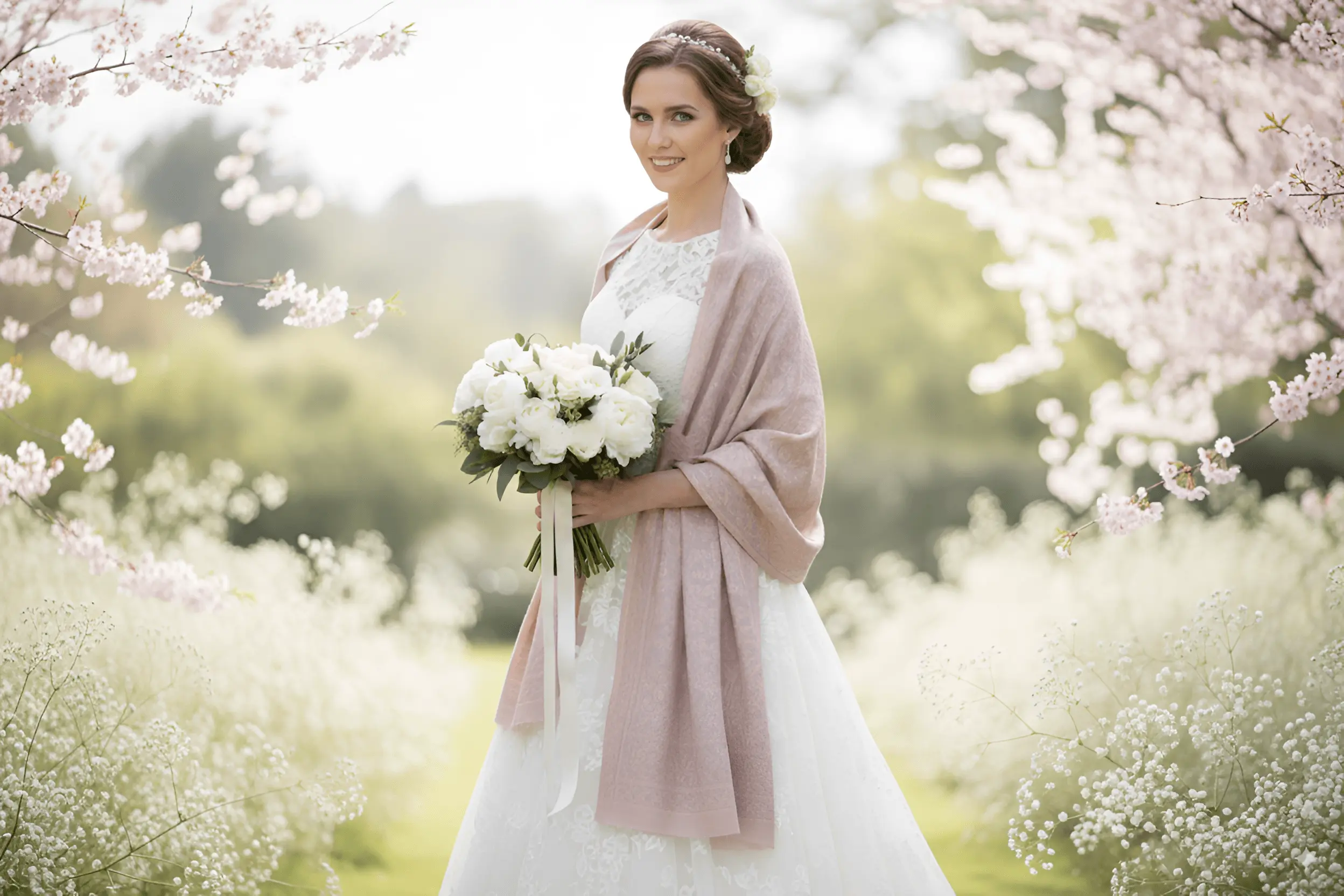
Across both shoulders, ends hanging forward, weight even. This is the ceremony drape: symmetrical, calm, and it displays a worked border at full width, which is why it suits an embroidered piece more than any other position.
Anchor it by letting the ends hang at slightly different lengths. Perfect symmetry is what starts the slow slide backwards off the shoulders, and two centimetres of difference is enough to stop it.
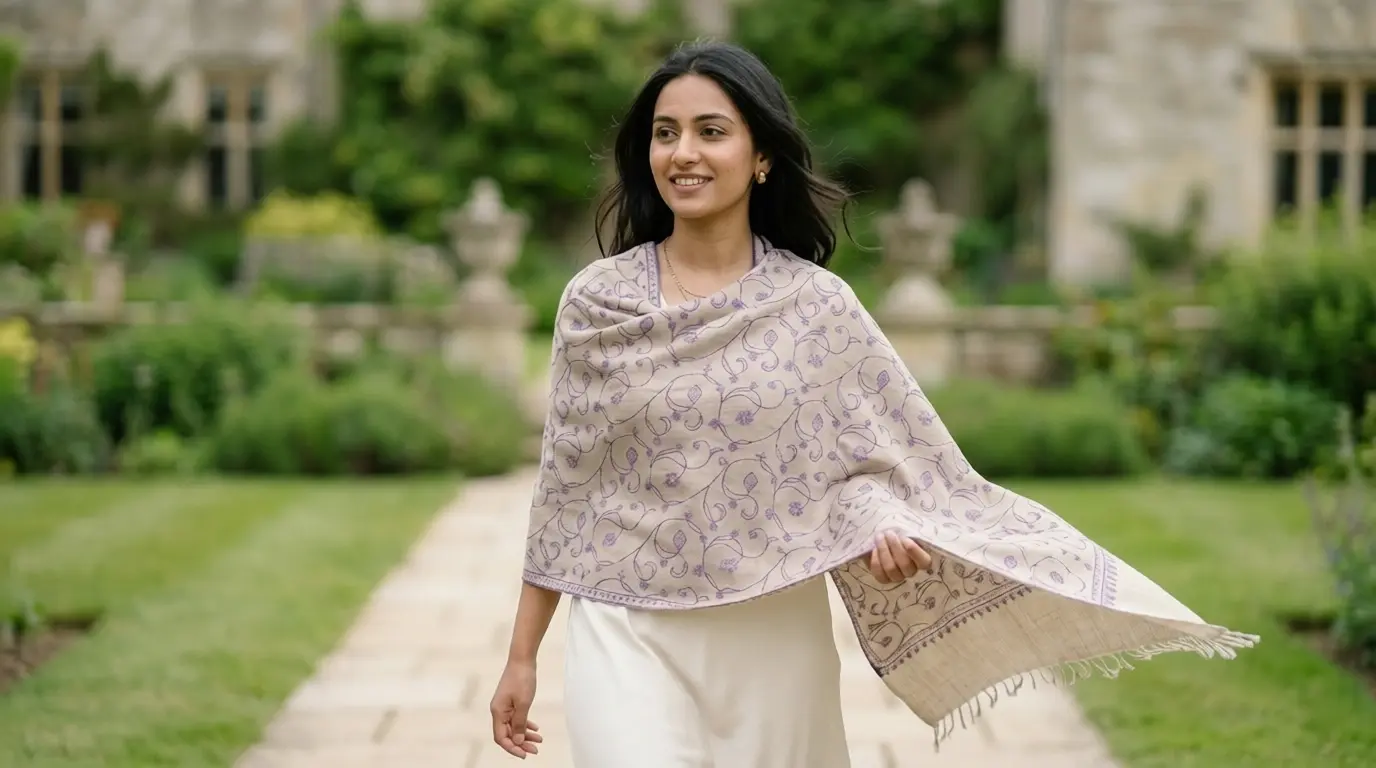
Start with the open drape, then take one end and throw it over the opposite shoulder. One arm comes completely free, the warmth doubles across the chest, and the drape survives walking, sitting and standing without attention.
This is the drape for an evening outdoors and the one to learn first. If you learn nothing else here, this position will carry a wedding, a dinner and a cold walk to the car.
Both ends thrown over opposite shoulders. The shawl closes around the body and holds real warmth, which makes it the outdoor drape for winter and for anything involving standing still in the cold.
It hides most of the outfit, so it belongs to the walk rather than the photograph. Release it to an open drape when you get indoors and the outfit comes back.
For scarves rather than shawls. Fold nothing, loop once at the collarbone, leave the ends level. It keeps a fine scarf in place through a working day or a dance floor without crushing the fabric or adding bulk at the neck.
A second loop tightens it into a soft knot for real cold, and a scarf at 200 by 70 centimetres has exactly the length for that without strangling.
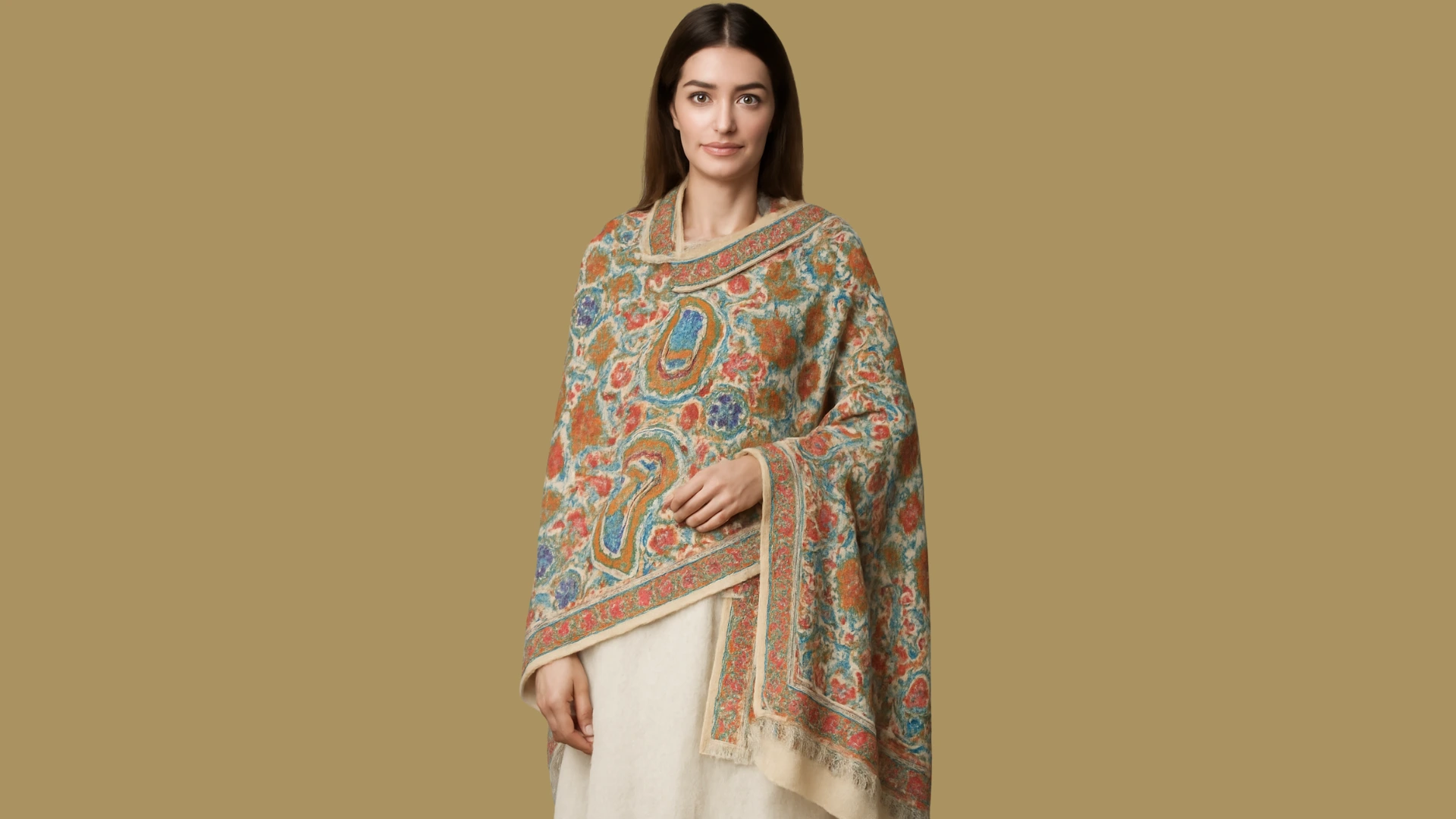
Open drape first, then a thin belt at the waist over both layers. The shawl stops being a wrap and becomes a structured layer with a waist, which reads as tailoring rather than as something thrown on.
It suits plain and lightly worked shawls best. Heavy embroidery prefers to hang free, and a belt across a Sozni border hides the months of work that make the piece worth wearing.
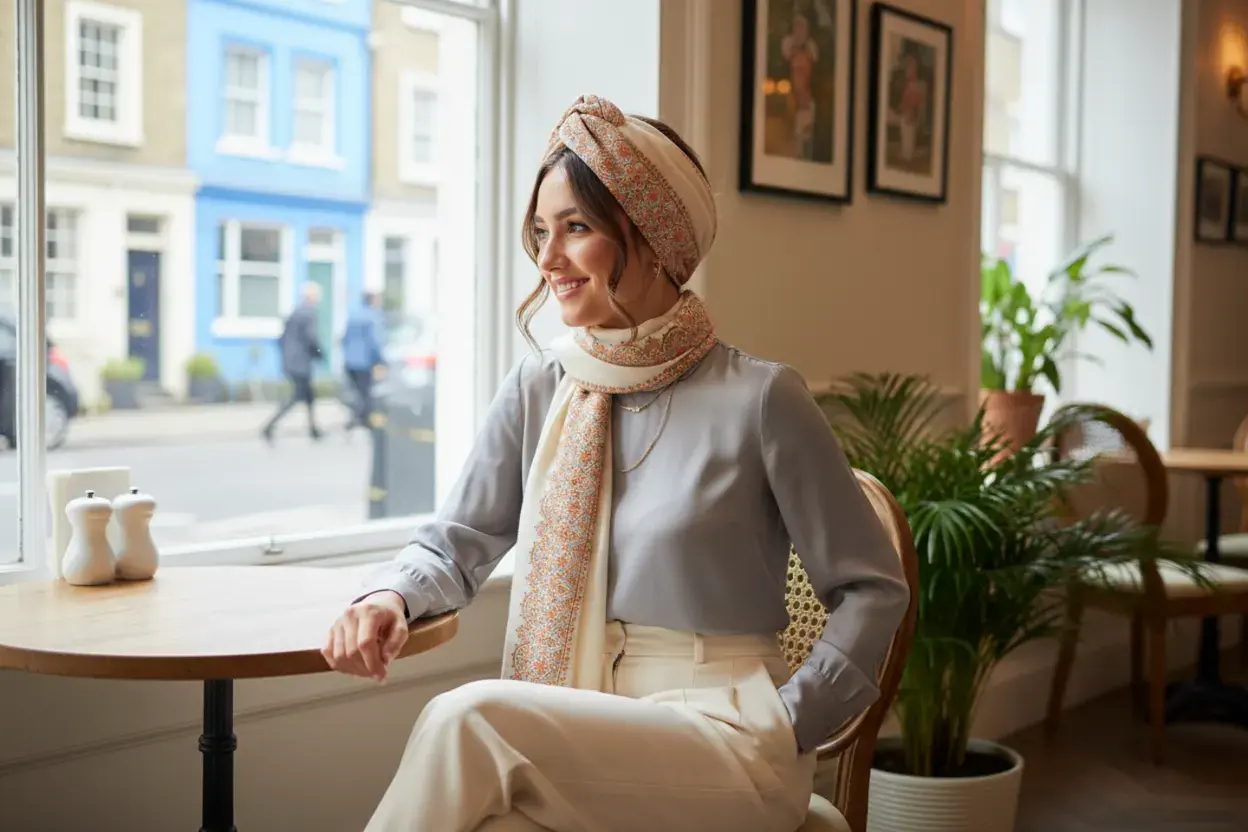
One long edge over the hair, one end taken across the opposite shoulder. It is the drape for weather and for any occasion that asks for the head covered, and it is the reason the widest pieces earn their width.
Fibre matters more here than anywhere else. Pashmina holds softly around the face where a slippery fabric slides backwards every few minutes, which is the difference between covering your head once and adjusting it all afternoon.
Anchor asymmetrically. One end always longer, or thrown, so gravity holds the drape instead of pulling it apart. Symmetrical drapes slide because nothing carries the weight.
Let the width do the work. A wide piece stays where a narrow one travels. If a drape keeps failing, the size is usually the reason rather than the technique.
Re-drape once, then leave it. The fibre settles into itself quickly. Constant small adjustments prevent that from ever happening, which is why the most fussed-with shawl is always the one that slips.
A drape holds better in a shawl that has been stored properly. Fold rather than hang: a hanger puts the whole weight of the piece on two points and stretches the shoulder line over a season.
Air it after a long day rather than washing it. Wool and pashmina shed odours on their own in a few hours, and washing softens the fibre, which is exactly the grip every drape here depends on.
Keep it out of plastic. A breathable cotton bag lets the fibre move, where a sealed box holds damp against it. Our guides to storing scarves properly and stopping a scarf shedding cover the rest.
If this drape is for a wedding, the choosing comes first: scarf or shawl for a wedding guest covers which piece to take, and what to wear over a wedding dress covers the bride. For occasion by occasion styling beyond these six mechanics, see our guide to wearing a Kashmiri shawl.
A full width shawl, wide enough for every drape in this guide and still easy to manage with one hand. Scarves at 200 by 70 centimetres suit the loop and the knot rather than shoulder coverage. Each product page lists its own measurements.
Anchor it asymmetrically: one end longer, or one end thrown over the opposite shoulder. Symmetrical drapes slide because nothing holds the weight. Width helps too, since a full shawl grips where a narrow scarf cannot.
Yes. The single throw and the loose loop both sit well over outerwear. Keep the drape outside the collar so the fibre stays visible and the warmth sits at the neck.
The open drape for the ceremony and photographs, the single throw for the evening. Both hold without pinning, and both leave a worked border visible.
Yes. Handwoven pashmina catches gently against itself and stays put, while smooth synthetic fabric slides as one sheet. It is the most common reason a drape that works in the shop fails at home.
Folded, in a breathable cotton bag, not on a hanger and not sealed in plastic. Air it after wearing rather than washing it.