Your bag is empty
Add something beautiful to get started
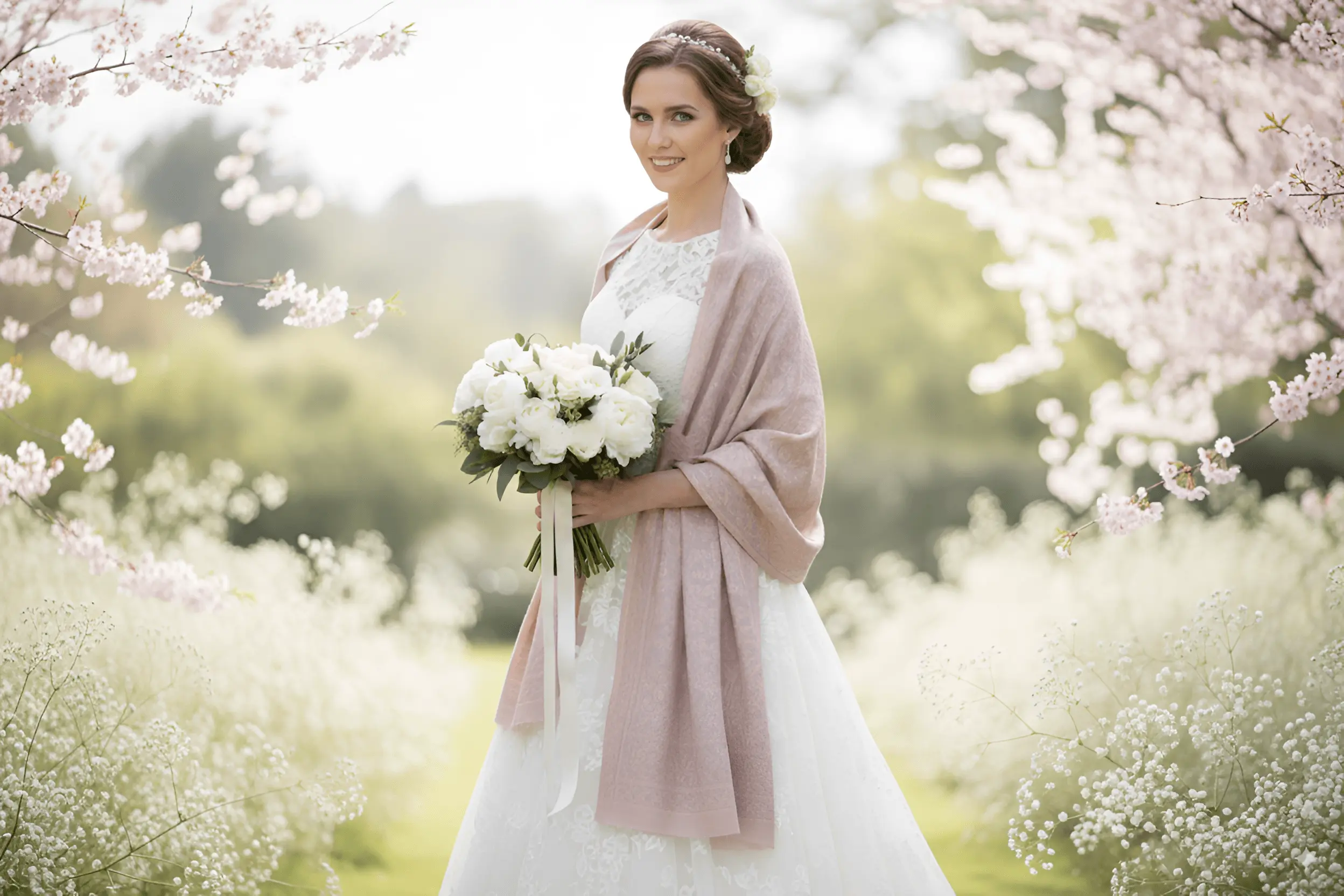
For the mother of the bride, the answer is an embroidered shawl in a tone one shade deeper than the outfit. It covers the shoulders for the ceremony, stays put through photographs, and comes off for dancing without leaving the outfit incomplete, which is the exact list a bolero or a jacket fails.
The mother's outfit is photographed through the whole day, not only in the group shot, and it is worn for twelve hours without a break. The cover-up has to earn both. What follows is how to choose one, in the order the decisions actually get made: the shape, the fibre, the needlework, and last of all the colour.
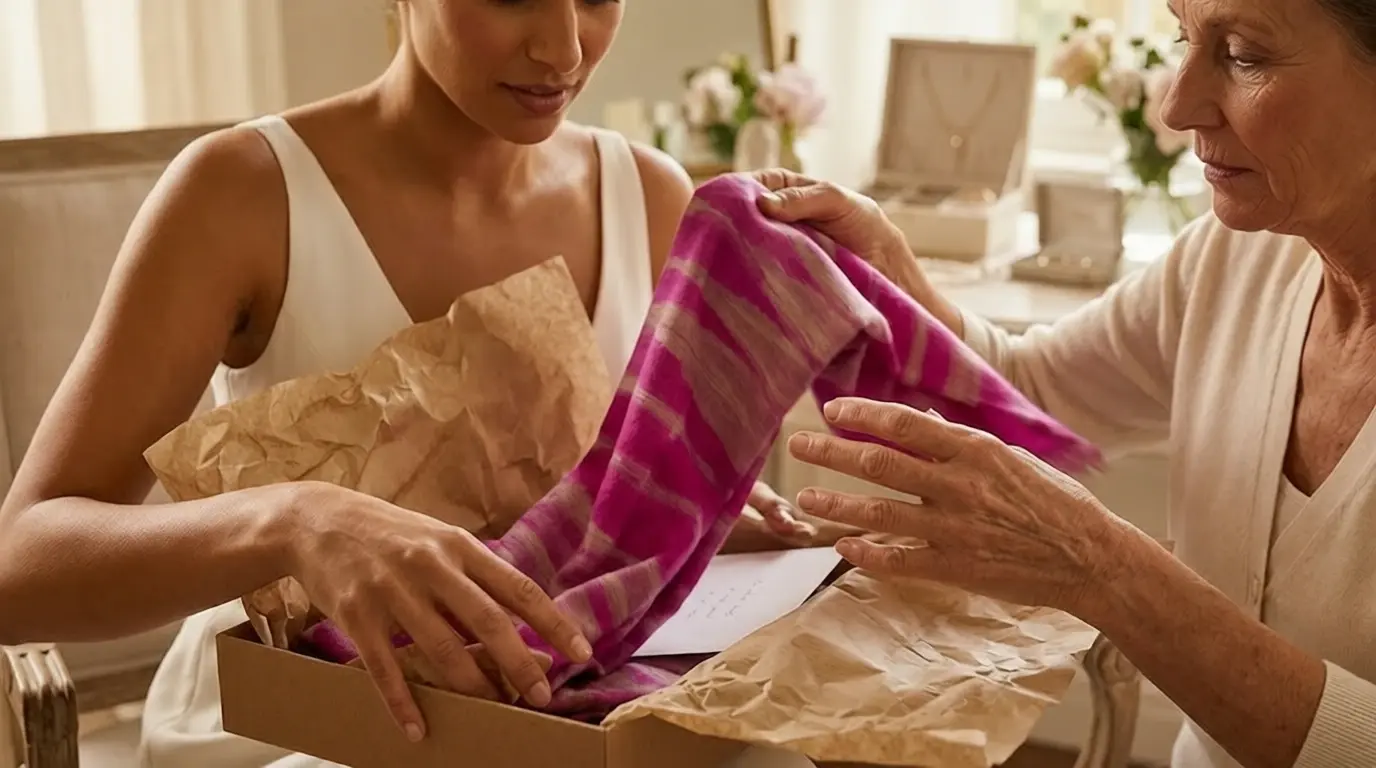
A jacket adds a second silhouette on top of the one the outfit already has. It arrives with its own shoulder line, its own length, and its own opinion about the dress underneath, and it tends to stay on all day whether the room is warm or not because taking it off leaves the outfit looking unfinished.
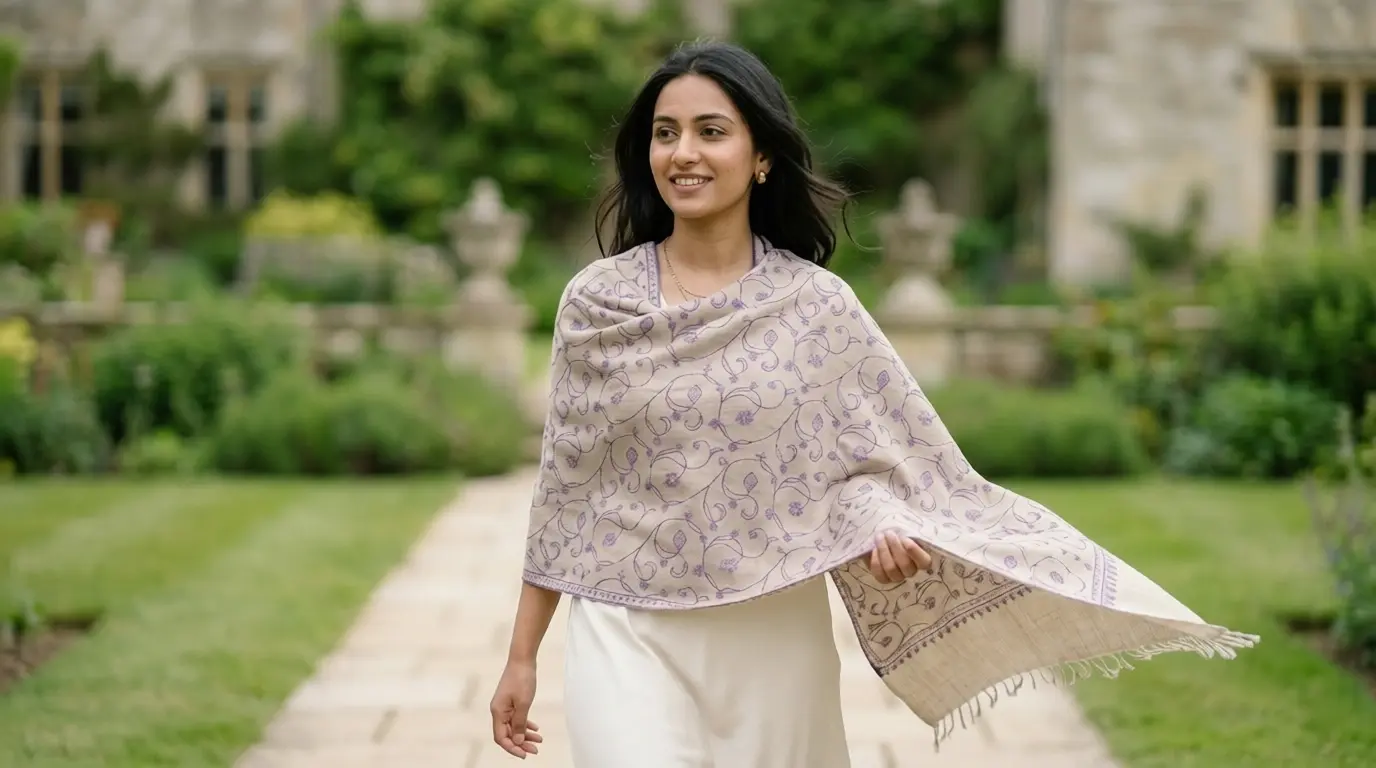
A shawl borrows the outfit's own line instead. It widens for a cold church, loosens for a warm marquee, folds over an arm during the first dance, and returns for the photographs outside without a trip to the cloakroom, covering all twelve hours the outfit is worn.
Width is what makes that possible. A shawl wants to be wide enough to cover the shoulder blades completely without pinning, which is the difference between a piece that is worn and a piece that is carried. Every piece lists its own measurements on its product page, and the largest heirloom shawls reach 225 by 115 centimetres.
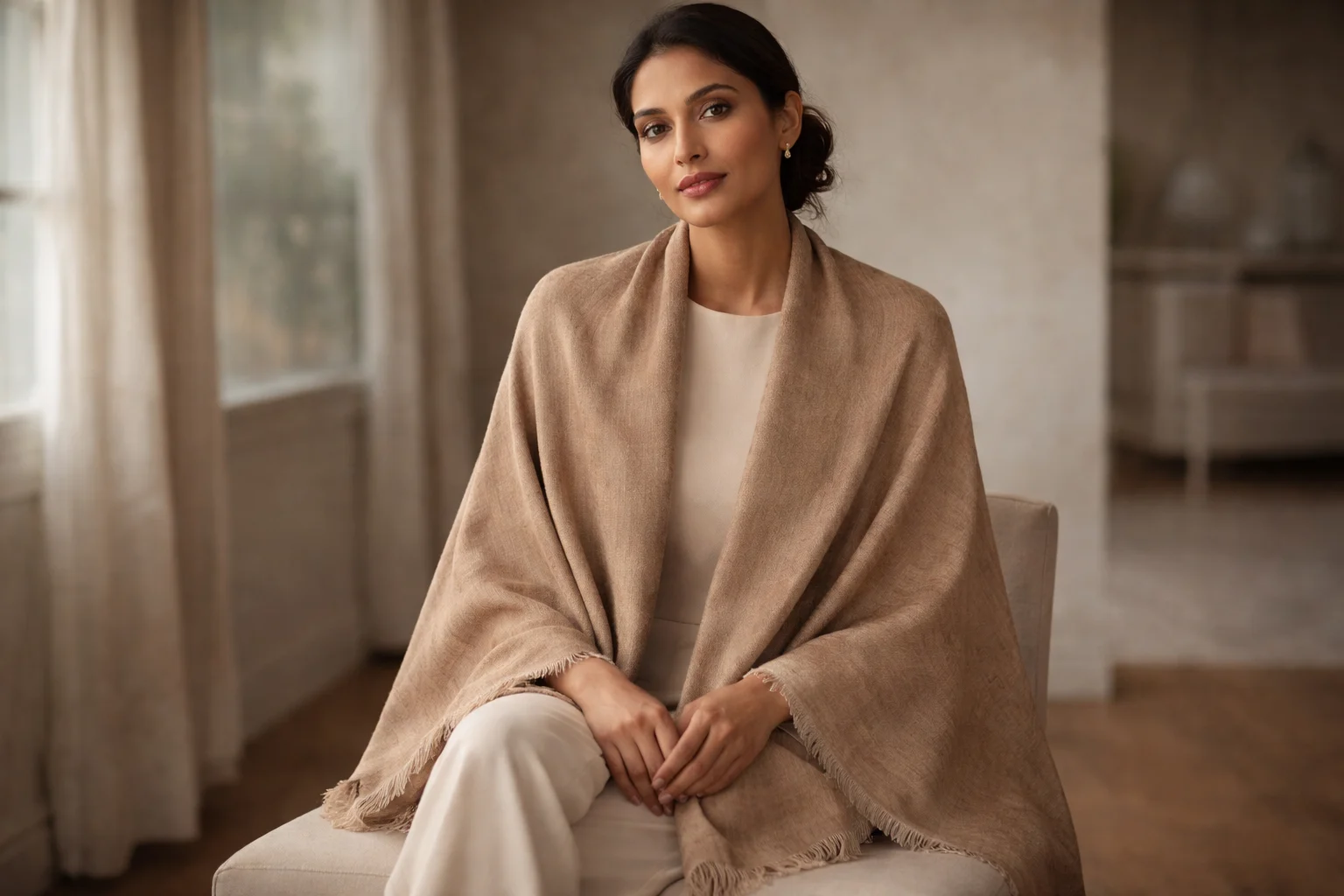
Warmth in a fine fibre does not look warm, and that is the whole point of choosing one. Pashmina insulates far beyond its weight, so the outfit stays visible under the drape rather than buried under wool. It is spun from the Changthangi fleece of Ladakh and handwoven in the valley, and it is the fibre to choose when the day runs long and cold.
Cashmere sits a little more densely in the hand and holds a pressed edge better, which suits a structured outfit and a formal room. Merino wool and silk is the lightest of the three, with a quiet sheen that photographs well under marquee lighting and indoor light.
The catalogue is honest about which is which. Every piece carries its lineage on the label, and the two signature lines are named rather than blurred: Heritage Pashmina, hand spun and handwoven in Kashmir, and Pure Cashmere from the high steppes of Mongolia, woven on precision looms.
In practice most mothers choose between a pashmina shawl for a winter or spring wedding and a merino silk piece for a summer one. If the difference between the fibres is unclear in words, it is obvious in the hand: read pashmina against cashmere before you shop, then judge the two side by side in person.
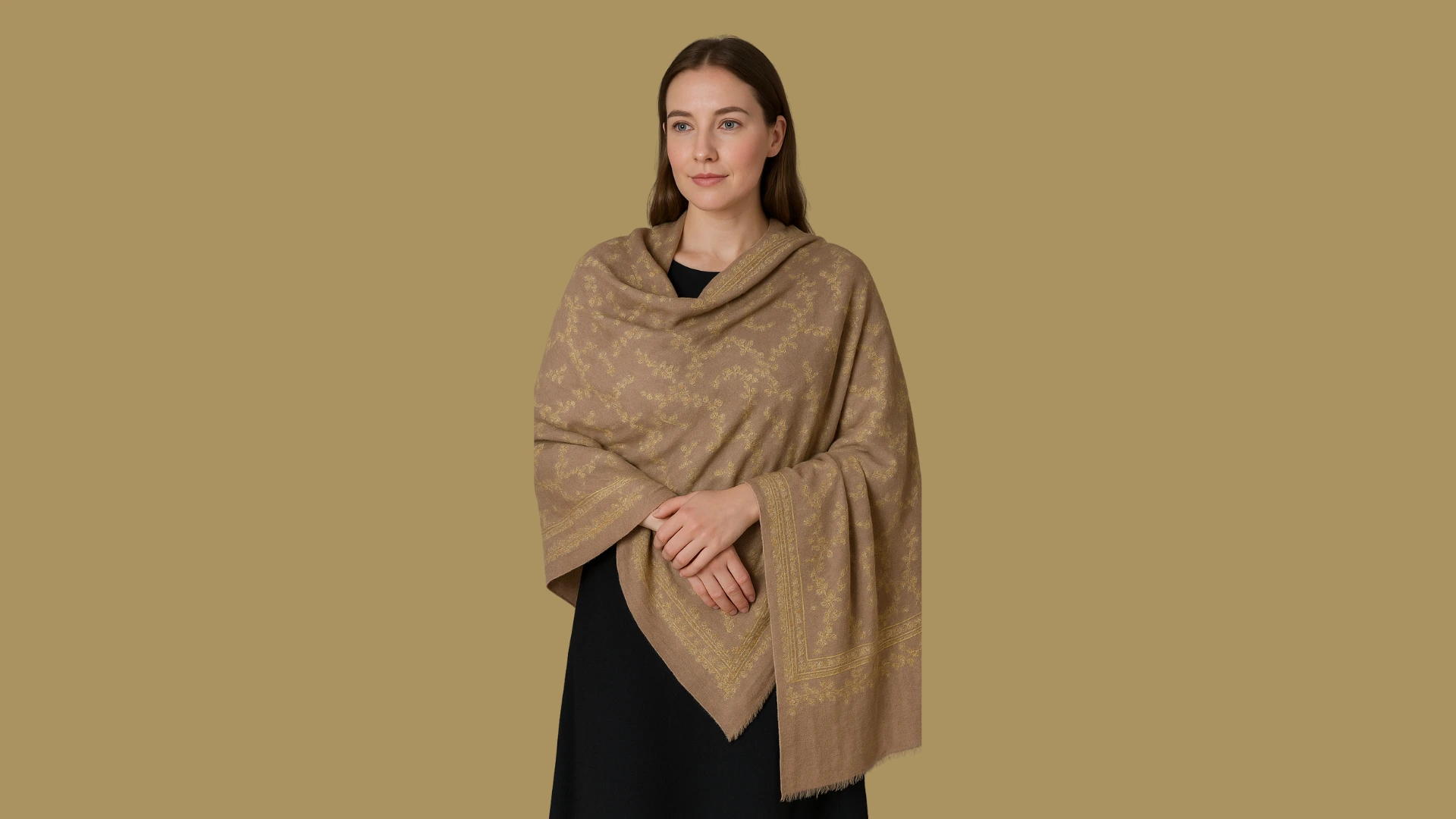
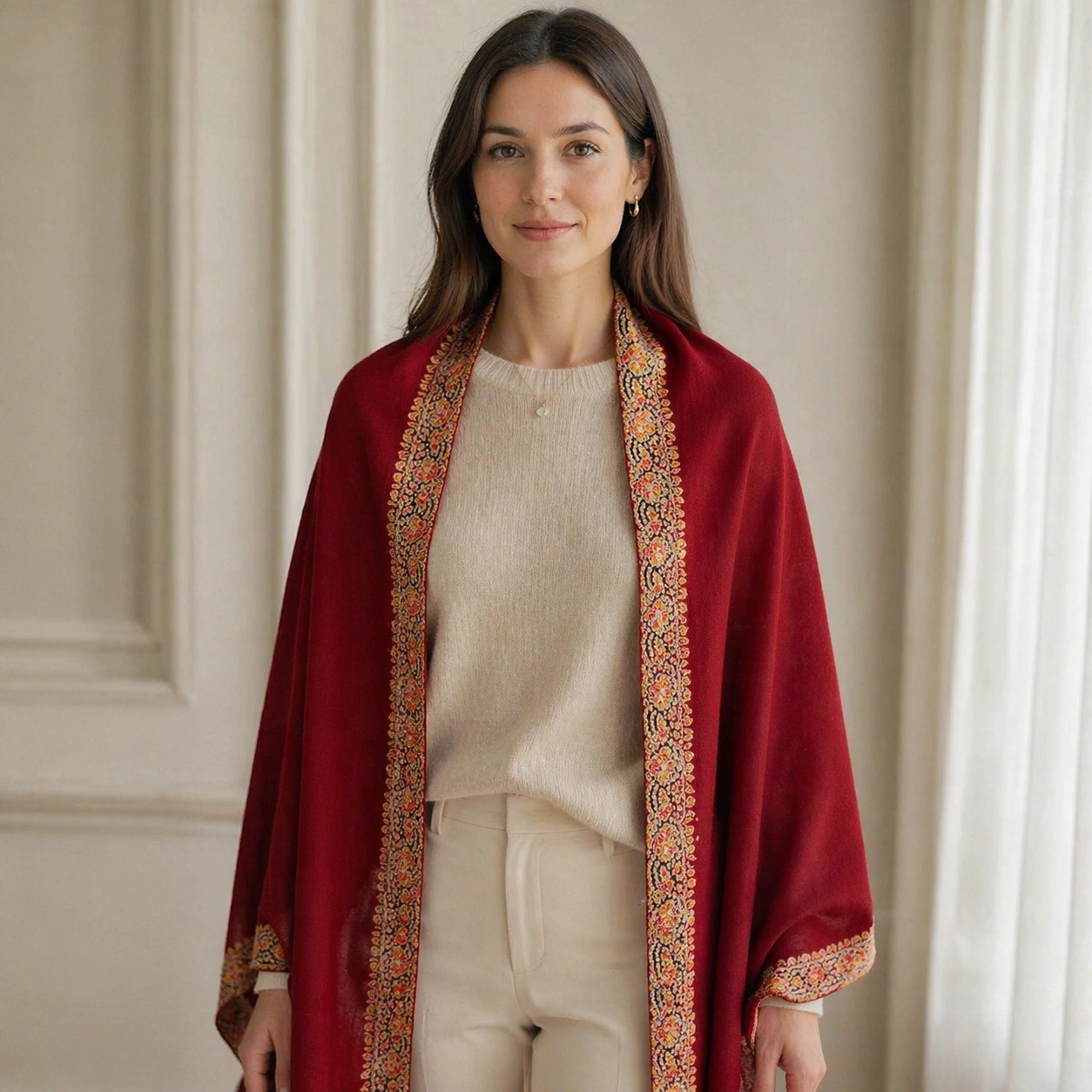
This is the outfit where the worked pieces earn their months of needlework. Over something plain, embroidery reads as jewellery rather than knitwear, and it is the reason a shawl gets remembered when a plain wrap does not.
It changes what the rest of the outfit has to do, too. A worked border at the shoulder means the neckline can stay simple and the jewellery can stay small, which is usually a relief by the third hour of photographs.
Four techniques account for almost everything worked by hand in the collection, and they are not interchangeable.
Sozni is the finest: a needle laid flat against the ground cloth so the pattern sits inside the weave rather than on top of it. A full Sozni shawl is counted in months, occasionally years, and it is the piece most often kept and passed down. Kani is not embroidery at all but weaving, built on the loom with small wooden spools, which is why a Kani border cannot be added later.
Tilla is metallic thread work, traditionally gold, and it is the one that answers an evening reception directly: it catches low light in a way flat colour cannot. Aari is hook work, faster and bolder than Sozni, worked in chain stitch, and it is by some distance the most common technique in our collection.
For the mother of the bride, Sozni or Tilla over a plain outfit is the reliable answer. If you want to see what the needle actually does before choosing, read our guides to Sozni embroidery and Kani weaving.
“Over something plain, a worked shawl is the outfit. The mother of the bride is the person that rule was written for.”
Kashmir Bloom, Birmingham
One shade deeper than the outfit frames it; an exact match flattens it. Navy over powder blue, deep green over sage, a red with real weight over blush. Black works over any strong colour and reads as elegant framing rather than mourning, though all black is better kept for an evening reception than a daytime ceremony.
The only colours worth clearing in advance are the bride's own and whatever the wedding party is wearing. Ivory over ivory remains the bride's privilege, and a mother in the same tone photographs as a second bride in every group shot.
English light is the other consideration, and it is the one most often forgotten indoors under shop lighting. Deep tones hold their colour in low winter light where pastels go grey. Gold and ivory needlework lifts a dark ground in exactly the way a photographer needs at four in the afternoon in December.
The reliable method is not a colour chart. Bring the outfit, or a sleeve of it, and hold the shawl against the actual fabric in daylight. Our Birmingham shop keeps the wedding pieces to hand for that, and it takes about ten minutes to settle a decision that can otherwise run for weeks.
A wedding day is not one temperature and not one room. The drape has to change with it, and the good news is that three positions cover the whole arc without any re-arranging worth the name:
Anchor it asymmetrically, with one end longer or thrown, and the weight holds itself. The full method is in our guide to draping a pashmina. If you are dressing the bride rather than yourself, see what to wear over a wedding dress.
Orders are processed within one to two business days. UK delivery takes three to five business days and is free over £60, so a week is comfortable and a fortnight is safe. Returns run to 14 days from delivery on unworn pieces with tags attached, which is enough to try a shawl against the outfit at home in daylight and change your mind once.
If the wedding is close, or the colour matters more than the convenience, the shop is the faster answer: judged in person, the decision is usually made in one visit.
Yes, over colour. A black shawl over a coloured outfit reads as elegant framing. Keep an all black combination for an evening reception rather than a daytime ceremony.
A shawl, in almost every case. It adjusts through the day, photographs as part of the outfit rather than on top of it, and comes off for dancing without leaving the outfit incomplete.
Wide enough to cover the shoulder blades completely, since width is what keeps the drape in place through a ceremony without pinning. The largest heirloom shawls reach 225 by 115 centimetres. Each product page lists its own measurements.
Sozni for the finest flat needlework, or Tilla metallic thread if the reception runs into the evening and you want the piece to catch low light. Both are best over a plain outfit.
Allow a week. Orders are processed in one to two business days and UK delivery takes three to five business days, free over £60. Returns are accepted within 14 days on unworn pieces with tags attached.
Yes. Our Birmingham shop at 1532 Pershore Road, Stirchley keeps the wedding edit to hand. Bring the outfit and judge colour and drape in daylight.