Your bag is empty
Add something beautiful to get started
For most wedding guests the answer is a shawl: it covers shoulders through a ceremony, survives an evening outdoors, and drapes over any neckline. Choose a scarf instead when the outfit is structured and needs its lines kept visible, or when the wedding stays indoors. The rest is colour, and choosing against the actual outfit rather than from memory.
Both answers assume the same fibre logic. Pashmina and fine wool silk give warmth without weight, so neither choice ever reads as a coat over the outfit.
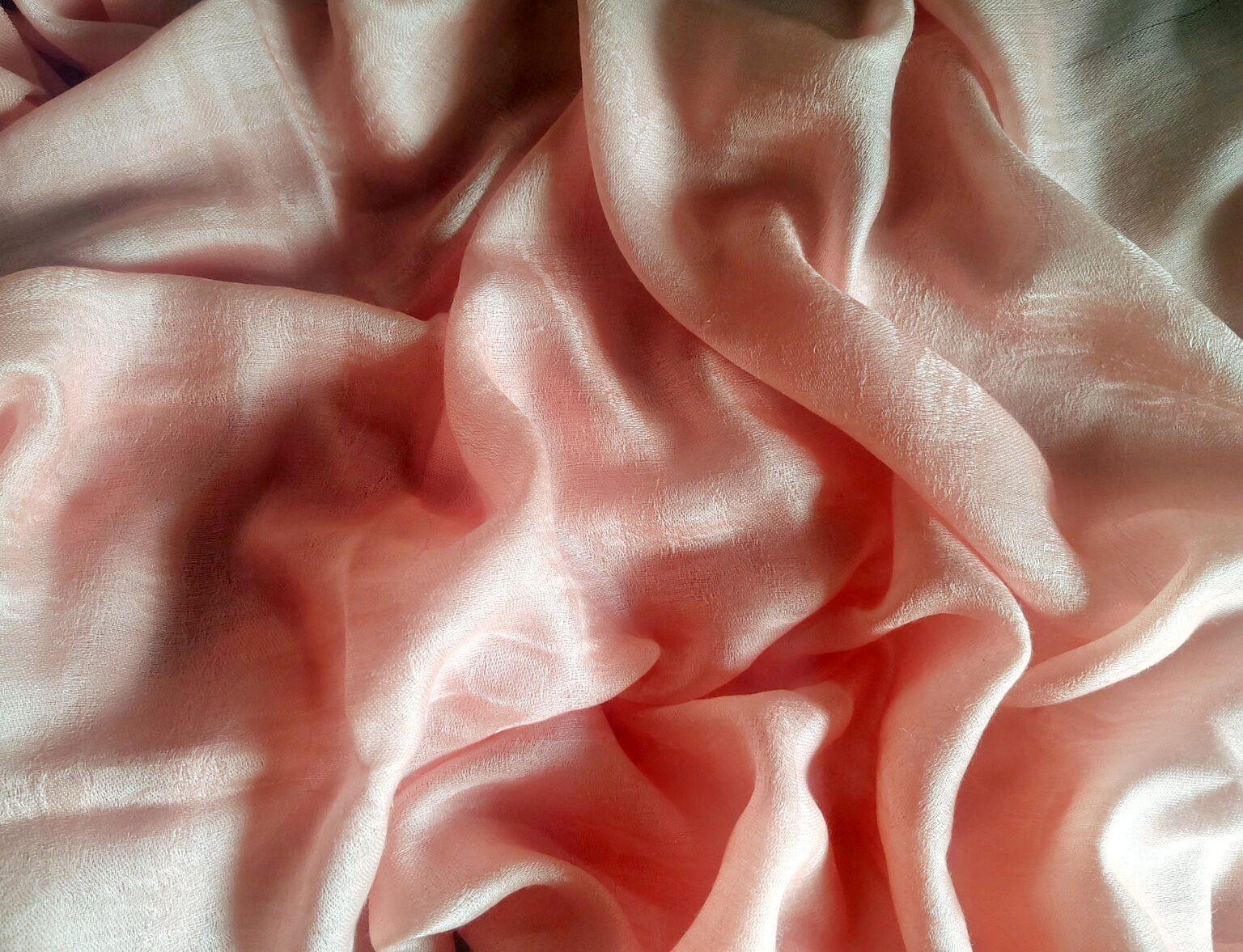
A fine scarf sits lighter than a full shawl and keeps a structured outfit visible: a tailored dress, a suit, anything with a shoulder line worth seeing. Our wool silk scarves run a generous 200 by 70 centimetres, enough to loop or drape without swallowing the silhouette. That is the size all 33 of our wool silk pieces are cut to, so the drape behaves the same way whichever one you choose.
It also earns its place in every photograph, and then spends the next decade as the most reached for thing in the wardrobe. For a guest who feels the cold lightly, a scarf in a rich tone is the quiet, correct choice.
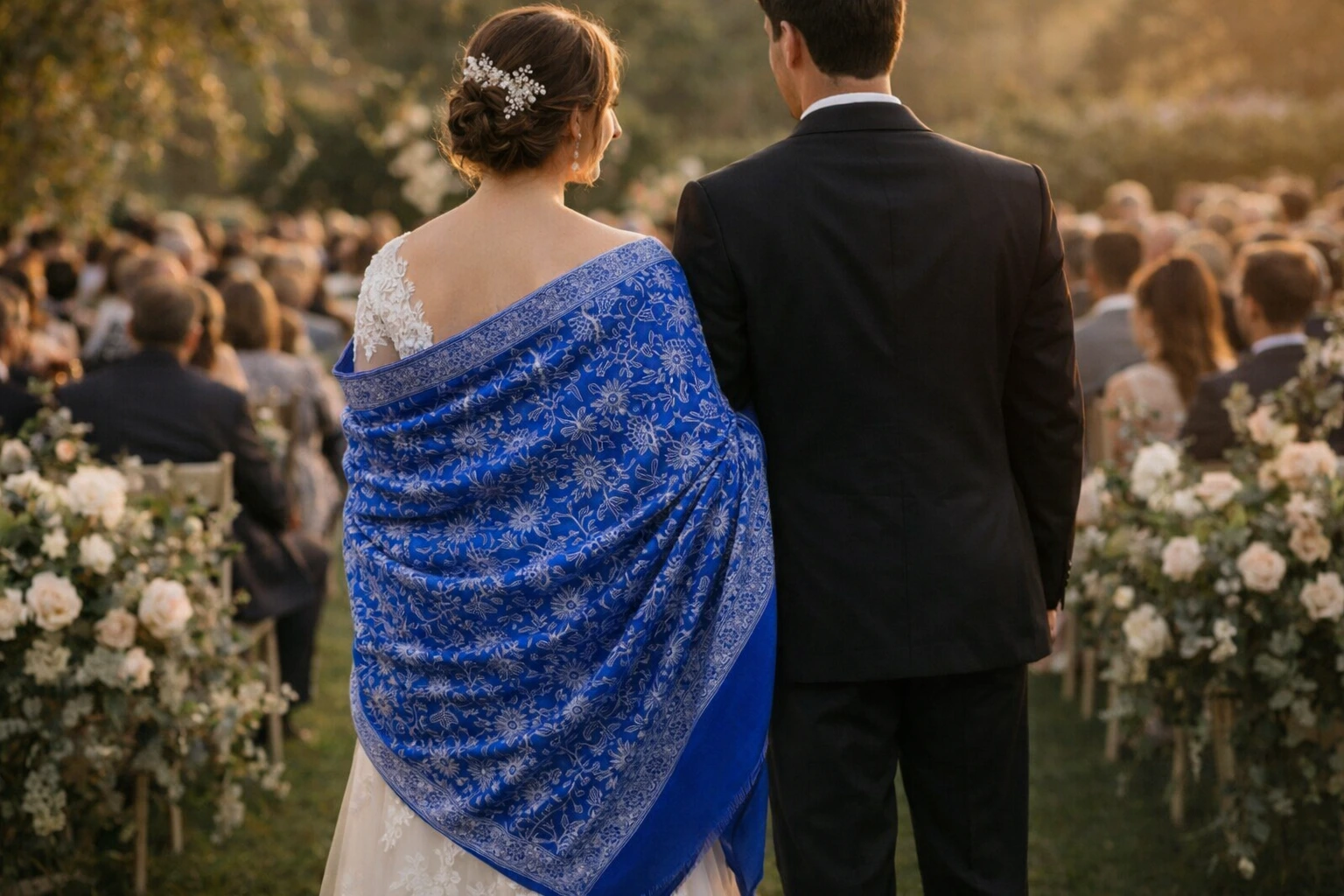
An English wedding runs from church cold to marquee midnight, and a shawl is the only cover that manages the whole arc: wide enough for real warmth, open enough to drape over any neckline, and dressed enough to stay on through dinner.
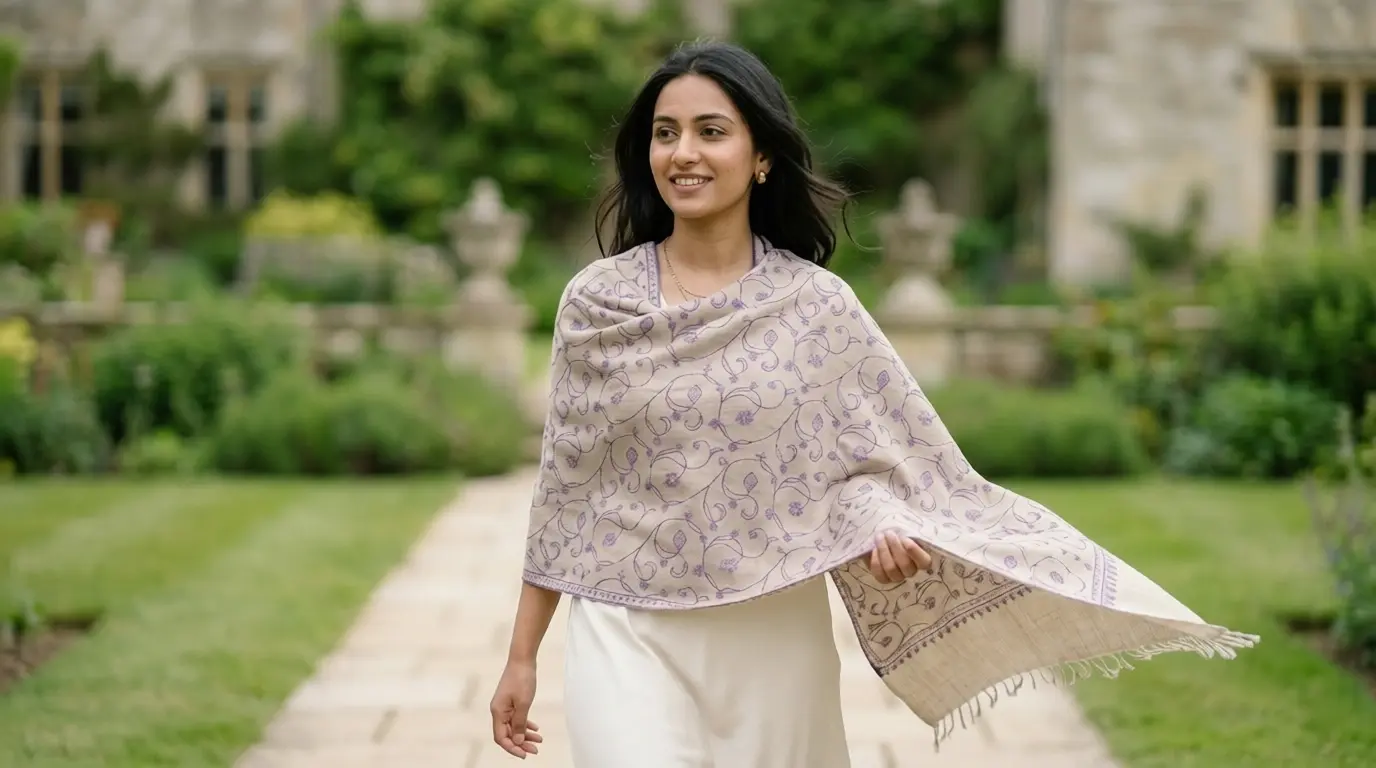
An embroidered piece worn over something plain becomes the outfit, which is why shawls dominate our wedding edit. Worked borders read as jewellery rather than knitwear. There are 22 shawls in the collection against 166 scarves, which tells you how much work each one takes.
Both answers rest on the same logic, and it is the reason a wedding cover-up is not simply a jumper in better clothing. Pashmina and fine wool silk insulate far beyond their weight, so the warmth arrives without bulk and the outfit underneath keeps its shape.
A coat changes the silhouette every time it goes on. A shawl in the right fibre never does, which is why it can stay on through the ceremony and the photographs.
Most of our wedding scarves are woven from 85 per cent merino wool and 15 per cent silk. That blend does two jobs at once: the wool grips itself and holds a drape where it was put, and the silk catches the light, which matters more than it sounds when the day is documented in several hundred photographs.
Pashmina is the finer and warmer of the two, and it is the choice when the wedding runs into a cold evening. Both give warmth that does not read as outerwear.
“Choose against the actual outfit, not from memory. Ivory beside ivory, a worked border beside a plain crepe: the fabric decides faster than the mirror does.”
Kashmir Bloom, Birmingham
One shade richer than the outfit frames it; an exact match flattens it. Deep tones, wine, moss, midnight, work over almost everything and photograph well in English light. If the shawl or scarf is for one specific dress, bring the dress: our Birmingham shop keeps the wedding pieces to hand for exactly that.
The shortlist is narrower than the wall of colour suggests. Across the collection the tones that recur most are black with 41 pieces, ivory with 37, red with 36 and beige with 32, with navy, green and cream close behind. That is the practical palette to choose from.
Ivory is the one to think twice about. It is the colour the bride has chosen, and a near match beside a white gown reads as an accident rather than a decision. Black is safe worn over colour and awkward worn over black in daylight.
A scarf for a wedding is typically 200 x 70 cm, long enough to loop once and still fall past the waist, light enough to fold away when the room warms up. A shawl is wider, and the extra width is the whole point: it covers the shoulder blades fully and stays in place through a ceremony without re-draping. The largest heirloom pieces reach 225 by 115 centimetres, and every piece lists its own measurements on its product page.
Match the size to the silhouette of the outfit:
The test in the shop is the same one to use at home: put the piece on and turn your shoulders. If it needs a hand to stay where it was put, it is too narrow for a whole day.
The range is wide enough that this is rarely a money decision. Scarves run from £15 to £480 across 166 pieces, and the middle of that range sits at about £55, which is where most wedding guests land.
A handwoven scarf at that price will outlast the dress it was bought for by a decade, which is the honest argument for spending on the cover-up rather than the outfit.
Shawls start at £25 and reach £2,100, with the middle around £160. For a guest, that middle covers the whole day comfortably and needs no explanation.
The top of the range is a different purchase. Five heirloom pieces sit between £1,050 and £2,100, where the price is months of Sozni or Kani handwork rather than the fibre, and those are usually bought for a bride or a mother of the bride rather than a guest.
The open drape. The shawl sits across both shoulders with the ends hanging forward. It is the drape for church pews and photographs, symmetrical and calm, and it leaves embroidery on full display.
The single throw. One end tossed over the opposite shoulder. It holds warmth through an evening outdoors and frees one arm completely for a glass or a handshake.
The loose loop. For scarves only: one loop at the collarbone, ends level. It keeps a fine scarf in place on the dance floor without crushing the fabric.
None of the three needs a pin. Handloomed pashmina and wool silk catch against themselves, which is why these drapes hold in the real fibre and slide in anything with a synthetic sheen.
UK delivery takes three to five business days and is free over £60, £4.95 below it. Returns and exchanges run to 14 days from delivery, provided the piece is unworn with its tags attached, so there is room to order two colours and send one back.
Allow a clear week if the date is fixed, and longer if you want to see the piece against the outfit first.
If you are close enough to visit, that last step is worth the journey. Our shop at 1532 Pershore Road, Stirchley, Birmingham B30 2NW keeps the wedding edit to hand, open Monday to Saturday 10.30am to 6.30pm and Sunday 12 to 6pm. Bring the outfit, or even a sleeve of it, and the choice usually makes itself in one visit.
Yes, worn over colour. Black over a coloured outfit reads as elegant framing rather than mourning. Black over black is for evening receptions rather than daytime ceremonies.
Our wool silk scarves measure around 200 by 70 centimetres, which loops twice or drapes open across the shoulders. Shawls run wider and are the choice when real coverage matters.
Yes. Pashmina insulates far beyond its weight, which is the point of the fibre: warmth that does not change the outfit underneath.
Yes. Our Birmingham shop at 1532 Pershore Road, Stirchley keeps the wedding edit to hand. Bring the outfit and judge colour and drape in person.
Better not. Ivory is the bride's colour, and beside a white gown a near match reads as an accident. Ivory is the second most common colour in our collection, so it is easy to pick up by mistake: choose a deeper tone and keep the pale shades for the wedding party.
Most guests land around £55, which is the middle of our scarf range. Shawls sit higher, around £160 in the middle of the range. Anything above roughly £1,000 is heirloom handwork, usually bought for the bride or her mother rather than a guest.
Allow a clear week. UK delivery is three to five business days and free over £60, and returns run to 14 days from delivery, so there is time to try two options and send one back.