
Your bag is empty
Add something beautiful to get started
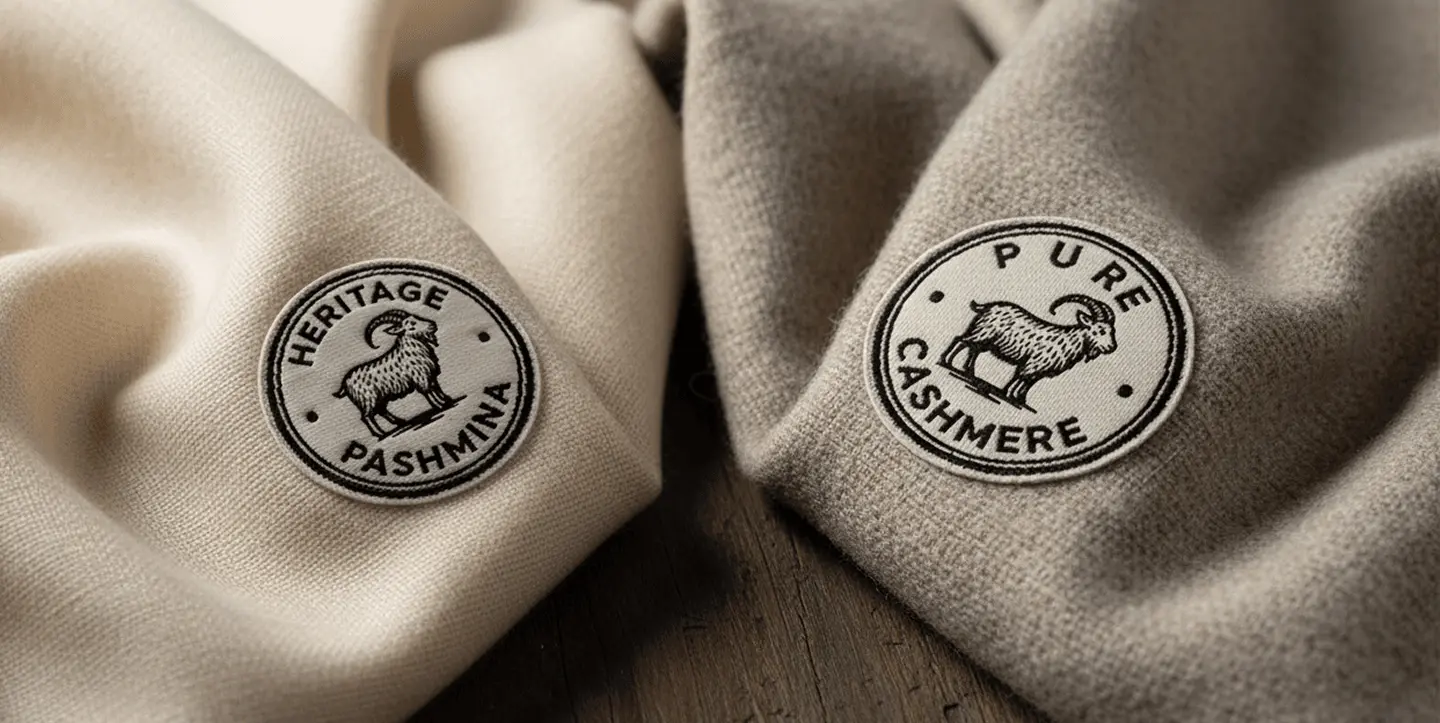
A promise made, a promise kept. At Kashmir Bloom, luxury begins where honesty lives. Every shawl we weave, every word we write and every label we attach reflects one principle: clarity without compromise.
In an age where "Pashmina" and "Cashmere" are used interchangeably, and sometimes misleadingly, we take a different stance. We treat these words as promises, each backed by craftsmanship, origin and truth.
Every Kashmir Bloom piece carries its lineage on its label. We do not embellish or obscure. We name our fibres exactly as they are and honour each for its own story. Our two signature lines are united by quality, yet distinct in their method, origin and spirit.
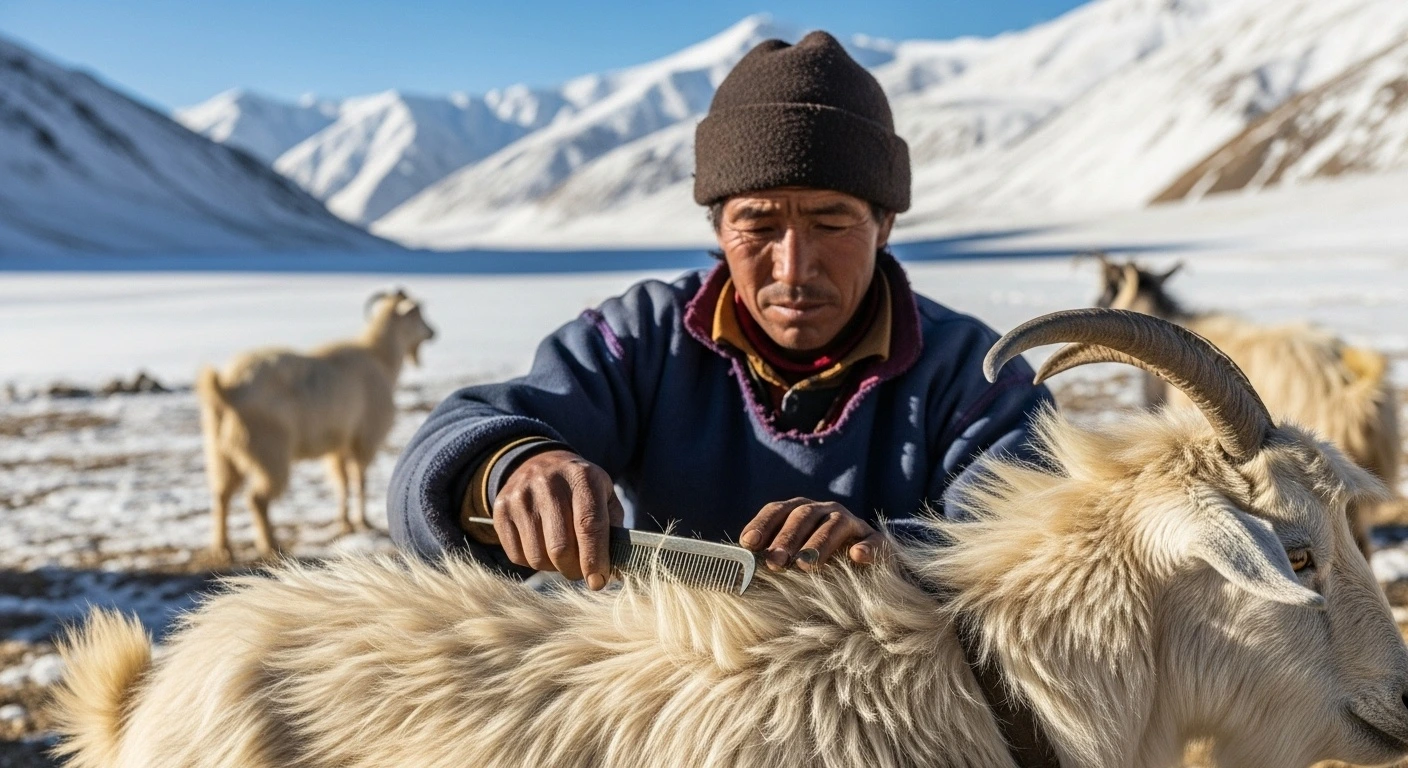
Heritage Pashmina is the soul of Kashmir Bloom: a living tradition of hand spun, handwoven and hand embroidered work rooted in the valley, a dialogue between the heart, the hand and history.
Each piece begins with cashmere fibre from the Changthangi goat of Ladakh, known for the softest and rarest fleece in the world. The wool is combed from the animal by hand, spun on traditional wooden wheels and woven entirely by hand.
It is a slow and deliberate craft. No two pieces are identical, and each bears the signature of its maker. Read our guide to identifying pure pashmina for the tests that prove it.
If Heritage Pashmina is heirloom, Pure Cashmere is ease. Both are pure, each reflecting a different rhythm.
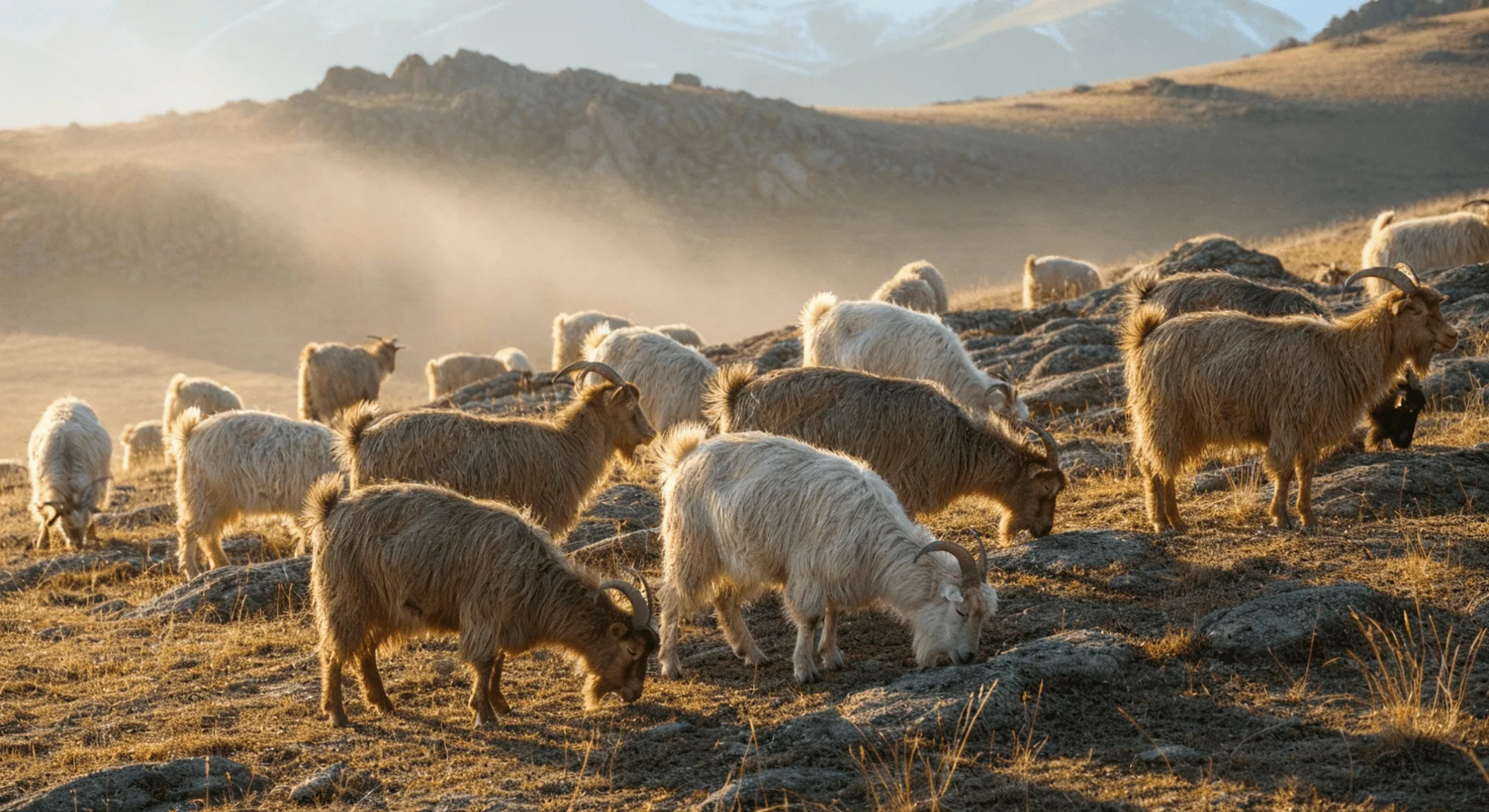
These shawls are woven from 100 per cent premium cashmere sourced from Mongolia and Inner Mongolia, regions known for exceptionally fine fibre. Each piece is created with precision on modern looms, designed for lightness, softness and quiet sophistication.
Smooth and graceful, for those who want understated luxury that fits into daily life. Our guide to cashmere grades explains what the hand can feel.
Both lines reflect the same devotion to truth and quality. The difference lies not in their worth but in their voice: one speaks of legacy, the other of living. If the two names still blur, pashmina versus cashmere sets them side by side.
Integrity. Mislabelling erodes trust, in brands, in buyers and in artisans. We honour our craft by naming it truthfully, always.
Choice. Knowing what you are buying is not a privilege, it is your right. Transparency lets you choose with confidence, guided by your own values and needs.
Respect. Every fibre carries a story. Cashmere from Ladakh tells of mountain air and endurance. Cashmere from Mongolia carries the spirit of open plains. To name them accurately is to honour both nature and the people who shape it.
None of this is a campaign. It is simply how a family trade has worked for five generations, written down.
“Trade is trust made visible.”
Haji Abdul Razzaq, wool trader, Srinagar
Transparency must live in practice, not just principle.
Full material disclosure. Every label lists the exact composition. No hidden blends, no borrowed terms.
Handcrafted integrity. Every Heritage Pashmina is fully handmade in Kashmir: spun, woven and embroidered by skilled artisans.
Ethical sourcing. We work directly with cooperatives and partners to ensure fair pay, safe conditions and sustainable practice.
Sustainability in action. Natural dyes, minimal packaging and designs made to age well. Luxury that lasts rather than depletes.
Open conversation. We answer every question with the same care that goes into every shawl.
Beyond the product, the same openness applies to how we work:
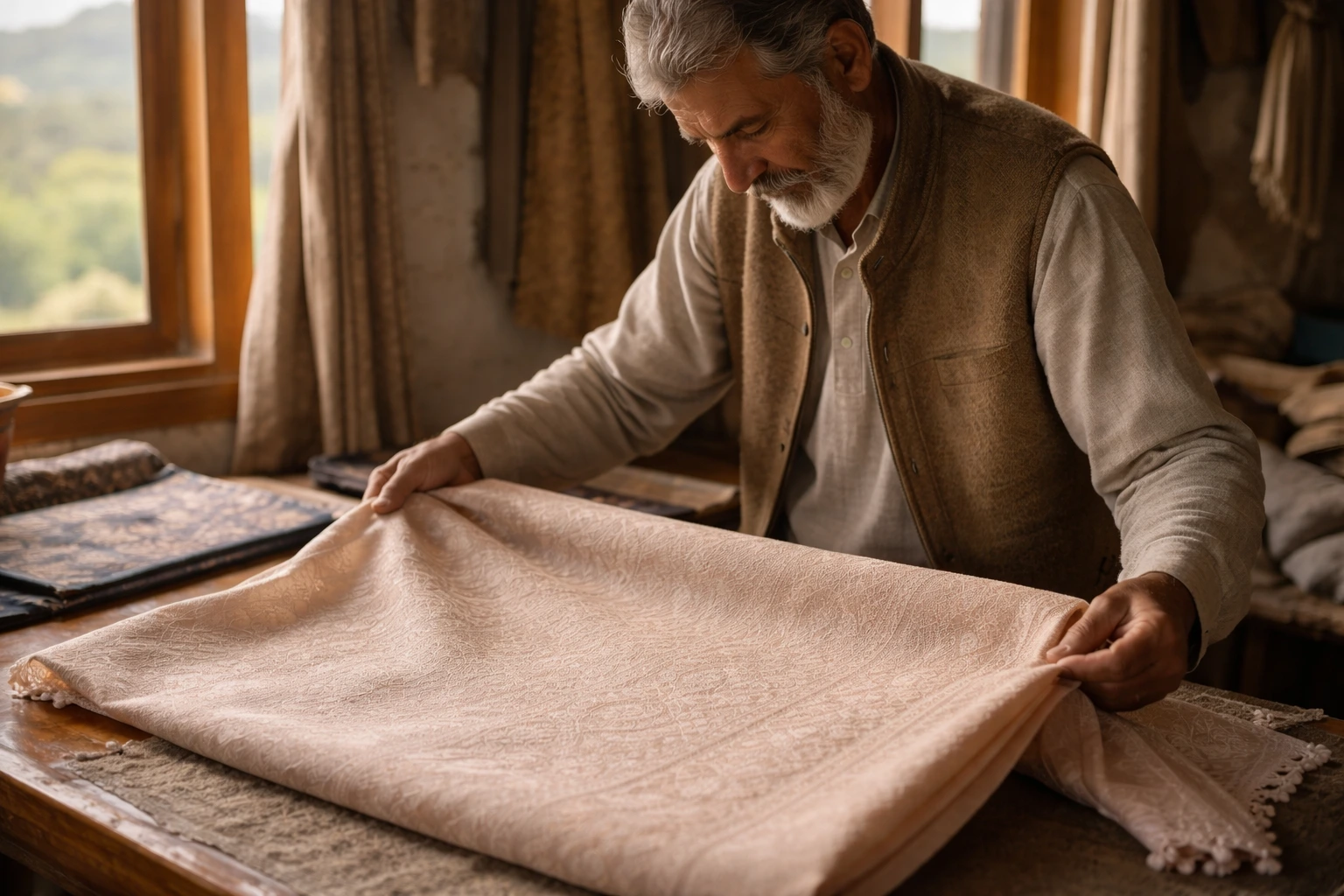
The values that shape Kashmir Bloom were not born in a boardroom. They lived quietly, generation after generation, in the narrow lanes of old Srinagar, where trade, faith and craftsmanship intertwined. Our forefathers taught that good business begins with good conscience.
A deal made in truth lasts longer than one written in profit. That philosophy, passed from father to son, still guides every decision we make.
Our story stretches back more than a century. Haji Abdul Razzaq, our great grandfather, was known across Srinagar as a man of principle and faith. A wool trader by profession, he built his name on fairness, and his word was his bond.
His son, Haji Abdul Ahad, inherited that same moral clarity. A man of prayer and unwavering discipline, he believed honesty itself was a form of devotion. Even in the hardest winters he walked to the mosque for every prayer.


“Say what you sell. Sell what you say.”
Five generations. One principle. Unbroken.

If you ever wish to know more, about a fibre, a technique or a claim, write to us at hello@kashmirbloom.com. We will answer with the same care we weave into every shawl.
Luxury begins with clarity. You have the right to know.
The most lasting form of beauty is honesty. It does not fade, fray or follow trends. It endures, quietly and faithfully.
At Kashmir Bloom, transparency is not a feature. It is our fabric. Every piece in the shawl collection and every hand embroidered scarf is labelled on exactly that basis.
Heritage Pashmina is hand spun, handwoven and hand embroidered in Kashmir from Changthangi fleece, and a single piece can take 12 to 24 months. Pure Cashmere is woven on modern looms from Mongolian and Inner Mongolian fibre in two to three weeks. Both are labelled exactly as they are.
Two places, and the label always says which. Heritage Pashmina uses fleece from the Changthangi goat of Ladakh. Pure Cashmere uses fibre from Mongolia and Inner Mongolia.
Every Heritage Pashmina piece is entirely handmade: spun, woven and embroidered by hand. Pure Cashmere is precision woven on modern looms, and we say so on the label rather than borrowing the word handmade.
Read the label, which lists the exact composition, and ask us anything at hello@kashmirbloom.com. Our guide to identifying pure pashmina also covers the tests you can do at home.