Your bag is empty
Add something beautiful to get started
The Autumn Edit
Season of mists and mellow fruitfulness,
Close bosom-friend of the maturing sun
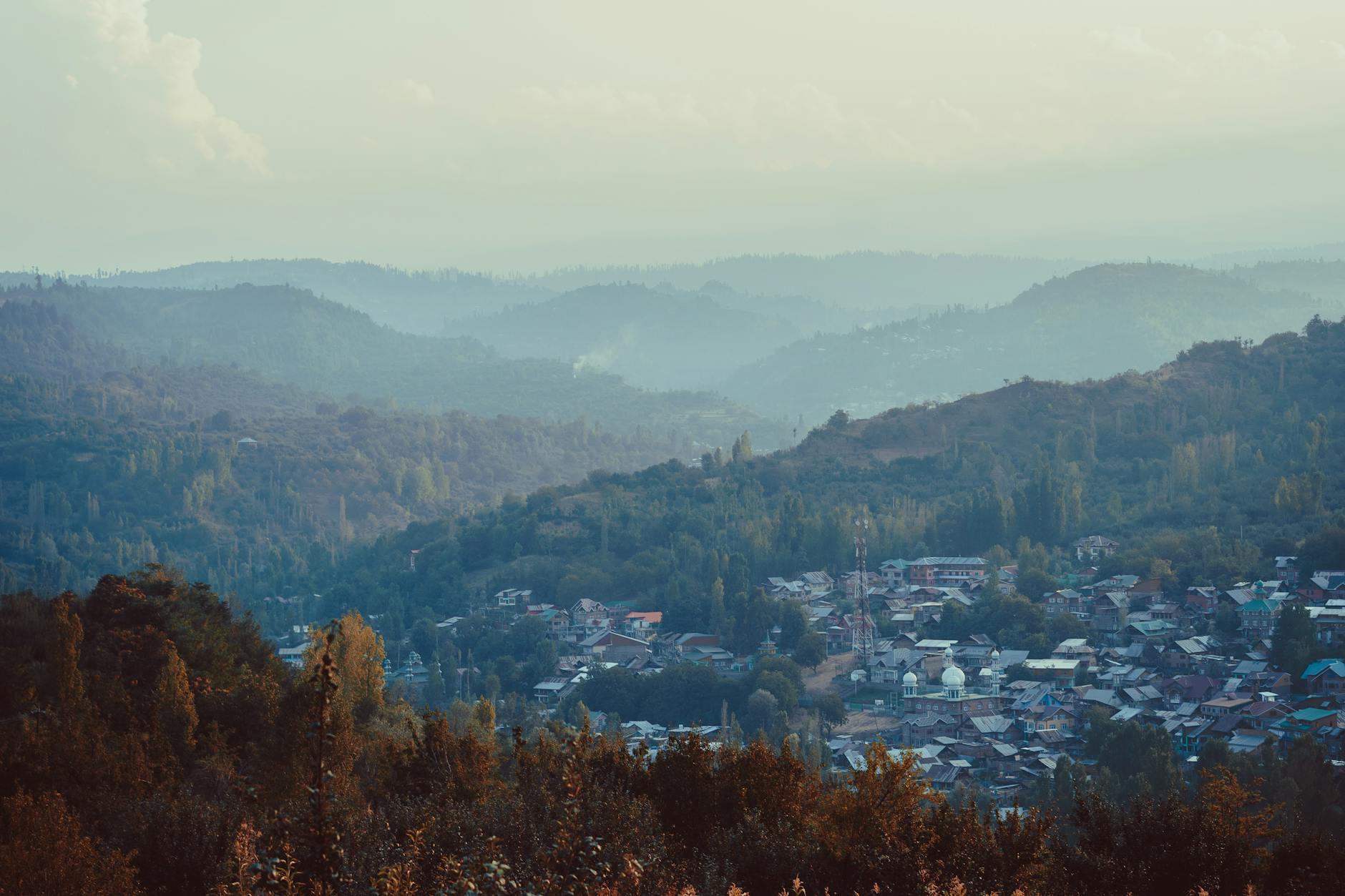
Mist in a mountain valley at dawn. Harud is the Kashmiri word for autumn, the few weeks when the valley turns copper, saffron and walnut.
October in Birmingham starts at seven degrees and climbs to fourteen by the afternoon, with rain on twelve days of the month. In Kashmir the same weeks have a name, Harud, and a way of dressing for them. The plane trees Kashmiris call chinar turn copper along the lakeshore, the saffron fields at Pampore are picked in the last days of October, and the shawl comes out of the chest where it spent the summer.
This is a guide to dressing for the British version of that season: the fibres that cope with damp, the colours that hold up in low light, and what each piece costs. Every piece shown is in stock at the price listed on the day this was written, and every number about the weather is a Met Office average.
Part one
The Met Office averages for 1991 to 2020 put Birmingham’s September at 18 degrees by day and 10 at night, October at 14 and 7, and November at 10 and 4. London runs about two degrees warmer. Rain falls on ten, twelve and thirteen days of those months respectively. So a British autumn is not cold so much as cool and wet, with a twenty-degree swing between a September lunchtime and a November evening.
That makes the clothing problem one of layering rather than insulation. The right piece adds warmth without weight, comes off in a warm room, folds into a bag, and does not mind a shower. A coat solves November and ruins September; a scarf or a shawl covers both.
The season in figures
Average temperatures and days of rain, 1991 to 2020
| City and measure | SeptemberSept. | OctoberOct. | NovemberNov. |
|---|---|---|---|
| Birmingham | |||
| By day | 18° | 14° | 10° |
| By night | 10° | 7° | 4° |
| Days of rain | 10 | 12 | 13 |
| London | |||
| By day | 20° | 16° | 12° |
| By night | 12° | 9° | 5° |
| Days of rain | 8 | 11 | 11 |
Met Office averages for Birmingham Winterbourne and London Heathrow, rounded to the degree. A day of rain is one with a millimetre or more.
Part two
Wool absorbs up to a third of its own weight in moisture before it feels wet, and gives off a little heat as it does so. The figure comes from the Woolmark Company, the wool industry’s own body, but the effect is familiar to anyone who has stood on a wet platform in a wool scarf and a cotton shirt: the scarf stays comfortable and the shirt goes cold. Cotton takes up water too, then dries slowly and pulls warmth from the skin while it does.
Cashmere is wool’s finer cousin. To be sold as cashmere in the United States a fibre must average 19 microns or less, and pashmina from the Changthangi goat of Ladakh measures around 13, which is why a pashmina shawl is warm without bulk. Our Heritage Pashmina® scarves are handwoven cashmere; the pashmina shawls are hand spun and handwoven in the Kashmir valley. For the difference in plain terms, read pashmina versus cashmere.
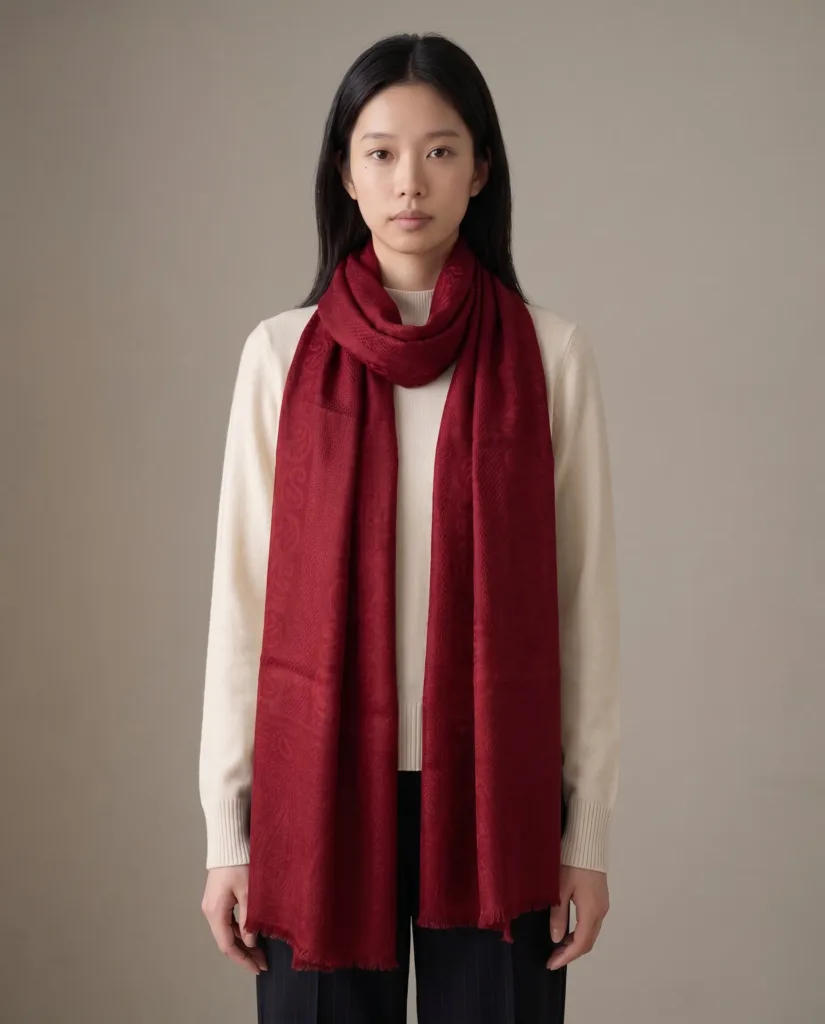
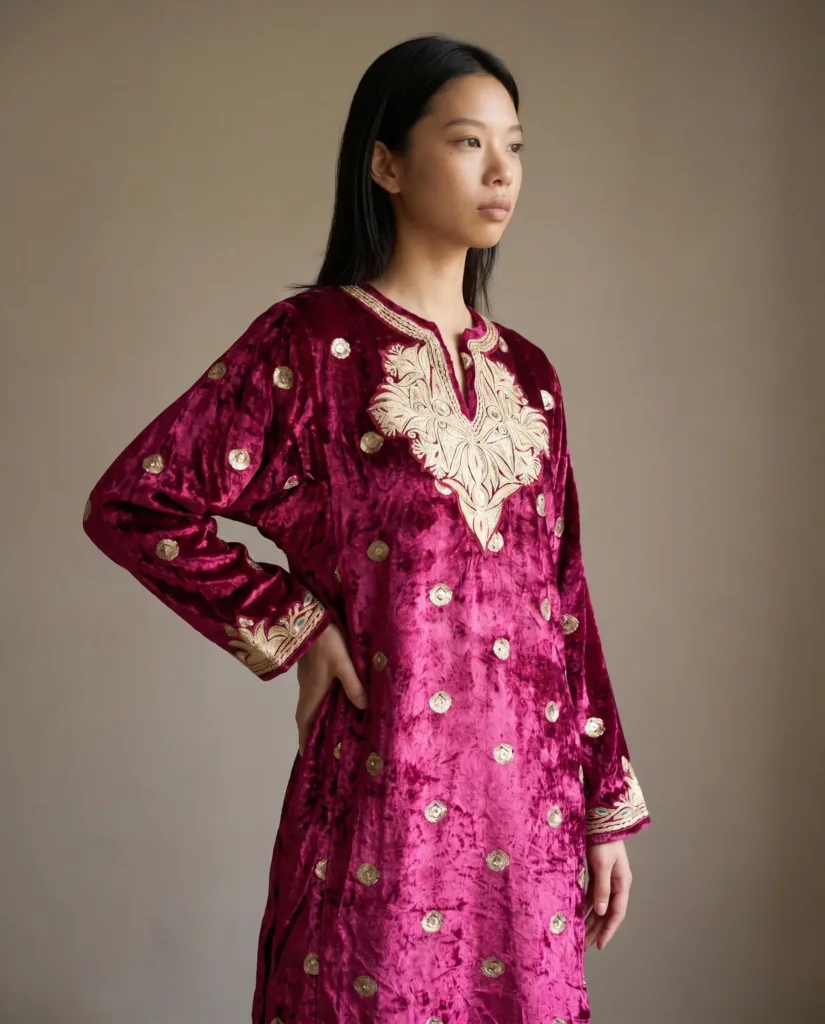
The lighter option is merino wool and silk. Our merino silk scarves are 85 per cent merino and 15 per cent silk, cut at 200 by 70 cm and weighing about 100 grams, and they are the September piece: enough for a cool morning, gone by lunchtime. Acro wool, the wool and acrylic blend in most of our pherans and kurtis, is light and warm but takes up little moisture and pills sooner, so it suits a dry cold day more than a wet one. Velvet is back this season in burgundy and forest, and dislikes rain, so save it for the evening.
The fibres, in stock
Part three
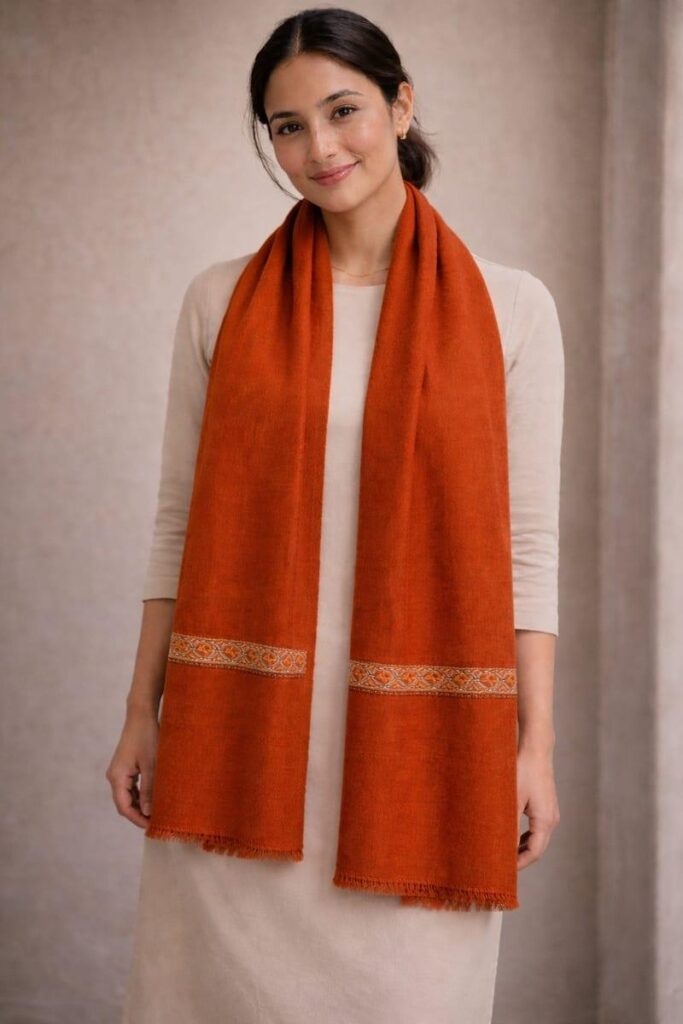
Harud has three colours of its own: the copper of the chinar, the saffron picked at Pampore, and walnut, the tree whose green husks split open in the same weeks. They are the colours this collection is named for, and they sit naturally against the grey of a British October because nothing else in the street is wearing them.
The trade reports lean the same way this year. Pantone’s report from the New York autumn and winter 2026 shows lists red mahogany, burnt olive, muted clay and a toffee brown; the forecasters add a deep burgundy and a forest green, with a winter cream to lift them. Our stock answers all of those. The one gap is teal, which the same reports favour and which we carry little of this season.
The colours, in stock
Part four
The month decides the weight. Start light and add, rather than buying for November in September and carrying it around for eight weeks.
| When | What to wear |
|---|---|
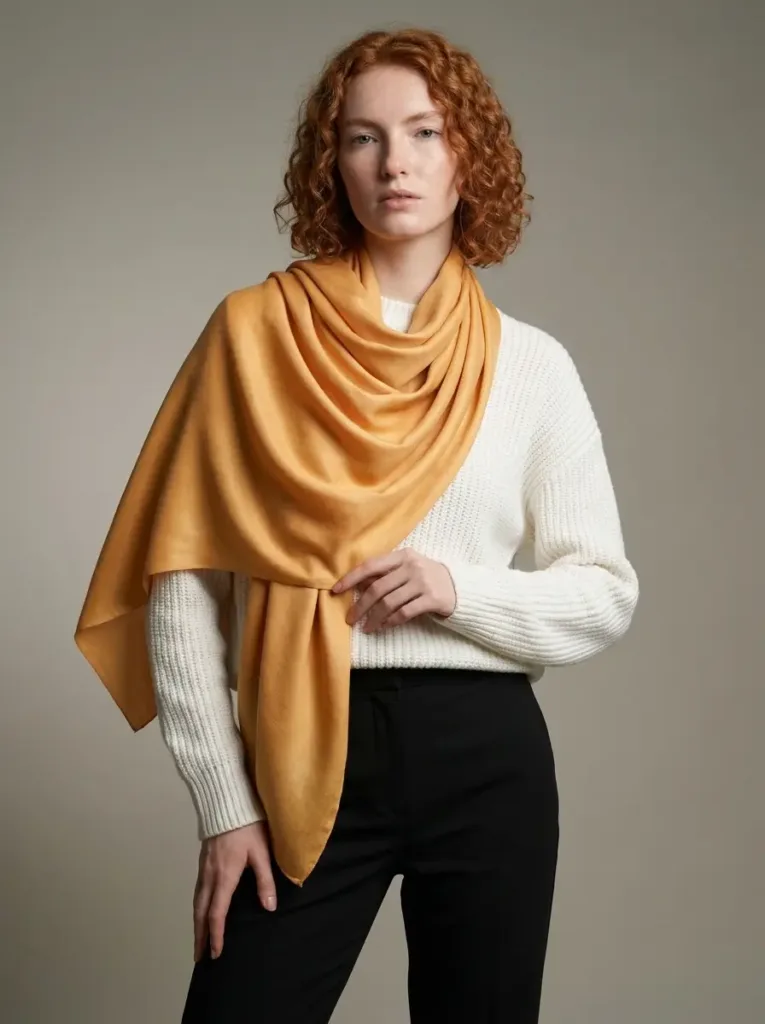
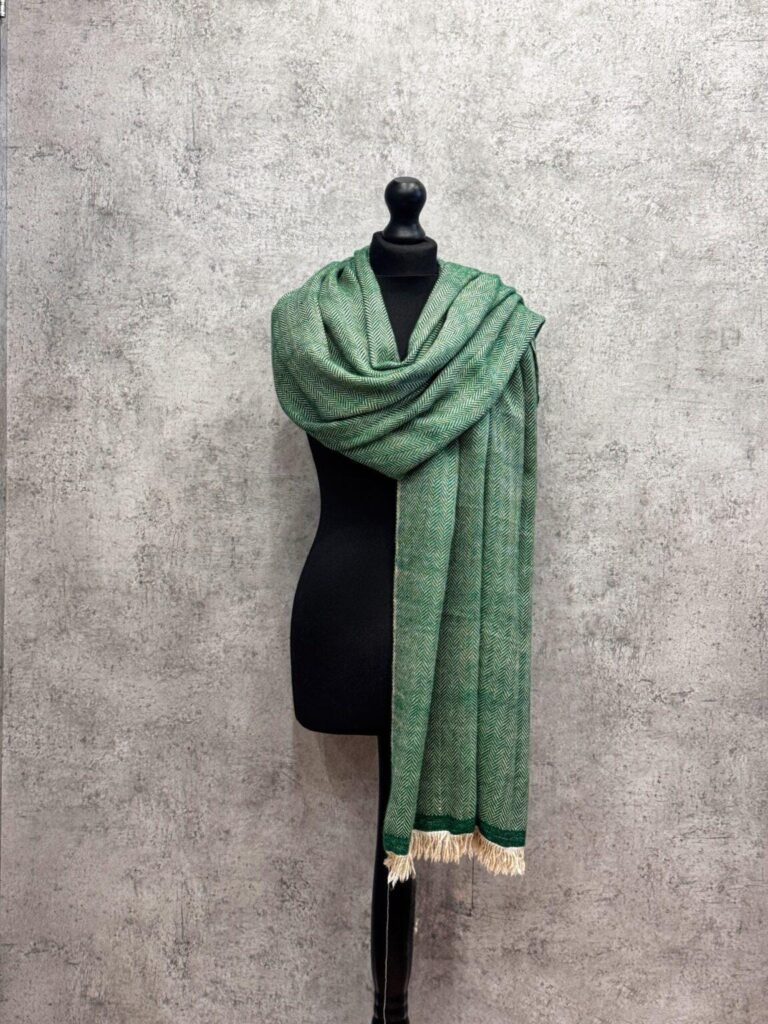
| Early September18 by day, dry most days | A merino silk scarf at about 100 grams, worn loose and gone by noon. The colour can be lighter than the month suggests.Terracotta Mist, Golden Hour |
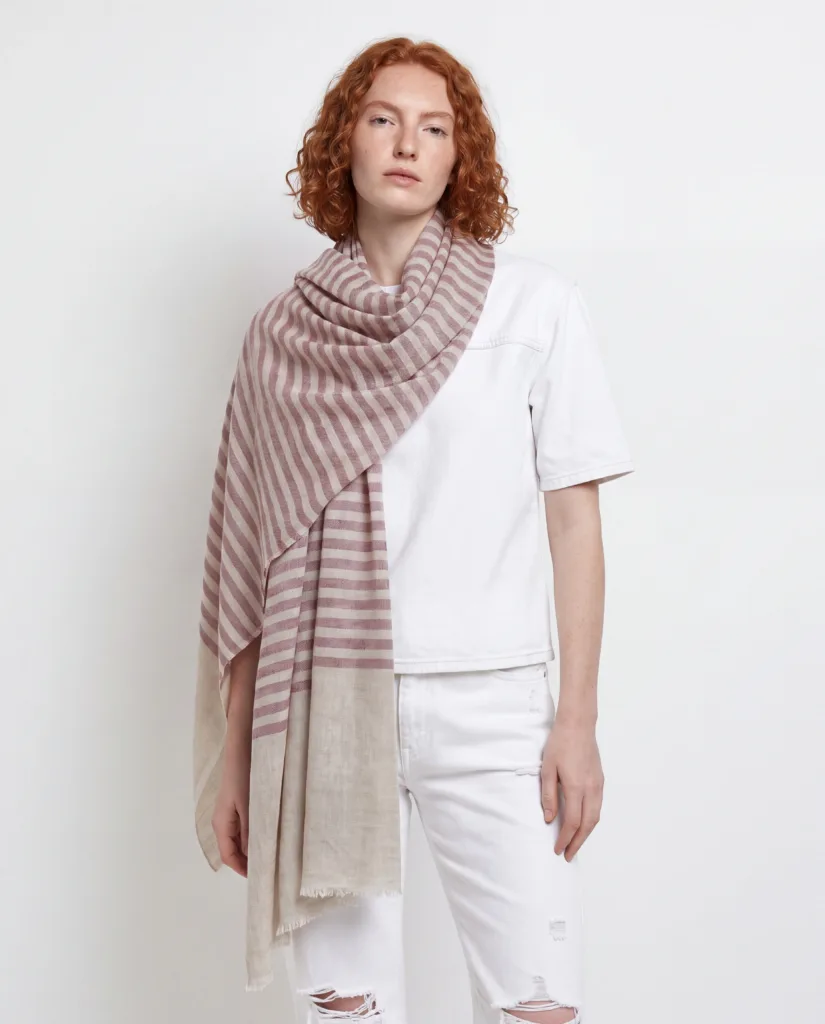
| Late Septemberfirst cold mornings | A cashmere scarf for the commute, folded into the bag once the office warms up. Saffron and amber are the colours of the month.Zaframi, Reg-e-Zar |
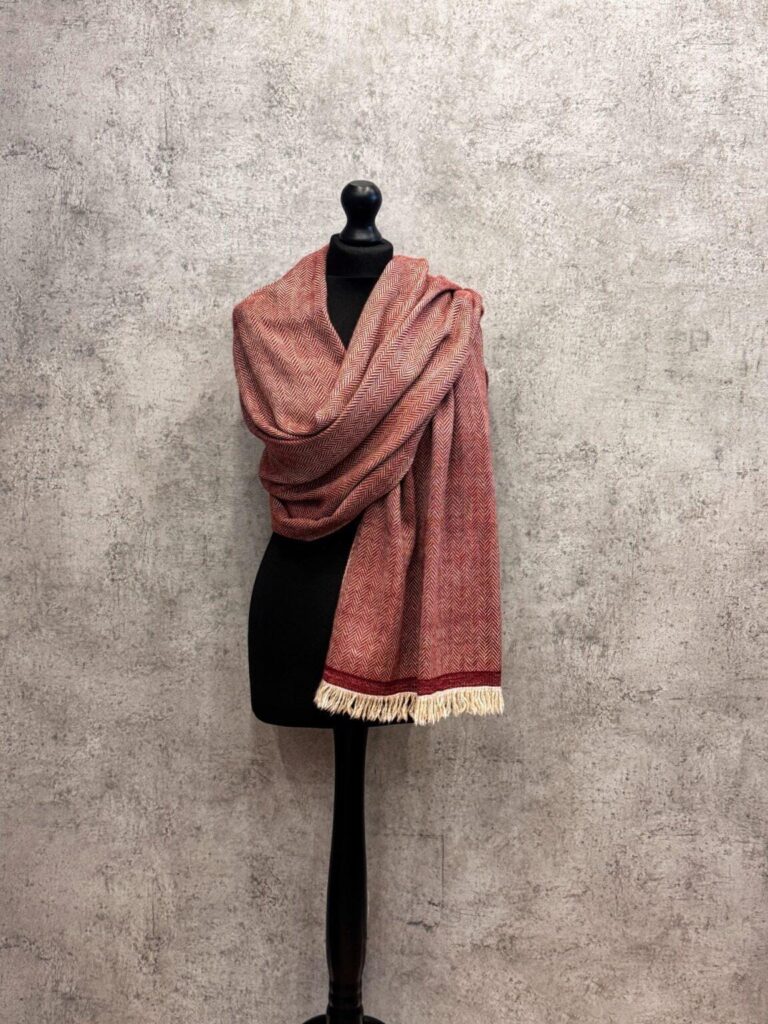
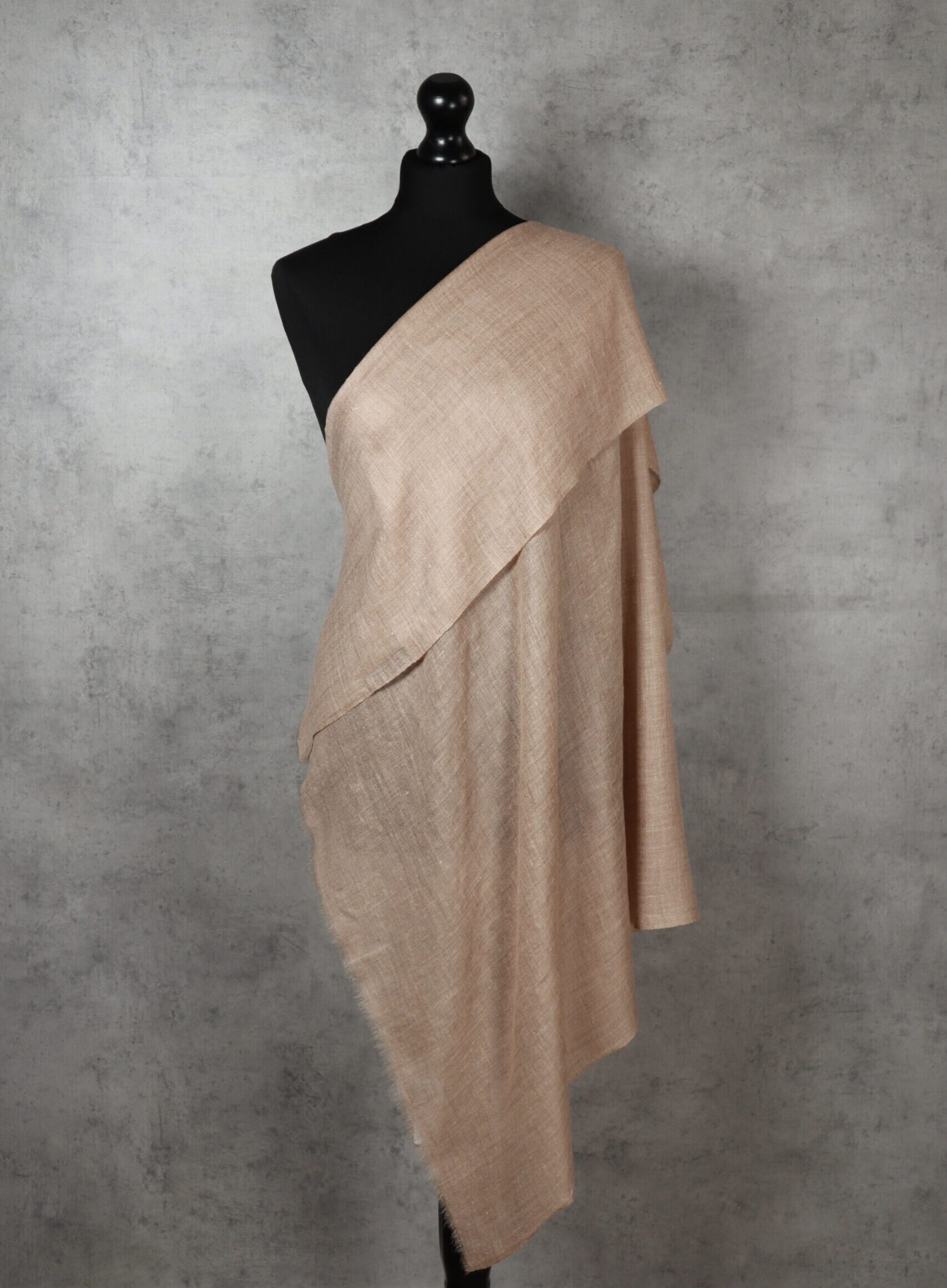
| October14 by day, rain on 12 days | Wool or cashmere, because both stay warm damp. A scarf by day and a full shawl for the evening, over the shoulders indoors and over the coat for the walk.Rustwood Herringbone, Desert Haze |
| November10 by day, 4 at night | The shawl goes under the coat collar for the walk from the car and stays on by itself inside. At home, a wool pheran; for an evening out, the velvet one.Zard-e-Khizaan, Gulzar-e-Zar, Driftwood, for men |
Part five
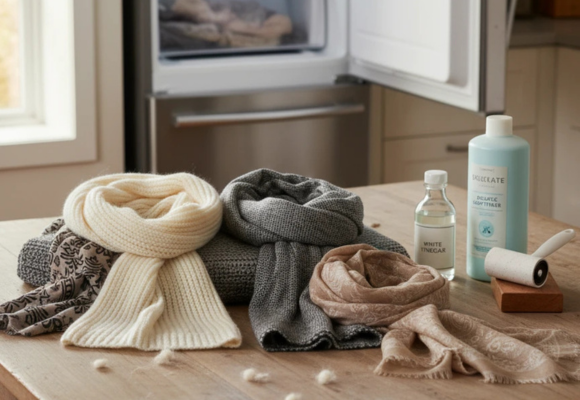
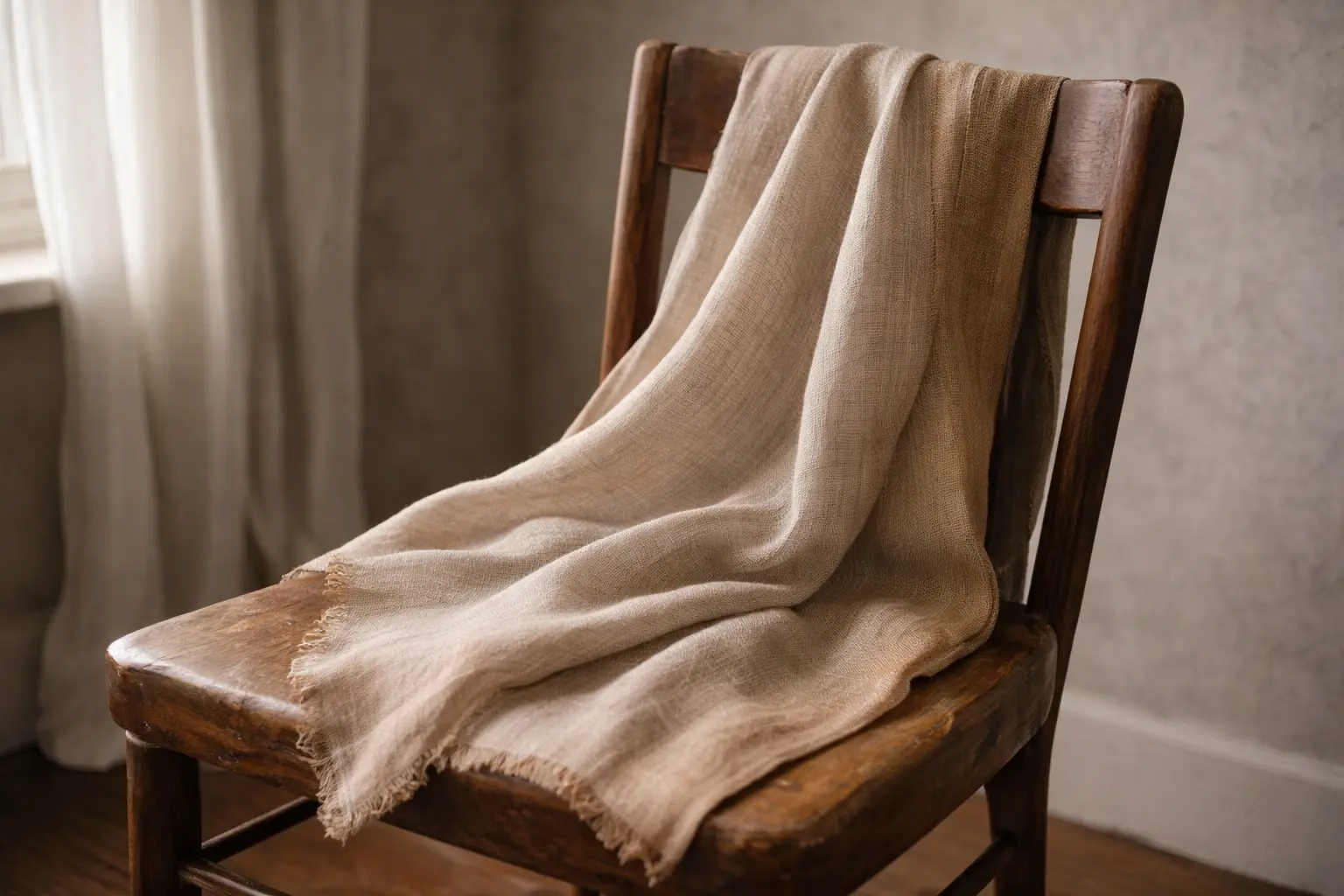
Cashmere and wool need little. After a wet day, hang the scarf over a chair overnight rather than washing it; wool sheds the moisture on its own. When it does need washing, hand wash in cool water with a wool detergent or dry clean, press the water out in a towel rather than wringing, and dry flat away from the radiator. Fold rather than hang, and put the summer’s cedar back in the drawer with it. Our guide to stopping a scarf shedding covers the first few wears.
The Autumn ’26 collection holds 82 pieces, 76 of them in stock today, from £20 to £165. Free UK delivery starts at £60, so everything from the cashmere tier up ships free and arrives in three to five working days. Unworn pieces with their tags can be returned within fourteen days.
Questions, answered
Pashmina is cashmere from one breed, the Changthangi goat, with fibre around 13 microns against a legal cashmere ceiling of 19. Finer fibre traps more air for its weight, so a pashmina shawl is warm without bulk. Neither is “three times warmer than wool”, a line that appears on retail sites with no study behind it.
A cashmere or wool scarf by day, and a full-width shawl if you will be outside after dark. A merino silk scarf at about 100 grams is a September piece and will feel thin once the daytime high drops below 14 degrees.
No. Wool fibres hold moisture without feeling wet. Let the scarf dry flat at room temperature and it recovers; the only real harm comes from a radiator or a tumble dryer.
Yes. Fold it lengthways and lay it over the collar for the walk, then wear it open over the shoulders indoors. That is the November pairing, and it is why a full-width shawl earns its price over a scarf.
The Heritage Pashmina® herringbone scarves are unisex, and the collection includes men’s shawls and scarves in wool. The Men menu lists them under Autumn ’26.
Sources: Met Office climate averages, Birmingham and London; Woolmark, wool is naturally breathable; 16 CFR 300.19, the cashmere definition; Bhattacharya 2004 on Changthangi goats; US National Weather Service on cotton in the cold; Pantone, New York autumn and winter 2026; Apparel Resources on velvet. Keats, “To Autumn”, written September 1819, published 1820, public domain.
PHOTOGRAPHY BY Kashmir Bloom, and the valley at dawn by Pexels