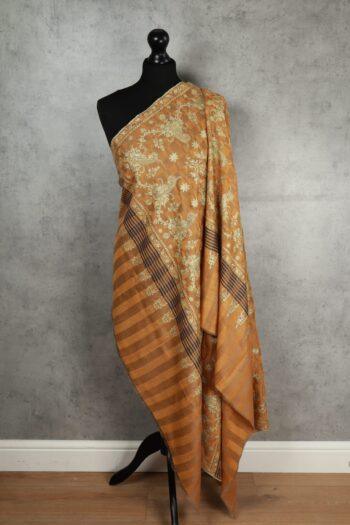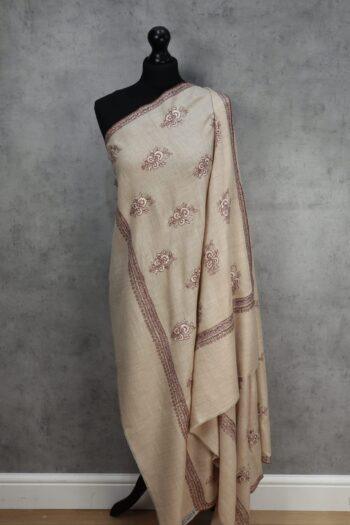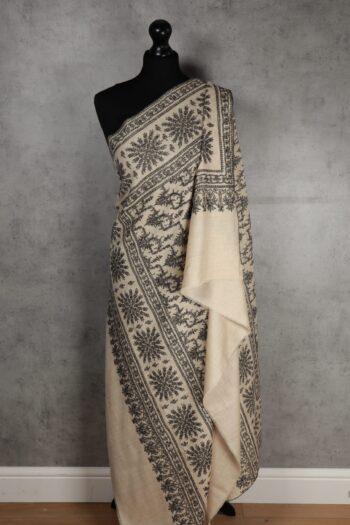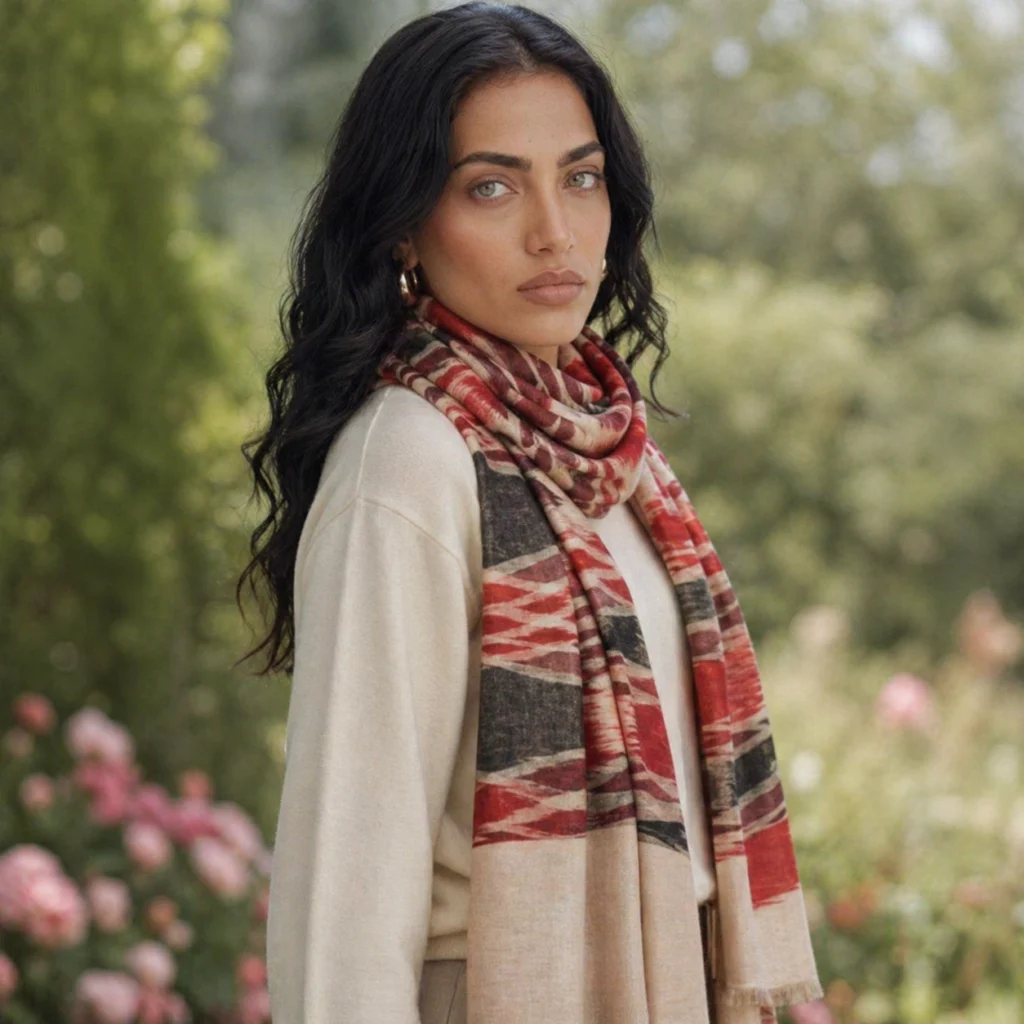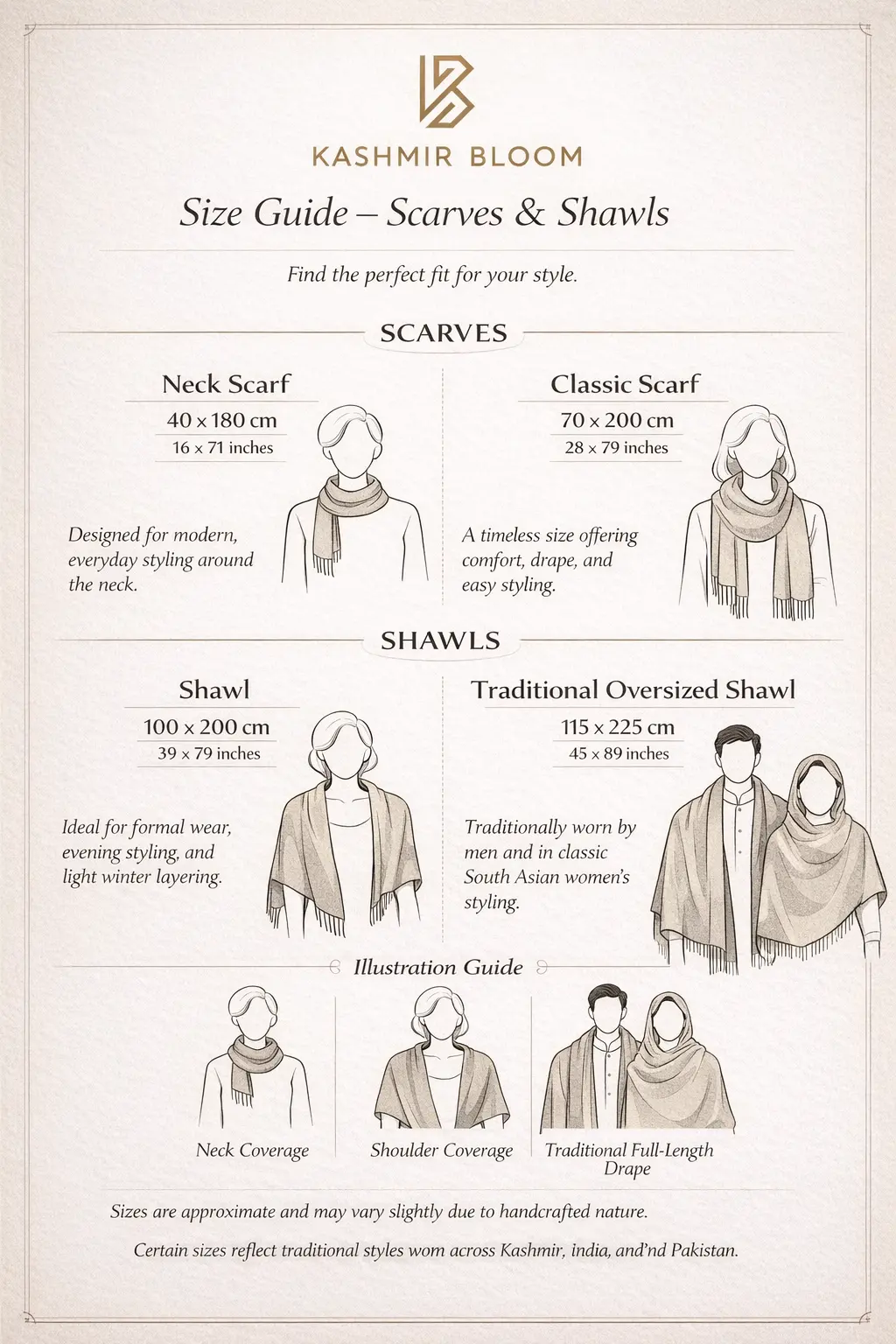

From the high winds of Ladakh to the looms of Kashmir, few textiles carry a legacy as cherished as pashmina. Yet its reputation has made it one of the most counterfeited fabrics, with shiny blends and machine-made imitations often misleading buyers about what they are truly purchasing. The result? A heritage craft reduced to confusion and compromise, making it vital to know how to identify pure pashmina shawls and invest in a pure pashmina shawl that is truly authentic.
And while imitations may look convincing, an authentic pashmina shawl has a language of its own, woven into every irregular edge, felt in its feather-light warmth, and preserved through centuries of Kashmiri craftsmanship. Learning to read these signs not only protects you from replicas, it connects you directly to the legacy of artisans who have kept the original kashmiri pashmina shawl tradition alive for generations.
In this guide, we’ll walk you through the essential tests and tell-tale details that distinguish a real pashmina shawl from lookalikes, helping you understand how to identify if the pashmina shawl i am buying is genuine? so you can confidently invest in a pure pashmina shawl and carry forward a piece of living heritage.
Why authentic pashmina matters
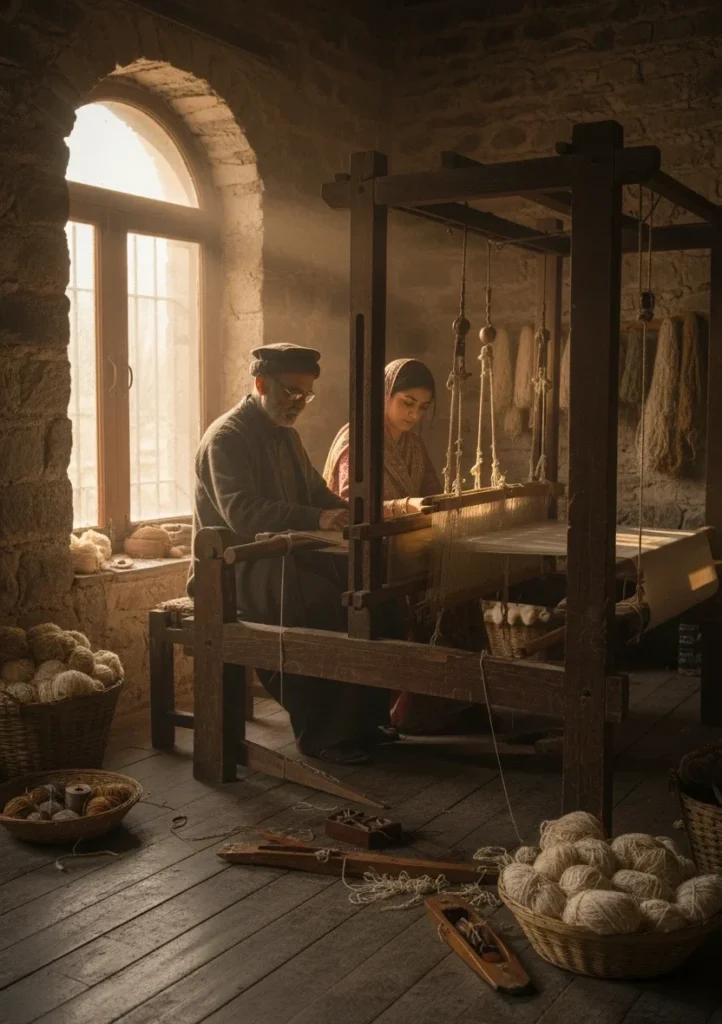
Authentic pashmina comes from the undercoat of the Changthangi goat, a breed native to the high-altitude regions of Ladakh. These fibers are extremely fine, measuring around 12 to 16 microns in diameter, and are hand-gathered and hand-spun by Kashmiri artisans to create every pure pashmina shawl.
Synthetic imitations, often labeled as pashmina or cashmere, are usually made from acrylic, viscose, or other artificial fibers. These materials can mimic the look and feel of a real pashmina shawl to some extent but lack the natural warmth, breathability, and texture found in a pure pashmina shawl.
True pashmina weaving and embroidery represent skills passed down for generations in Kashmir. When you find an original pashmina shawl, you are holding something that connects directly to this heritage and reflects the craftsmanship behind every authentic pashmina shawl.
Handwoven signs every genuine shawl shows
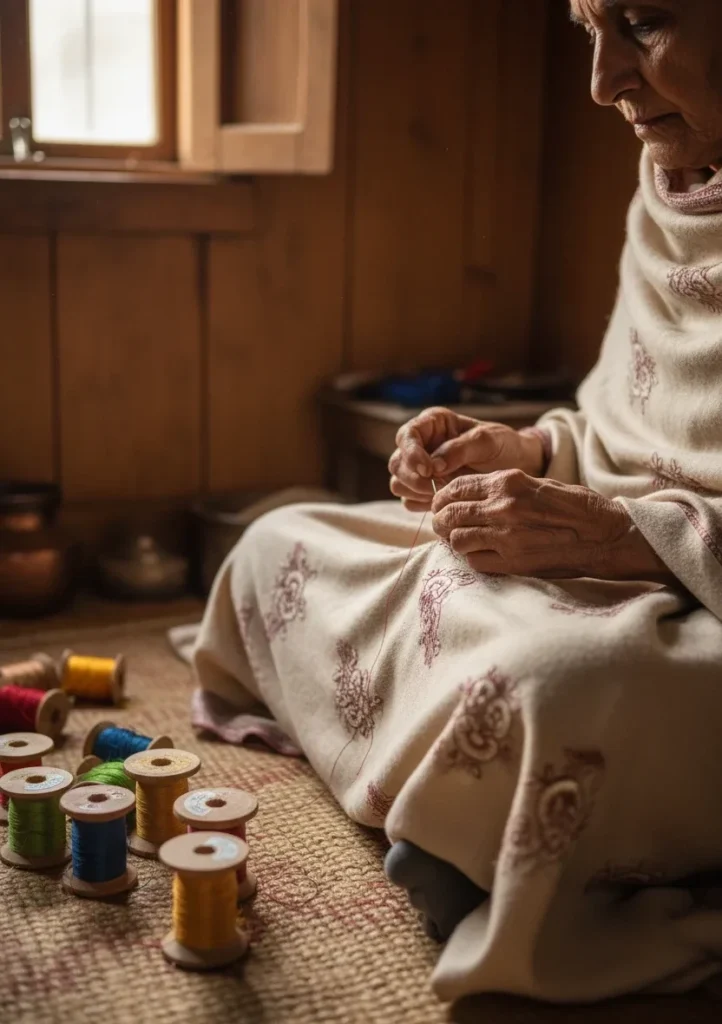
Handwoven pashmina shawls display features that do not appear in machine-made fabrics. These indicators help answer the question many buyers ask: how to identify if the pashmina shawl i am buying is genuine? and whether it is truly a pure pashmina shawl.
Loom selvedge imperfections
The edges, known as selvedges, on a handwoven pashmina shawl often appear slightly uneven. Small variations in thickness or waviness occur because the yarn is managed by hand on a traditional loom.
These natural shifts in structure are part of the hand-weaving process and will not be found in machine-woven textiles, which have perfectly uniform edges unlike an original kashmiri pashmina shawl.
Uneven sozni knot density
Sozni embroidery, done entirely by hand, shows minor differences in the spacing and tension of the stitches. Some knots or threads may be closer together or slightly looser, creating gentle irregularities across the pattern.
This variation reflects the unique hand movements of each artisan and proves the embroidery was crafted by a person, not a machine.
Delicate openness in the weave
Hold a handwoven pure pashmina shawl against the light, and you will see a fine, airy structure. The threads reveal tiny, irregular gaps, proof of hand tension guiding the loom. Machine-woven fabrics often appear dense and overly rigid.
If you are wondering what weaving patterns are typical of genuine pashmina?, look for slight irregularities, breathable structure, and handcrafted variation that define an authentic pashmina shawl.
Feathered warp-end fringe (eyelash finish)
On a classic original pashmina shawl, the fringe is simply the warp threads released from the loom. These fine, hair-like ends are trimmed and lightly teased, not twisted or knotted.
Machine pieces usually show perfectly uniform tassels, missing the organic eyelash-like finish that identifies a real pashmina shawl and confirms it is a pure pashmina shawl.
Step-by-Step Tests to Identify Whether the Pashmina Shawl You’re Buying Is Genuine: Real vs Fake
If you are asking how to identify if the pashmina shawl i am buying is genuine?, these tests will help determine whether you are investing in a pure pashmina shawl.
The ring test
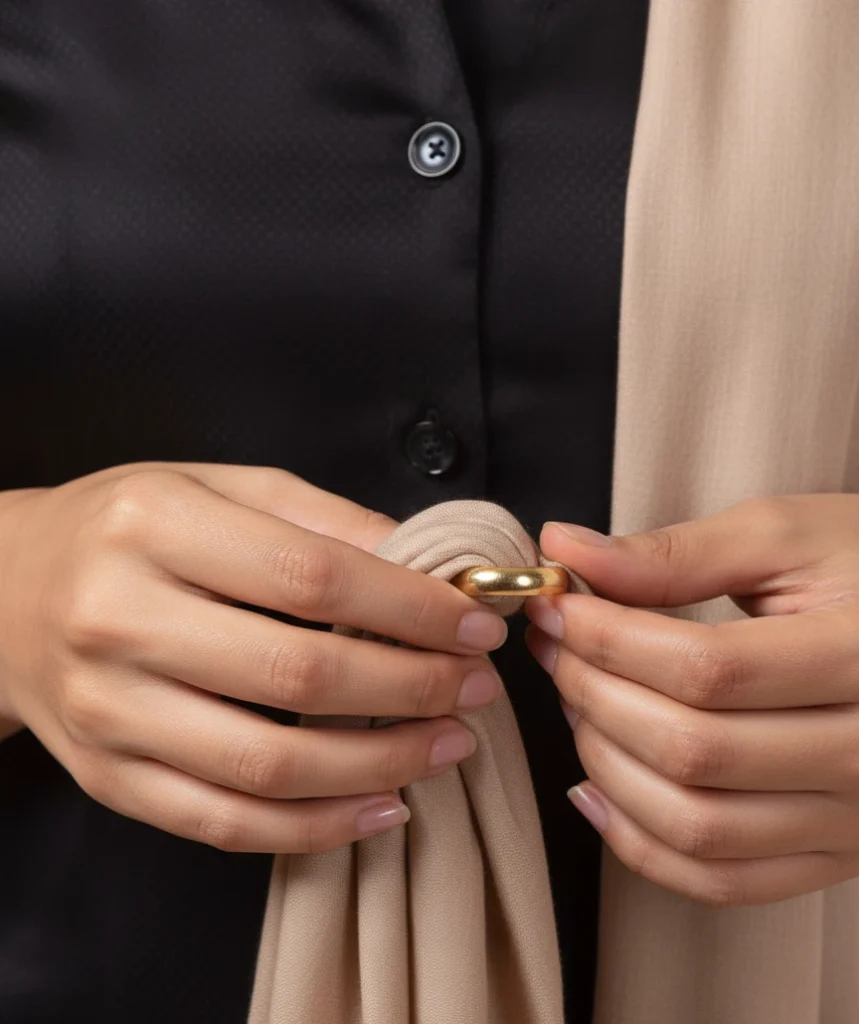
A pure pashmina shawl is made from very fine fibers, which allows it to slip smoothly through a standard wedding ring. While many assume this confirms an authentic pashmina shawl, some lightweight blends can also pass.
So the ring test alone does not guarantee a real pashmina shawl.
The static test
Rubbing two sections of a pure pashmina shawl together does not create static electricity. Synthetic fibers often generate static when rubbed.
This test helps distinguish an original pashmina shawl from artificial blends
Weave irregularity check
Handwoven pashmina typically displays small irregularities in the weave. These imperfections are expected in a pure pashmina shawl and help confirm you are handling a real pashmina shawl.
Again, if you are wondering what weaving patterns are typical of genuine pashmina?, handcrafted inconsistency is a key sign.
The burn test
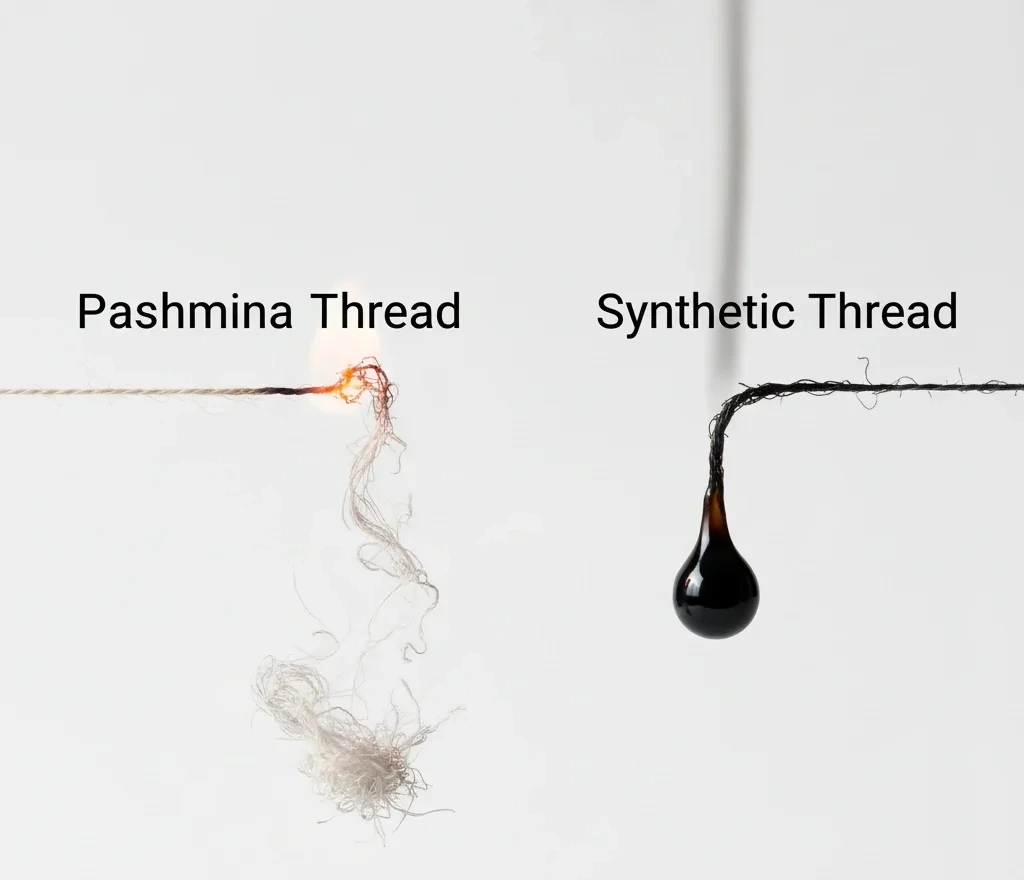
A small loose thread from a pure pashmina shawl, when burned safely, produces an odor similar to burnt hair and leaves behind a soft ash.
- Synthetic materials: Tend to melt, harden, or give off a chemical smell
- A real pashmina shawl burns like natural hair.
- This final check helps confirm an authentic pashmina shawl.
Understanding micron science and fiber origins
Diameter in microns
Genuine fibers used in a pure pashmina shawl measure between 12 and 16 microns. This extreme fineness is what makes an original kashmiri pashmina shawl softer and lighter than most cashmere products.
For comparison:
- Standard cashmere fibers: 16-19 microns
- Sheep’s wool: Often 20+ microns
- Human hair: Around 50-100 microns
The smaller the micron count, the finer the fiber. This is why every authentic pashmina shawl feels warm yet weightless.
Changthangi goat undercoat
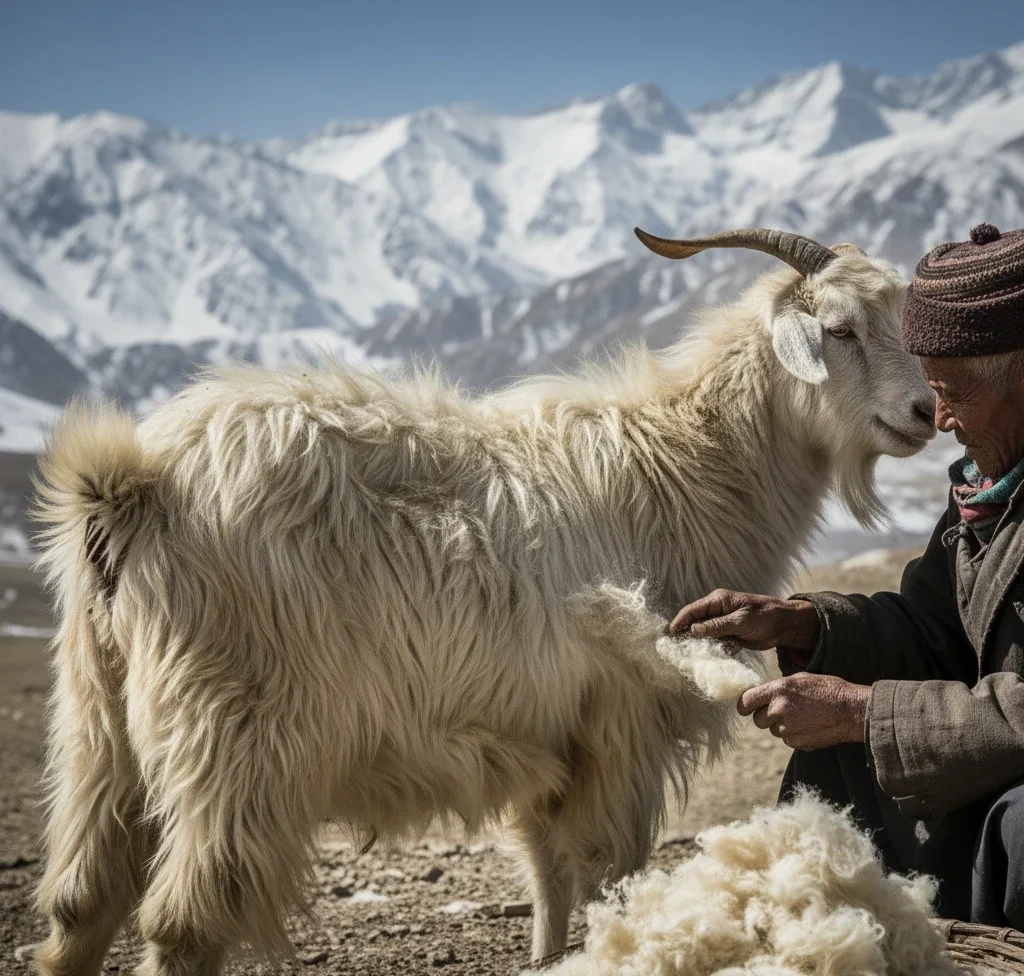
Every pure pashmina shawl comes from the undercoat of the Changthangi goat native to Ladakh. The climate and altitude directly influence fiber quality.
This undercoat is collected each spring through a gentle combing process, not shearing. The climate, altitude, and traditional care practices in Ladakh directly affect the quality and fineness of the fiber. Only fiber from this specific breed and region qualifies for an original pashmina shawl and ensures you are buying a real pashmina shawl rather than a blended imitation.
Common myths that mislead pashmina buyers
Ring test is foolproof myth
The ring test is widely used to identify pashmina. In this test, a shawl is passed through a small ring, like a wedding ring. While genuine pashmina and a pure pashmina shawl are fine enough to fit, some synthetic blends and lightweight machine-made fabrics can also pass through a ring.
The ring test alone doesn’t confirm authenticity. Multiple tests together offer clearer results when verifying an authentic pashmina shawl or confirming whether you are purchasing a real pashmina shawl.
Shine equals quality myth
Authentic pashmina has a matte or slightly lustrous finish because it’s made from natural animal fibers. A pure pashmina shawl will never have an artificial plastic shine. Synthetic and viscose materials often look shiny or reflect light more strongly, which can mislead buyers seeking an original kashmiri pashmina shawl.
High shine is usually a sign of imitation or blended fabric, not pure pashmina. Some natural blends, like wool-silk, naturally carry a subtle sheen that adds to their beauty, though it’s a different look from the understated glow of a pure pashmina shawl.
Adorn Yourself with Our Wool-Silk Scarves
Where to buy certified pashmina with confidence
Government GI certified stores
The Government of India has established Geographical Indication (GI) certification for pashmina products. GI tags identify products that originate from a specific place and meet set standards for quality and authenticity, helping buyers verify a pure pashmina shawl.
GI-certified pashmina is made from the undercoat of the Changthangi goat and is processed, spun, and woven in Kashmir and Ladakh. This certification strengthens the credibility of an authentic pashmina shawl and ensures that the piece qualifies as an original pashmina shawl. The Craft Development Institute (CDI) in Srinagar issues these tags and maintains records of approved weavers and manufacturers.
Look for these authenticity markers:
- Hologram or serial number: Official certificates include verification features
- Stitched labels: Authentic tags are sewn, not glued onto the fabric
- Government database: Tag numbers can be cross-checked with issuing authorities
Artisan-led boutiques like Kashmir Bloom
From our heritage showroom at 1532 Pershore Rd, Stirchley, Birmingham, B30 2NW, Kashmir Bloom continues the journey of authentic pashmina from Ladakh’s highlands and Kashmir’s looms to discerning admirers across the world, offering carefully sourced pure pashmina shawl collections.
Unlike boutiques that only claim transparency, we go further, maintaining direct relationships with artisan families and documenting every stage of a shawl’s journey, from the Changthangi goat’s undercoat to the final handwoven masterpiece, ensuring each pure pashmina shawl is fully traceable.
- Fiber clarity: Exact composition and micron fineness openly disclosed for every authentic pashmina shawl.
- Origin traceability: Raw material sourcing from Ladakh detailed with care to confirm each original kashmiri pashmina shawl.
- Craft transparency: Dyeing, spinning, weaving, and embroidery steps documented for every pure pashmina shawl.
- Heritage assurance: Each piece comes with provenance notes that connect buyer to artisan and validate the integrity of the original pashmina shawl.
Our commitment extends beyond the product. We ensure fair pay, ethical sourcing, and sustainability at every step of production. We work with cooperatives that value skilled craftsmanship and maintain open communication with artisans to guarantee the integrity of each pure pashmina shawl.
This rooted presence, both in Kashmir’s heritage and here in Birmingham, is why heritage lovers and collectors trust us to deliver not just a shawl, but an heirloom of uncompromised integrity and a truly authentic pashmina shawl.
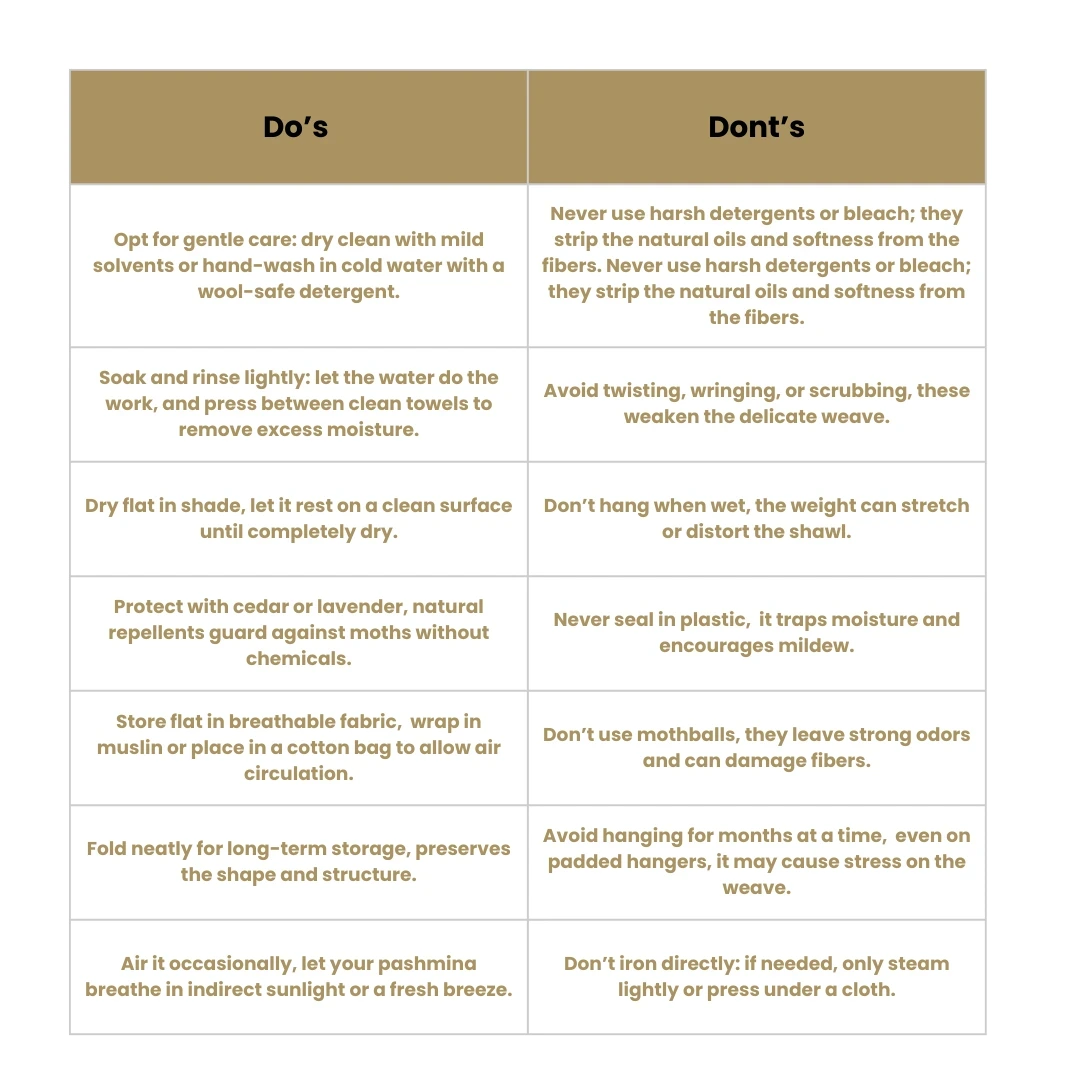
Care tips to keep your pure pashmina pristine
Own a story, not just a Pashmina shawl
A Kashmir Bloom pashmina is not just an accessory, it is a companion for life’s moments, carrying warmth, elegance, and meaning wherever it goes. Its softness endures through seasons, its design transcends fleeting trends, and its value only deepens as it becomes part of your story, especially when you choose a pure pashmina shawl crafted with integrity.
At Kashmir Bloom, we exist to preserve this legacy while offering you pieces that embody both timeless beauty and modern sophistication. Each timeless shawl is an invitation to experience the rare harmony of heritage and luxury, crafted by Kashmiri artisans, cherished by those who understand true artistry, and destined to be passed down as an heirloom for generations, just as every original pashmina shawl should be.
For those interested in viewing handwoven pashmina with full documentation, Kashmir Bloom offers private appointments and consultations about the Heirloom Edit collection at kashmirbloom.com/shop/, where you can explore a curated range of pure pashmina shawl pieces backed by full authenticity assurance.
Frequently Asked Questions on How to Identify a Pure Pashmina Shawl
1. Can machine-made pashmina shawls still be authentic?
Machine-woven pashmina using genuine Changthangi goat fiber can be authentic, though traditional handwoven pieces are considered more valuable due to their artisanal craftsmanship.
2. Does authentic pashmina always come with a GI certification tag?
Not all genuine pashmina carries official GI tags, as some artisans work outside the formal certification system, but GI tags provide the strongest guarantee of authenticity and origin.
3. How much does authentic pashmina typically cost?
The price of an authentic Pashmina can vary depending on its quality, size, and craftsmanship. A simple handwoven stole may start around £40–£150, while a solid-colour genuine shawl usually costs between £200–£300.
More detailed designs and larger handcrafted pieces often range from £300–£1,200, and intricately embroidered styles such as Sozni or Kani can reach £500–£2,500. Rare collector’s items or heirloom-quality Pashminas, prized for their artistry and heritage, may command prices of £1,500–£12,000 or more.
4. Is the ring test enough to confirm a shawl is pure pashmina?
No. While many authentic pashminas pass the ring test, fine silk and some synthetic blends can pass too. Combine the ring test with other checks—soft warmth against the skin, slight weave irregularities, absence of static, and an official GI tag—for reliable proof.
5. Is pashmina the same as cashmere?
Pashmina is a special, finer grade of cashmere. It is combed from Changthangi goats and measures only 12–16 microns in diameter, giving it exceptional lightness and softness. Standard cashmere can be thicker and sourced from several goat breeds, so it may not feel as airy or rare as true pashmina.
6. What weaving patterns are typical of genuine pashmina?
A pure pashmina shawl often features the classic ‘Chashme-Bulbul’ or diamond weave pattern. This pattern is intricate and difficult to replicate perfectly by machine, making it a hallmark of an original pashmina shawl.
7. How to identify if the pashmina shawl I am buying is genuine?
To identify a pure pashmina shawl, check for the GI mark, perform the burn test to check for the smell of burnt hair, and look for the slight weave irregularities that indicate it was made on a handloom. Buying from a reputable source is the best way to ensure you receive a real pashmina shawl.
Interested in discovering the true craftsmanship of pashmina firsthand?
Explore our exquisite collection of handwoven pashmina shawls at Kashmir Bloom. For personalized guidance on identifying and caring for authentic pashmina, email us at hello@kashmirbloom.com or call 0121 798 0032 to book a consultation.
Related Products:
-
Sold out