There is a kind of patience that cannot be manufactured. It lives in the hands of an artisan who has spent years learning to place hundreds of stitches per centimetre with nothing more than a fine needle and thread. That patience is sozni embroidery, and it is one of the most extraordinary textile arts the world has ever produced.
If you have ever held a kashmiri sozni shawl and wondered how it came to look the way it does, this is for you. We will walk you through the history, the process, the patterns, and what to look for when buying authentic sozni work today. Understanding what goes into each piece changes the way you see it. It changes the way you wear it, too.
What Is Sozni Embroidery?
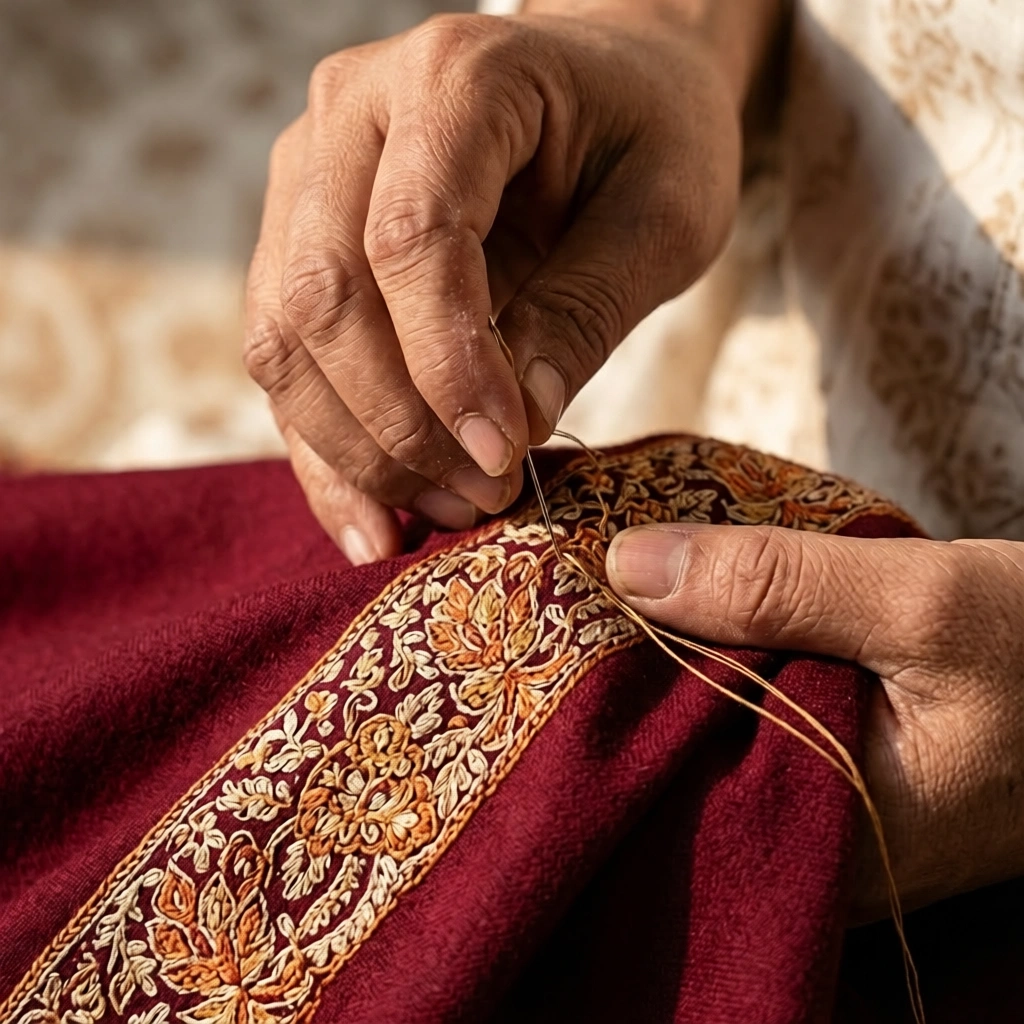
Sozni embroidery is a form of needle embroidery native to the Kashmir Valley, practised for over five centuries. The word “sozni” comes from the Persian “sozan,” meaning needle. True to its name, this is an art form built entirely on the precision of a single needle, drawn through fabric by hand with extraordinary care.
The question of what is sozni embroidery comes up often, and the short answer is this: it is a surface embroidery technique in which artisans use a thin needle and fine thread to create intricate patterns on fabric, typically wool, pashmina, or silk. What makes it different from other embroidery traditions is the density, the scale, and the sheer time involved.
A simple border design on a pashmina shawl might take one skilled artisan a month to complete. A fully embroidered shawl, where sozni embroidery covers the entire surface, can take two years or more. These are not exaggerations. The time investment is real, and it shows in the finish.
Sozni work is done entirely from the reverse side of the fabric. The artisan works with the wrong side facing up, reading the design through the weave of the cloth and placing each stitch by feel and memory as much as by sight. The right side of the fabric is never touched during embroidery. This single fact gives you a sense of the skill involved.
The History of Sozni Embroidery in Kashmir
The roots of sozni embroidery in Kashmir reach back to the fifteenth century, when the Kashmir Valley was becoming one of the great centres of textile artistry in the world. Persian influence shaped the motifs and the vocabulary of design. Mughal patronage from the sixteenth century onward elevated the craft to new heights, bringing demand from royal courts and wealthy patrons across the subcontinent.
Sozni embroidery kashmir flourished under this patronage. The famous Kashmir shawl became a prized possession across Persia, Central Asia, and eventually Europe. European traders who first encountered Kashmiri shawls in the eighteenth and nineteenth centuries were astonished by the density and fineness of the embroidery. The paisley pattern, so closely associated with Kashmir, spread across the world because of these shawls.
The craft survived colonial disruption, partition, and the upheavals of the twentieth century. It did so because the knowledge was passed within families and communities, from parent to child, from master craftsman to apprentice. Many of the artisans working today in the Kashmir Valley come from families who have practised sozni work for generations.
This is not a craft preserved in a museum. It is alive, still practised by skilled hands, still producing pieces that carry the weight of that long history.
How Sozni Embroidery Is Made: The Process Step by Step
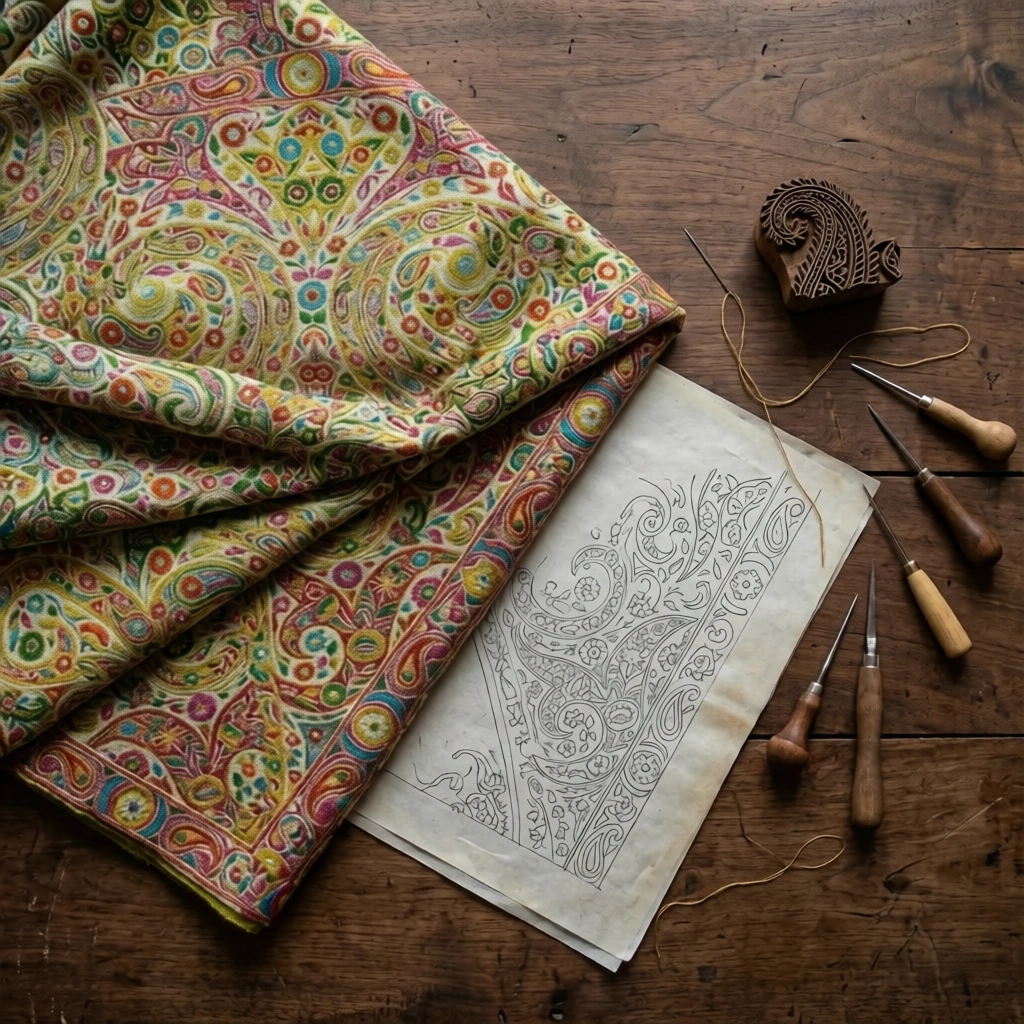
Understanding how a kashmiri sozni embroidery piece is made helps you appreciate what you are holding. There are no shortcuts in this process. Every stage requires precision.
The Naqash: Design Creation
Before any needle touches fabric, a designer known as a Naqash creates the pattern. Traditional designs draw from a vocabulary built over centuries: chinar leaves, lotus flowers, paisleys, flowering vines, birds, and geometric lattice work. The Naqash traces the design onto thin paper, then transfers it onto the fabric using a carved wooden block dusted with chalk or charcoal paste.
This imprint on the fabric is the map the embroiderer will follow, working from the reverse side.
The Embroiderer at Work
The artisan sits with the fabric reversed, the chalk outline visible through the weave. Using a fine needle threaded with silk or high-quality cotton, they begin to fill in the design, stitch by stitch. The thread is pulled through from the back, and the work on the visible face of the fabric builds up gradually.
The stitch count varies enormously depending on the grade of work. Light sozni embroidery might involve five stitches per centimetre. The finest sozni embroidery can reach five hundred stitches per centimetre. At that density, the embroidery and the fabric itself begin to feel like a single surface.
One important rule governs sozni work: the artisan who begins a piece finishes it. Embroidery is not passed between workers like a production line. The tension, the rhythm, and the character of the stitchwork must remain consistent throughout. Handing a piece to another embroiderer mid-way would alter the character of the work in ways a trained eye can detect.
The Sozni Work Shawl: Levels of Coverage
A sozni work shawl can be finished to different levels of embroidery coverage:
Border work
Border work covers the edges and ends of the shawl with decorative panels. This is the most common form and takes weeks to months.
Jaali work
Jaali work creates an open lattice pattern across the fabric. The fine mesh-like embroidery produces a delicate, almost lace-like effect.
Sozni Jama
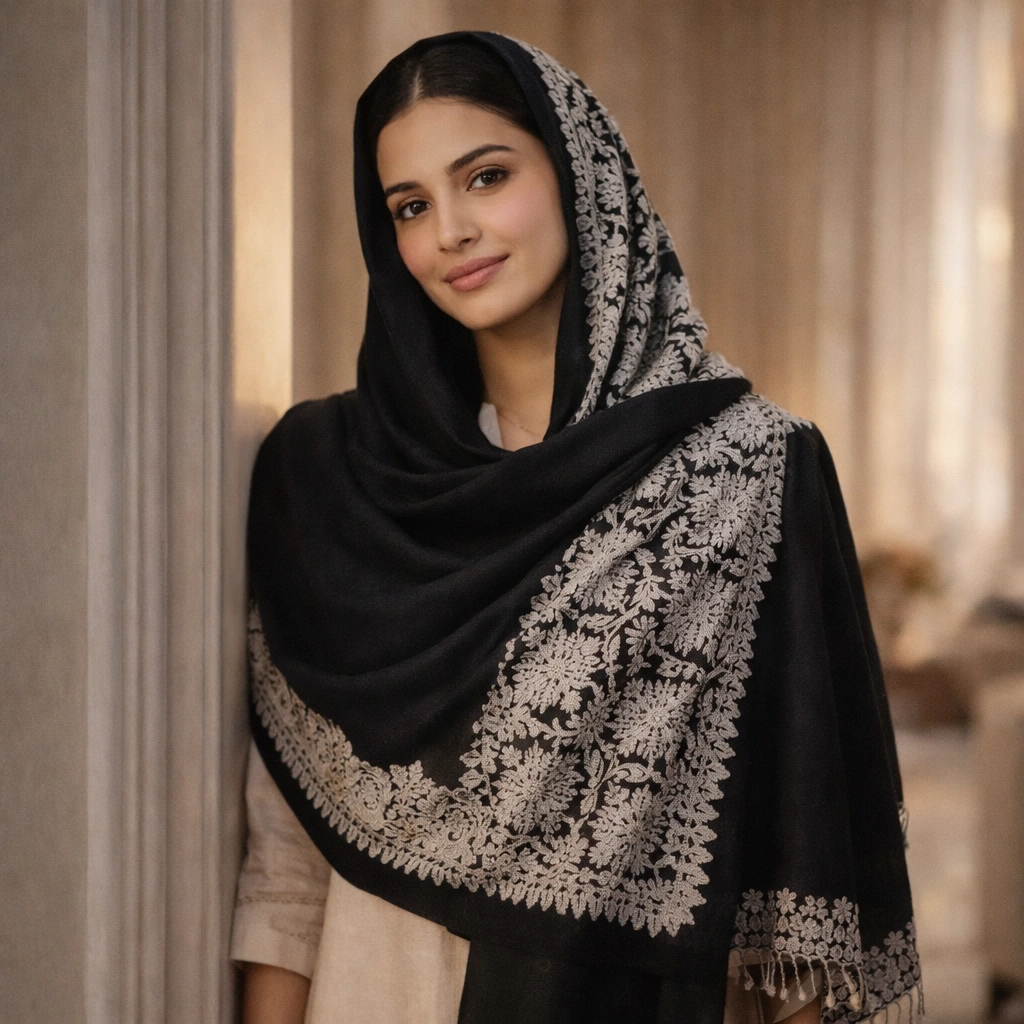
Sozni Jama is full-coverage embroidery across the entire surface of the shawl. This is the highest tier of sozni work, taking one to two years or longer to complete. A sozni work shawl finished to this standard is genuinely a lifetime piece.
Sozni Embroidery Motifs and Their Meaning
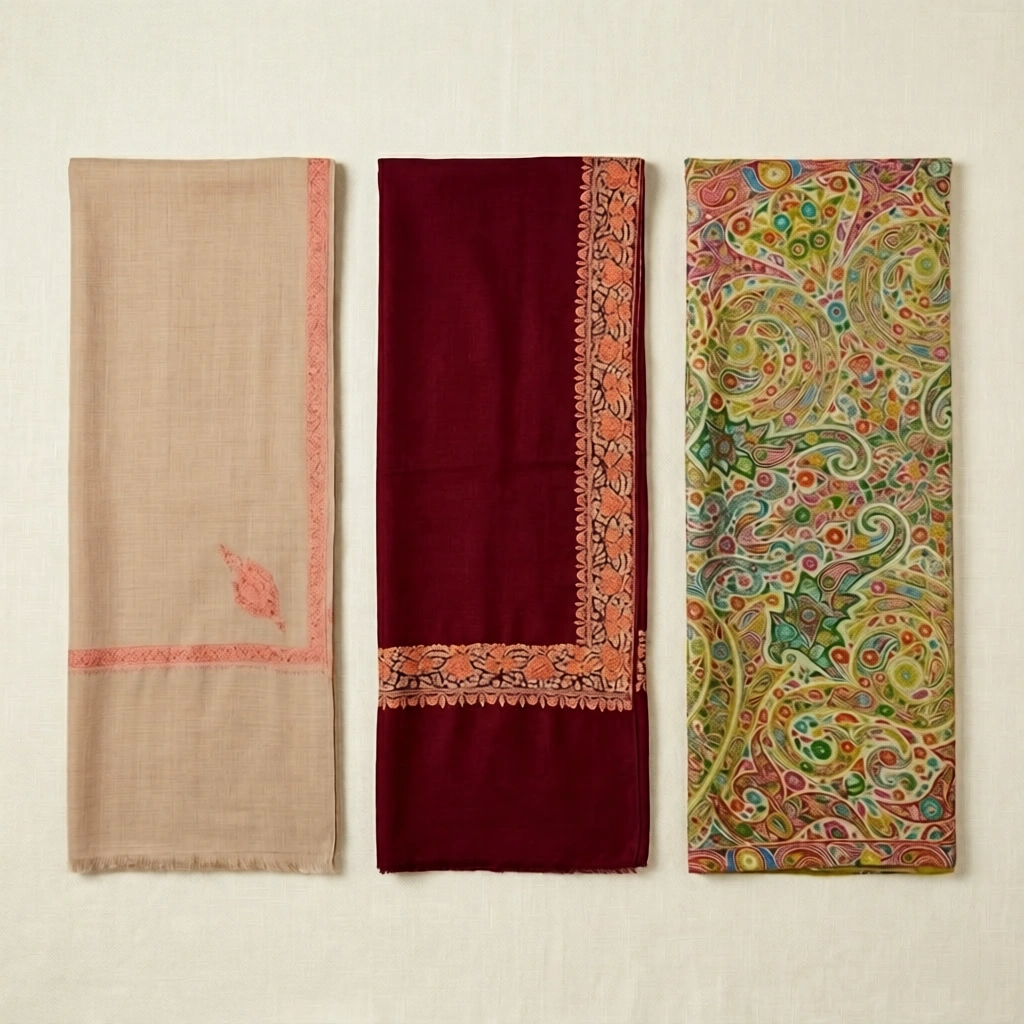
The motifs used in sozni embroidery are not decorative accidents. Each design carries meaning rooted in the natural and cultural landscape of Kashmir.
The chinar leaf, a symbol of Kashmir itself, appears in sozni embroidery across shawls, stoles, and pherans. The lotus represents purity and spiritual depth. The paisley, called “buta” in Kashmiri, symbolises the teardrop or the mango, and carries associations with prosperity and abundance. Flowering vines suggest life and growth. Geometric jaal patterns reflect the intricate lattice windows of Kashmiri architecture.
When you look at a kashmiri sozni shawl and trace a vine from one end to the other, you are following a design language that artisans have been refining for five centuries. The vocabulary has evolved, but the connection to Kashmir’s natural world remains constant.
Colour in sozni embroidery follows similar thoughtfulness. Traditional pieces often use natural dyes, with saffron yellows, indigo blues, deep greens, and madder reds drawn from the surrounding landscape. Contemporary sozni work has expanded the colour range, but the best pieces still honour the tonal richness that gives Kashmiri embroidery its warmth.
What Is a Sozni Stole and How Does It Differ from a Shawl?
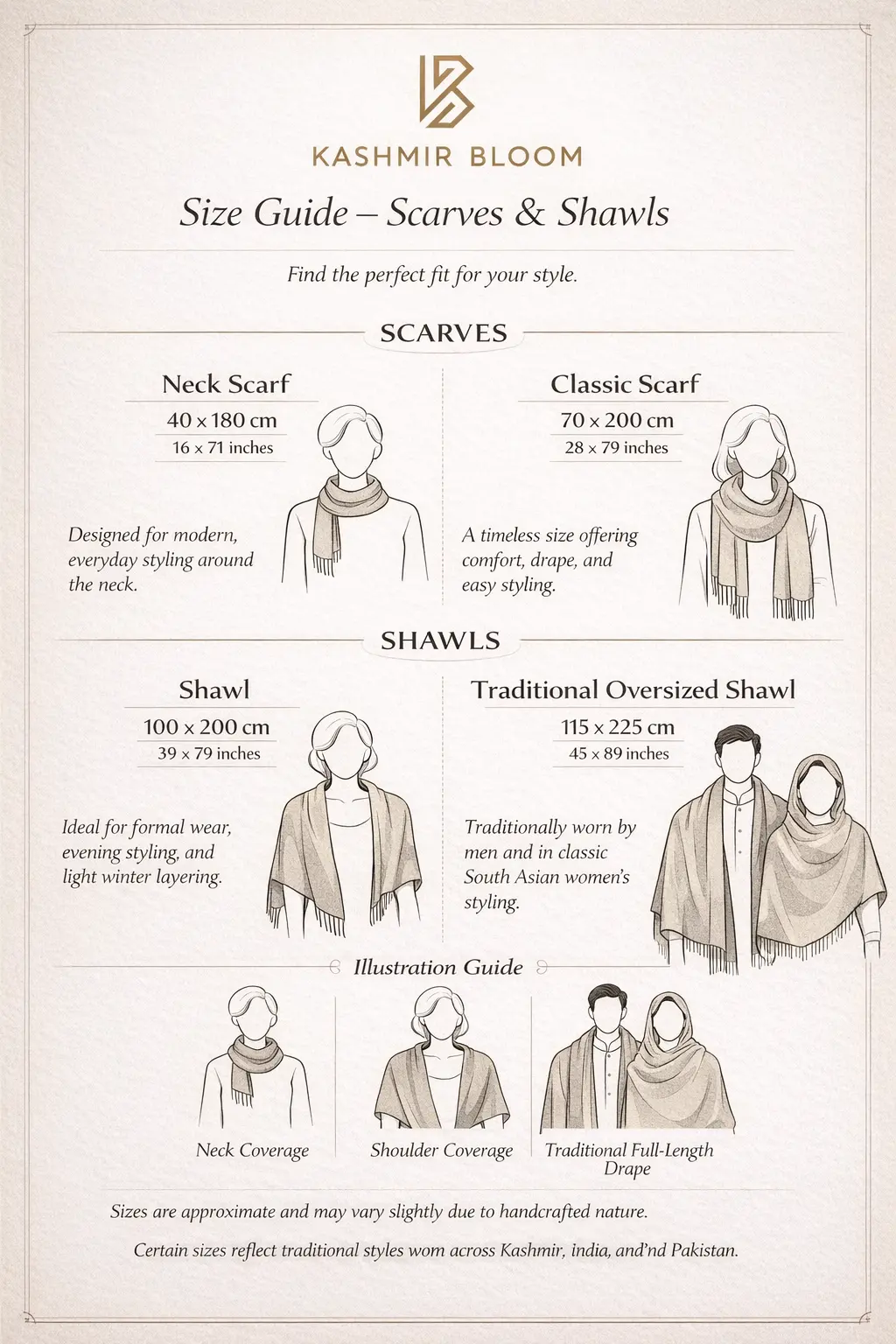
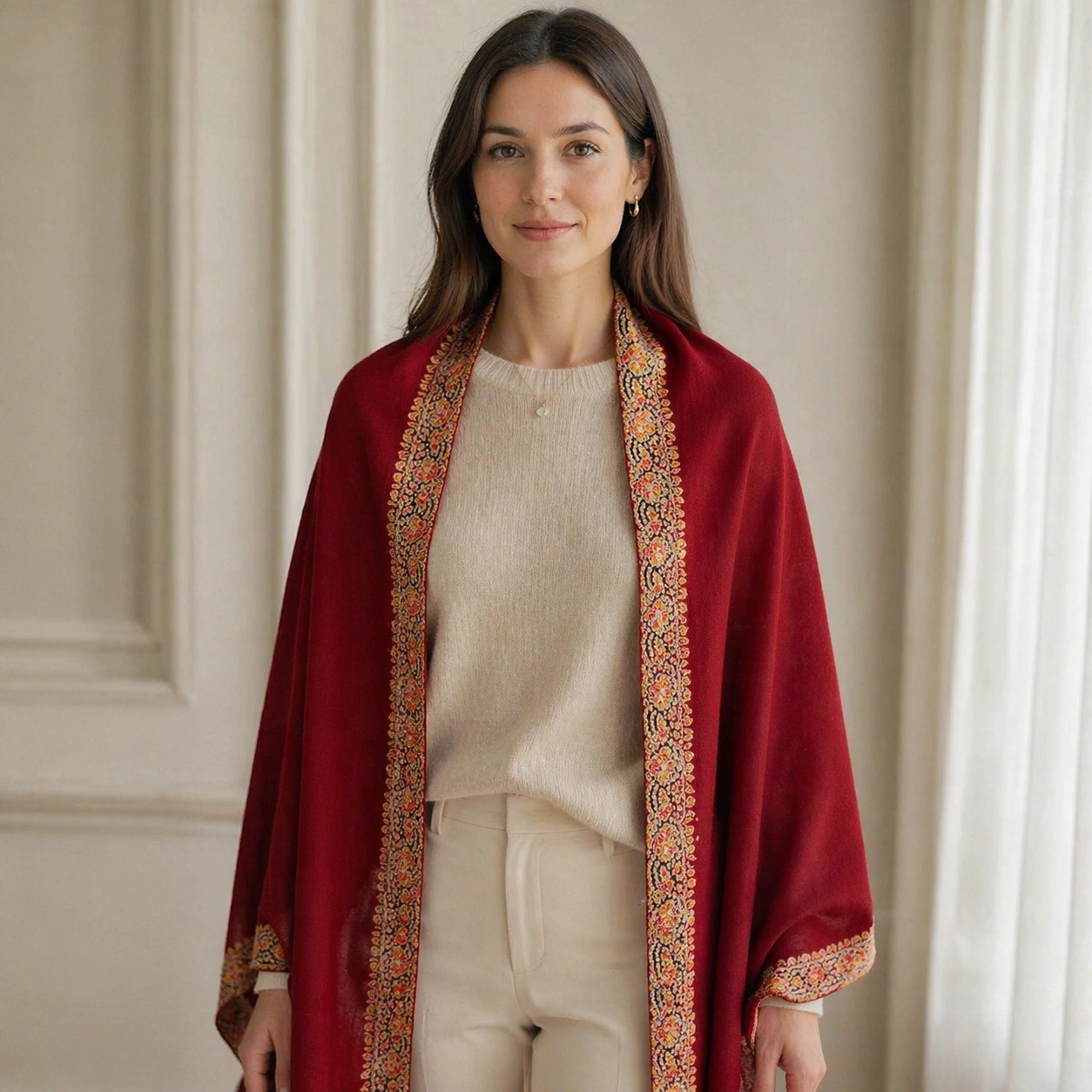
A sozni stole is a narrower, lighter piece than a traditional shawl, typically measuring around 200 cm by 70 cm. The sozni embroidery on a stole often focuses on the borders and end panels, creating a piece that is elegant and wearable for everyday occasions as well as formal ones.
A sozni stole works beautifully draped over the shoulders with occasionwear, or worn loosely around the neck with simpler outfits. Because the base fabric is lighter and the embroidery coverage tends to be less dense than on a full shawl, a stole is often the ideal starting point for someone discovering sozni work for the first time.
A full sozni embroidery shawl is a grander statement piece. Larger, heavier, and usually more densely embroidered, a sozni embroidery shawl is the piece you reach for at weddings, formal gatherings, or significant occasions. It is also the piece most likely to become a family heirloom, passed from one generation to the next.
Both carry the same craftsmanship. The difference lies in size, weight, and occasion.
Sozni Phirans: Wearing the Embroidery as a Garment
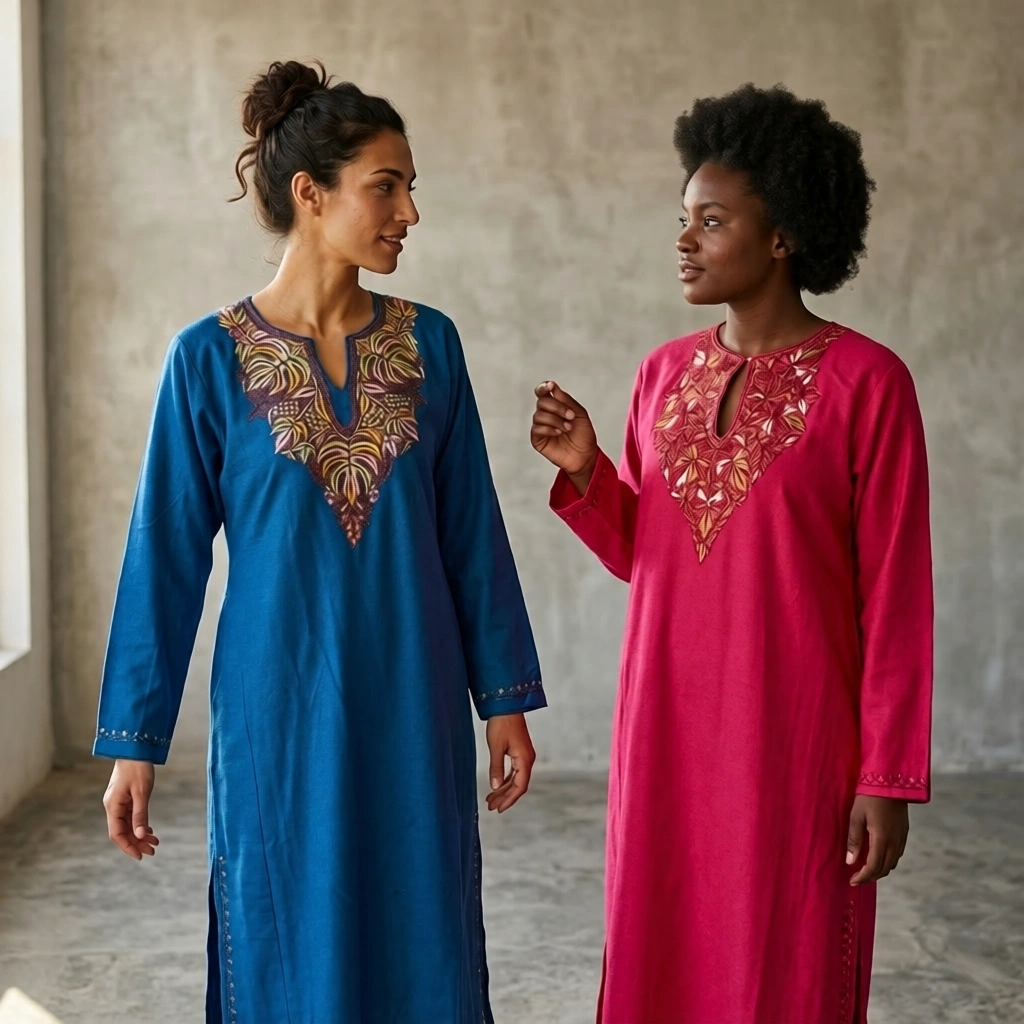
Most people encounter sozni embroidery on shawls and stoles, but the craft extends to garments too. Sozni phirans are traditional Kashmiri robes, typically long and loose-fitting, with sozni embroidery worked around the neckline, cuffs, and front opening.
The pheran is the most iconic garment in Kashmiri traditional dress. Worn by both men and women, it is shaped for the cold mountain climate and has been a central part of Kashmiri identity for centuries. When adorned with sozni phirans, the garment becomes something more than functional outerwear. It becomes a wearable expression of Kashmiri artistry.
Sozni phirans worn at weddings and celebrations carry particularly dense embroidery, often in jewel tones worked across the chest and hemline. Everyday sozni phirans tend toward lighter work, with delicate border patterns that are refined without being overwhelming.
You can explore Kashmir Bloom’s hand-embroidered pheran collection to see how sozni work translates into a garment you can actually wear.
How to Identify Authentic Sozni Embroidery
This is the question that matters most when buying. The market for Kashmiri textiles includes pieces that claim handmade credentials they do not have. Knowing what authentic sozni embroidery looks and feels like protects you.
Here is what to look for.
Check the reverse side
Authentic sozni work shows the mirror image of the pattern on the back of the fabric. The reverse side will look clean, with thread paths that mirror the front design. Machine embroidery produces a different pattern on the reverse, often showing looped or chaotic thread work.
Look for irregularity
Human hands produce slightly irregular stitches. This irregularity is a quality signal, not a flaw. Perfectly uniform stitching at high density is more likely machine work than hand sozni embroidery.
Feel the thread
Silk thread used in sozni work has a natural lustre and warmth. Synthetic threads feel different under the fingers, often cooler and more plastic-like.
Ask about the time taken
A reputable seller should be able to tell you roughly how long the embroidery on a piece took to complete. If no one can answer this question, that tells you something.
At Kashmir Bloom, every embroidered piece is labelled with full transparency. The Noor e Zar Sozni Shawl is one example of a piece where the craftsmanship is real, the provenance is clear, and no claims are inflated. That transparency is something we believe every buyer deserves.
Sozni Embroidery on Different Fabrics
Sozni embroidery appears most famously on pashmina, but it is worked on a range of fabrics across different price points and occasions.
Pashmina
Pashmina is the most prized base for sozni embroidery kashmir. The fineness of the fibre allows the embroidery thread to sit delicately on the surface without distorting the weave. A kashmiri sozni embroidery piece on pure pashmina combines two of Kashmir’s greatest crafts.
Wool
Wool provides a sturdier ground for sozni work. Sozni shawl pieces on wool tend to carry bolder, more visible embroidery and are often used for outerwear and heavier wraps.
Silk
Silk allows for a different quality of embroidery. The sheen of the silk base plays against the thread to create a luminous effect. Silk sozni stole pieces are popular for formal occasions and gifting.
You can explore Kashmir Bloom’s full range of hand-embroidery scarves and stoles to see how sozni embroidery translates across different fabrics and occasions.
Caring for Your Sozni Embroidered Pieces
Sozni embroidery pieces deserve thoughtful care. The time invested in creating them makes it worth caring for them properly.
Dry cleaning is the safest option for heavily embroidered sozni work shawl pieces and phirans. If hand washing, use cool water and a small amount of gentle wool wash. Never wring or twist the fabric. Press the water out gently and lay the piece flat to dry, away from direct sunlight.
Store sozni embroidery pieces folded in clean cotton or muslin cloth. Avoid plastic bags, which trap moisture. Cedar blocks placed nearby will deter moths without the harshness of chemical mothballs.
Treat these pieces as the heirlooms they are. Cared for properly, a sozni shawl or stole will outlast many fashion trends and can be passed on as a genuine family piece. Our guide on how to store scarves covers this in more detail.
Why Sozni Embroidery Matters Today
The future of sozni embroidery depends on demand. When buyers choose authentic, hand-embroidered pieces over machine-produced imitations, they support the artisans who keep this craft alive. They make it economically viable for families in the Kashmir Valley to continue passing these skills to the next generation.
This is not sentimentality. It is economics. Every authentic sozni stole or sozni shawl purchased from a brand that sources honestly represents real income for a real artisan. It sustains a living tradition.
When you buy a piece of genuine sozni embroidery, you are not just buying something beautiful. You are participating in the preservation of a craft that has survived five centuries. That is worth understanding clearly. It is also worth communicating when you gift one.
If you want to read more about what separates genuine Kashmiri craft from imitation, our piece on handwoven versus machine-made textiles goes deeper on why the distinction matters for heirlooms.
Kashmir Bloom sources every embroidered piece directly from artisans in Kashmir. We see the work being made. We label every piece with full fibre and technique transparency. You can read about how we do this on Our Transparency page.
If you are ready to explore pieces, our Kashmiri shawl collection is the place to start.
Frequently Asked Questions
What is sozni embroidery?
Sozni embroidery is a traditional hand needle embroidery art from the Kashmir Valley, practised for over five centuries. A single artisan uses a fine needle and thread to create intricate patterns on fabric, working from the reverse side of the cloth. It is most commonly seen on pashmina shawls, wool stoles, and traditional Kashmiri pherans.
How long does sozni embroidery take to complete?
It depends on the density of the work. A simple border design on a sozni embroidery shawl may take one to two months. Jaali (mesh) work takes longer. A full-coverage sozni embroidery piece, where the pattern covers the entire surface of the shawl, can take one to two years for a single skilled artisan to finish.
How can I tell if sozni work is genuinely handmade?
Turn the piece over and examine the reverse side. Authentic sozni embroidery shows the mirror image of the front pattern on the back. You will also notice slight natural irregularities in the stitch spacing, which is a mark of hand work. Machine embroidery produces a different and usually more chaotic reverse pattern.
What fabrics are used for sozni embroidery in Kashmir?
Pashmina is the most prized base for kashmiri sozni embroidery, but sozni work also appears on wool, silk, and blended fabrics. Pashmina offers the finest ground and allows the embroidery thread to sit most delicately on the surface.
What is the difference between a sozni stole and a sozni shawl?
A sozni stole is narrower and lighter than a full shawl, typically used for everyday or semi-formal wear. A sozni shawl is larger, more substantial, and often carries denser embroidery. Both are hand-embroidered in the sozni tradition. The choice between them usually comes down to occasion and how you plan to wear or gift the piece.
Are sozni phirans still made today?
Yes. Sozni phirans remain a living part of Kashmiri dress tradition. They are worn at weddings, family gatherings, and celebrations, and are available from brands that source directly from Kashmir Valley artisans.