Spring is when your scarf should feel like a second skin, not a safety blanket. The heavy knits go away, the layers come down, and suddenly the right scarf becomes one of the most expressive things in your wardrobe. But choosing spring scarves well, the fabric, the weight, the pattern, how you actually tie and wear them, takes more thought than most people give it.
This guide covers all of it. The fabrics worth choosing. The styles that work. Specific tying techniques. And how to find the spring scarves that you’ll reach for every year, not just this one.
Why Spring Scarves Are Different from Winter Ones
The purpose shifts entirely. In winter, a scarf is insulation. In spring, spring scarves are about completing a look, adding colour, texture, and intention to outfits that don’t need to be bundled up.
That shift in purpose means the fabric choice becomes the most important decision you’ll make. A wool scarf that felt perfect in January will feel oppressive by April. And a purely synthetic piece will look flat against the softer light of the season.
The sweet spot for spring scarves sits in natural fibres that breathe. Specifically: lightweight cashmere, wool-silk blends, and hand-painted or hand-woven wool. These fabrics move with you. They hold colour beautifully in natural light. And they feel genuinely different against the skin from anything synthetic.
A lot of buyers make the mistake of searching for “spring silk scarves” and settling for polyester labelled as satin. It’s worth understanding what you’re looking at before spending money on something that won’t serve you well.
What Fabric Should Spring Scarves Be Made From?
This question trips people up more than any other. Here’s what actually matters.
Cashmere in spring
Many people assume cashmere only belongs in winter. That’s not quite right. A lighter-weight cashmere, woven with a denser but finely constructed weave, sits beautifully in the 10°C-to-18°C range that defines British spring. The Heritage Pashmina® Ikat Scarves in Kashmir Bloom’s spring collection weigh 165 grams. That’s notably lighter than a winter wrap, but enough body to drape elegantly and provide real comfort on a cool evening.
Wool-silk blends
The Feel The Air Scarf, made from 80% wool and 20% silk, shows exactly why this combination works for spring. The wool provides warmth without weight. The silk adds a subtle sheen and smoothness that makes the fabric feel different from pure wool. It’s the kind of piece you barely feel you’re wearing.
Hand-painted wool-silk
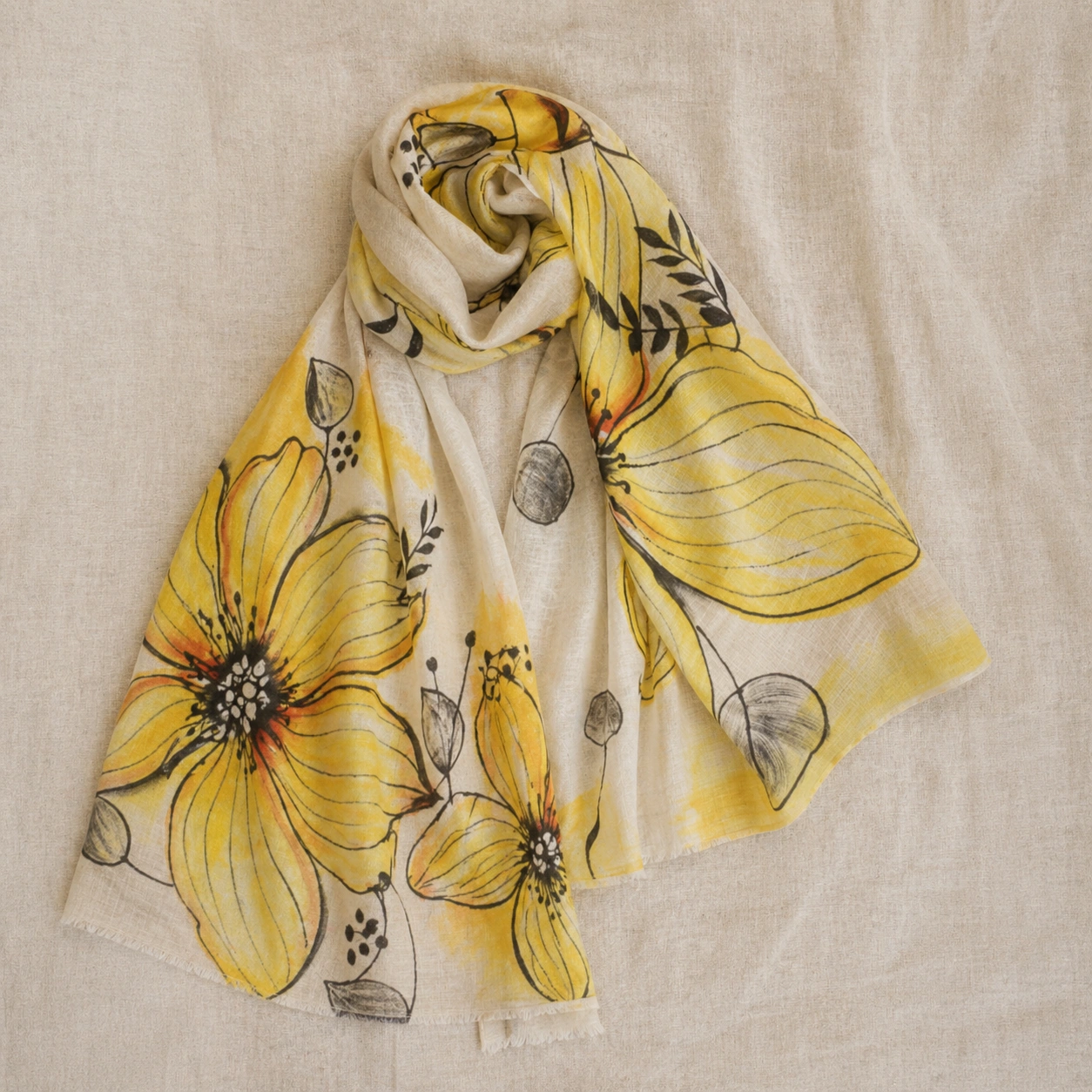
The Painted Dream Scarf takes the wool-silk blend and adds wearable art. Hand-painted with bold florals and abstract designs, it delivers spring colour in a completely different way from a printed piece. No two are identical. That matters when you’re paying for something you expect to last.
Synthetic alternatives, viscose, polyester, “silky” fabrics, look noticeably different in person. They flatten in natural light. They don’t move the same way. If you’re buying spring scarves for women as an investment rather than a one-season accessory, fabric honesty should be the first thing you look for in a brand.
The Spring Scarves Worth Knowing from Kashmir Bloom’s Spring Collection
Kashmir Bloom’s spring collection contains 14 pieces across three distinct product families. Here is what each offers.
The Heritage Pashmina® Kashmiri Ikat Scarves
These are the statement pieces of the collection. Eleven colourways, each named for what it evokes: Rosewood Blush, Amethyst Drift, Saffron Mist, Orchid Haze, Rose Bloom, Rosewood Mirage, Amber Ash Horizon, Fuchsia Blush Strata, Saffron Smoke Lattice, Azure Drift, Coastal Mist.
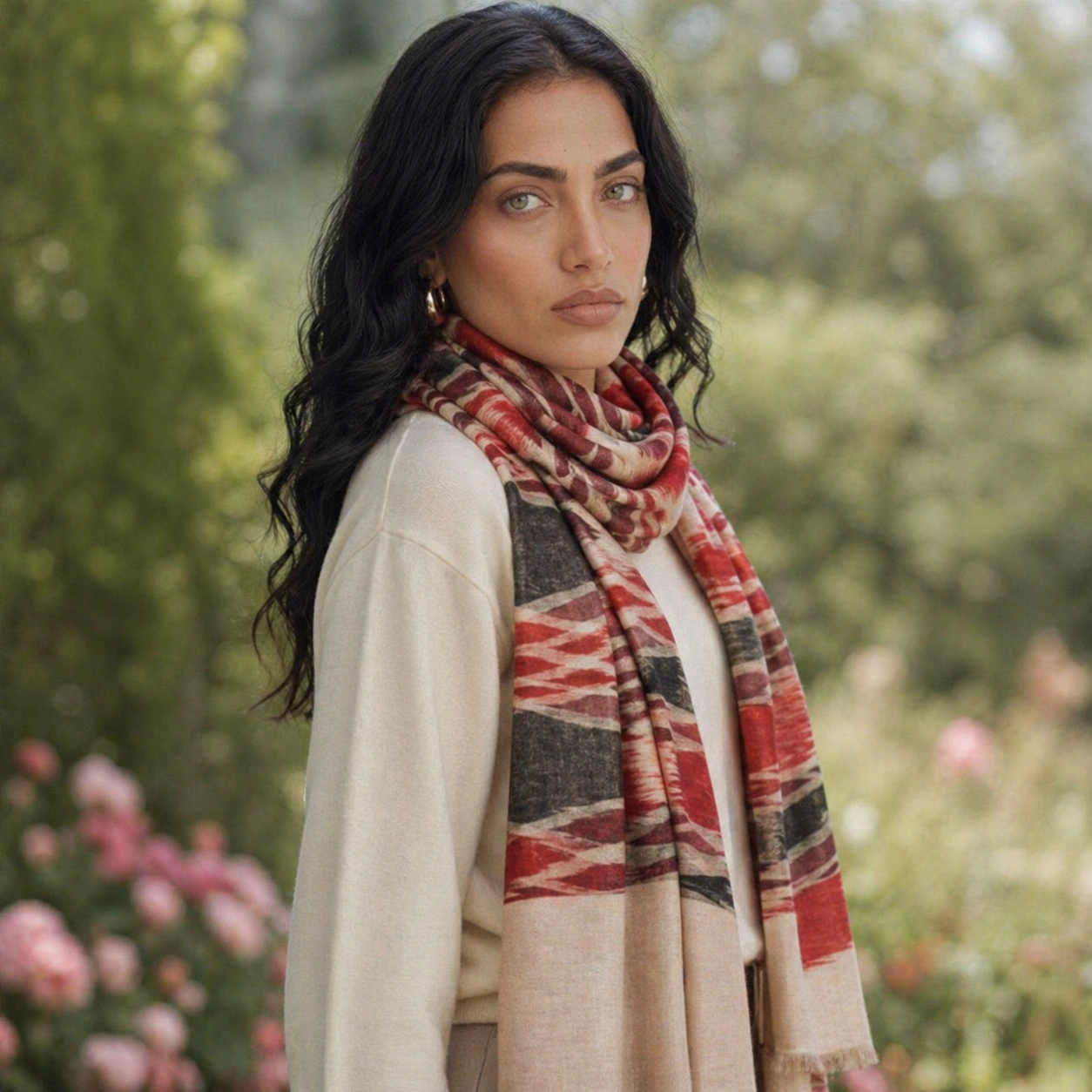
Each uses the Ikat technique. Ikat, pronounced ee-kat, is a method in which the yarns are resist-dyed before weaving, creating patterns with soft, feathered edges rather than sharp lines. The result is the fluid, almost painterly stripe you see in these pieces. It’s a technique with deep roots across Central Asia and Kashmir, and it gives these scarves a character that no screen-print can replicate.
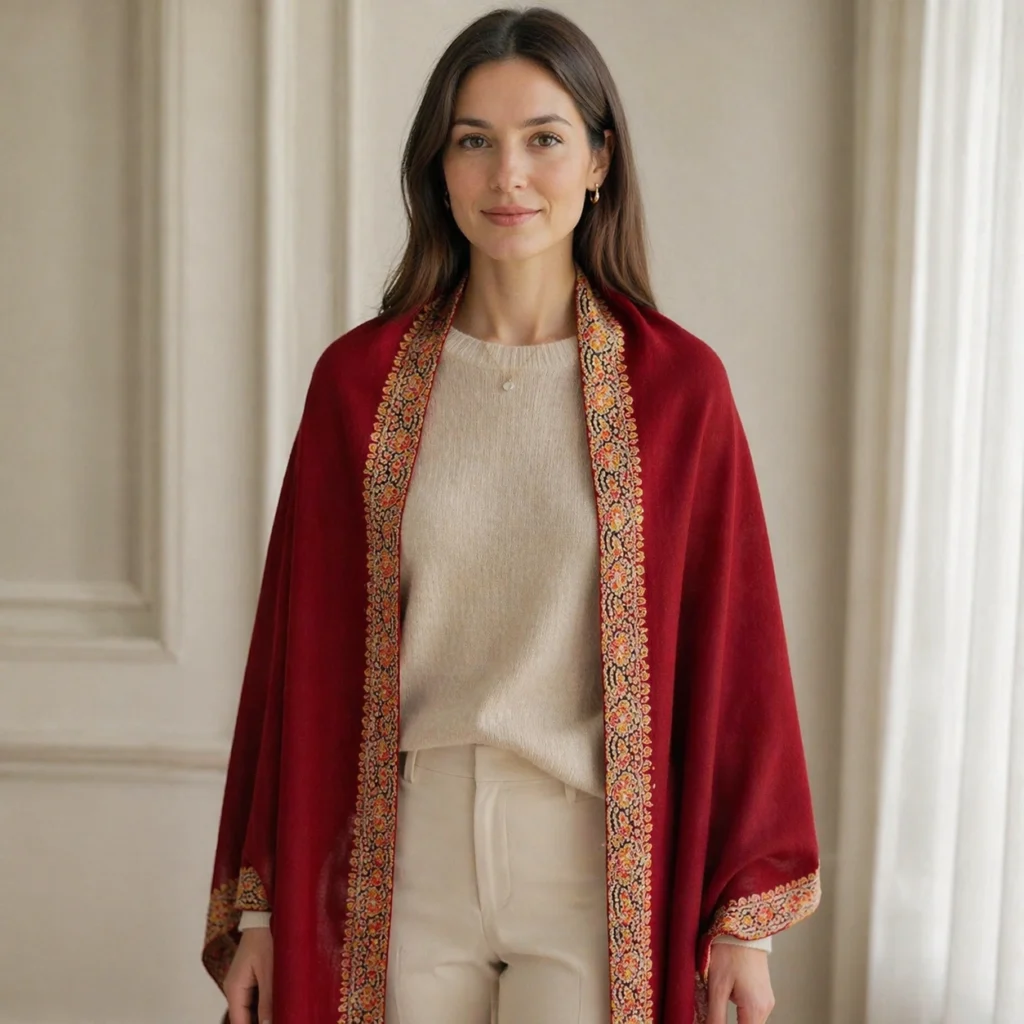
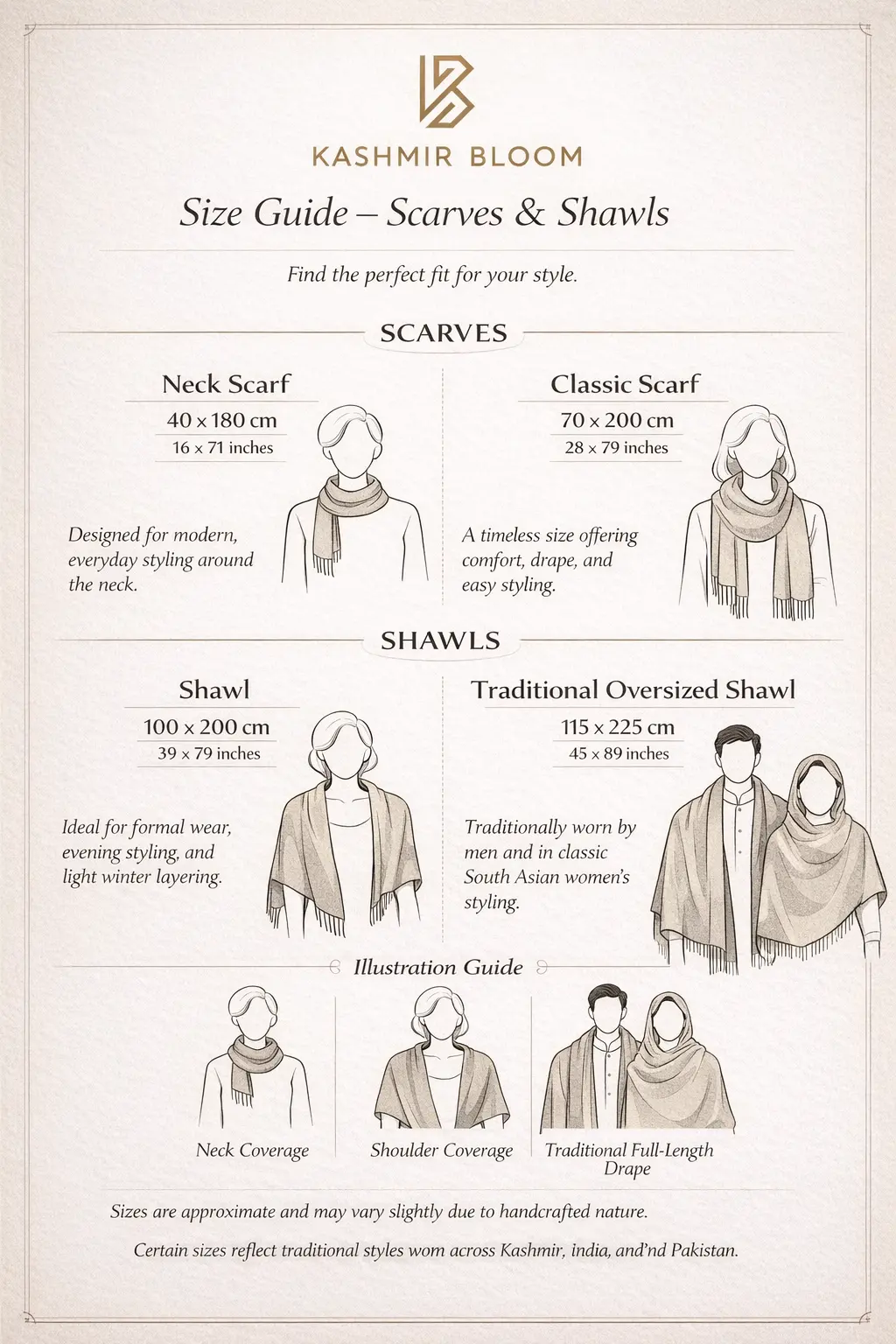
The dimensions are generous: 78 inches in length and 28 inches in width. That means they work as a full shoulder wrap, a loose neck loop, or a light body drape. The weight, 165 grams, gives the fabric enough presence to hold its shape when worn.
For women’s spring scarves at this quality level, £140 represents serious value. A Heritage Pashmina® Ikat Scarf worn well and cared for properly will outlast many seasons.
The Feel The Air Scarf
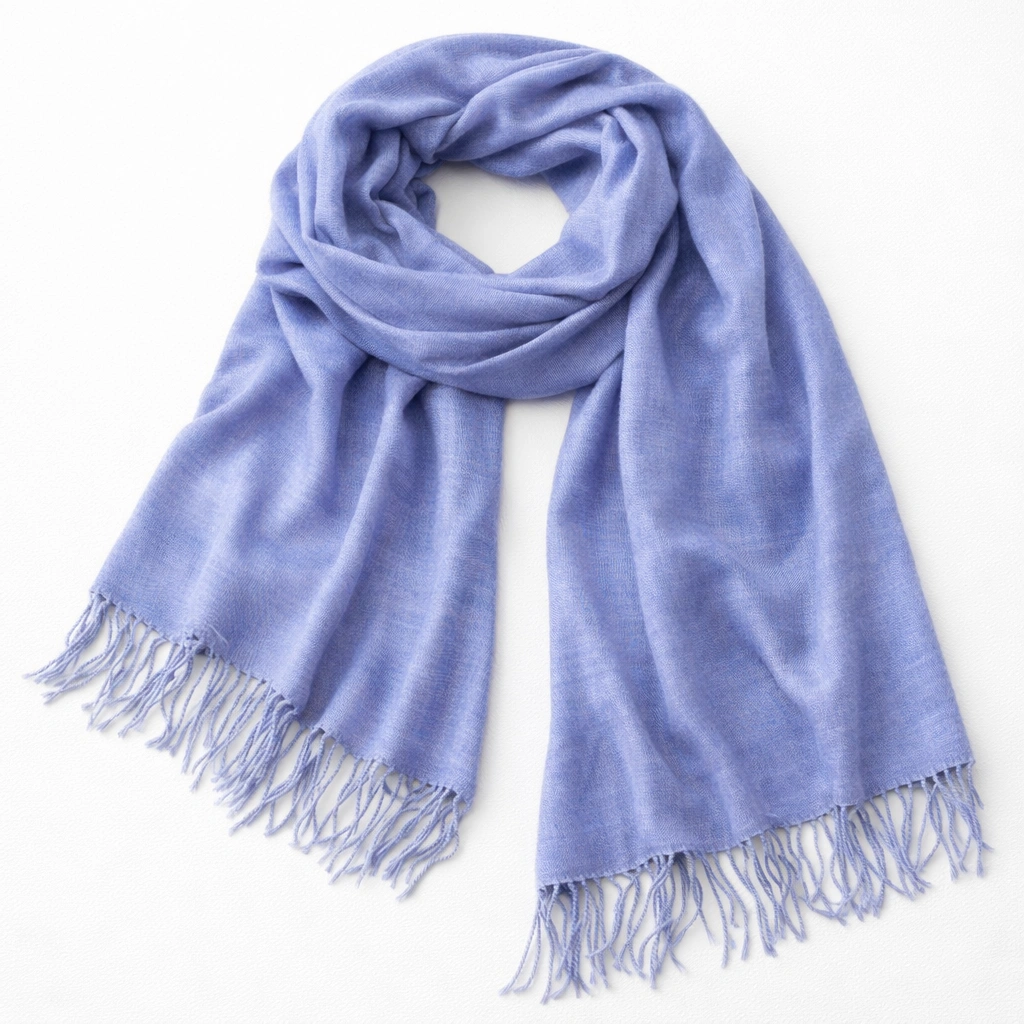
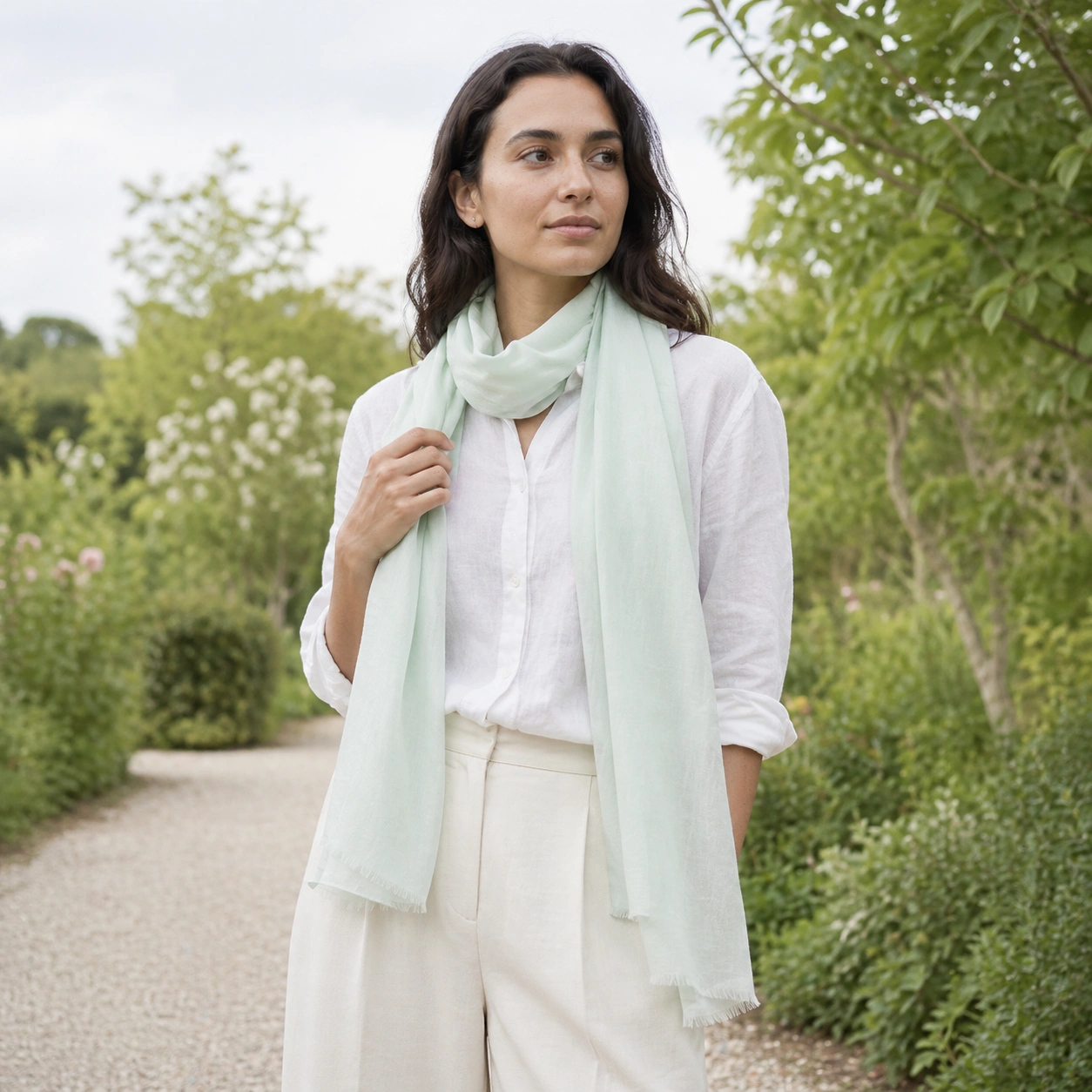
Twenty-one colourways including mint, peach, pistachio, sky, turquoise, and champagne, colours built for spring. The 80/20 wool-silk blend creates a featherlight texture that earns the name. This is the piece you grab when you’re not sure whether you’ll need a scarf at all. It folds to almost nothing. It adds warmth without commitment.
For anyone building their first spring scarf wardrobe, this is the natural starting point.
The Painted Dream Scarf
Twelve pattern options including Red Tulips, Sunflower, Sky Shades, Rainbow Leaves, and Flowers on Beige. Hand-painted on a wool-silk blend, each piece carries the slight variations that come from being made by a person, not a machine. The florals translate directly into spring styling. Tied loosely around the neck or draped over a light jacket, this scarf does something a plain or stripe-only piece cannot.
The Pure Hue Scarf
For anyone who prefers simplicity. Solid colour, clean finish, accessible price. A practical spring scarf that delivers exactly what it promises.
How to Wear a Scarf in Spring, Six Ways That Actually Work
Knowing how to wear a spring scarf well is what separates a piece that sits in a drawer from one you reach for repeatedly. These six methods work across the scarves in the collection.
1. The Loose Neck Loop
Take your scarf and loop it once around your neck without tying. Let both ends fall forward at equal length. This works best with the Feel The Air Scarf in lighter colourways. It adds colour without bulk and sits perfectly over a linen shirt, a light blazer, or a spring trench.
2. The Shoulder Drape
Lay the scarf across both shoulders and allow it to hang naturally down the front. No tying required. The Heritage Pashmina® Ikat Scarves were designed for this, their 28-inch width and 165-gram weight create a proper drape. Worn over a fitted outfit, this transforms a simple look into something considered and complete.
3. The Parisian Knot (for longer scarves)
Fold the scarf in half lengthwise. Hold the folded end in one hand and the two loose ends in the other. Loop around your neck, pass both loose ends through the folded loop, and pull gently. The result is a neat front knot that keeps the scarf in place all day. This is particularly effective with the Fuchsia Blush Strata or Orchid Haze Ikat Scarves, the pattern reads clearly through this method.
4. The Open Front Drape
Drape the scarf over your shoulders and let both sides hang open at the front without crossing or tying. This works as a light over-layer for an evening when temperature drops unexpectedly. The Azure Drift and Coastal Mist Ikat Scarves in cooler tones work especially well here, adding colour without competing with what you’re wearing underneath.
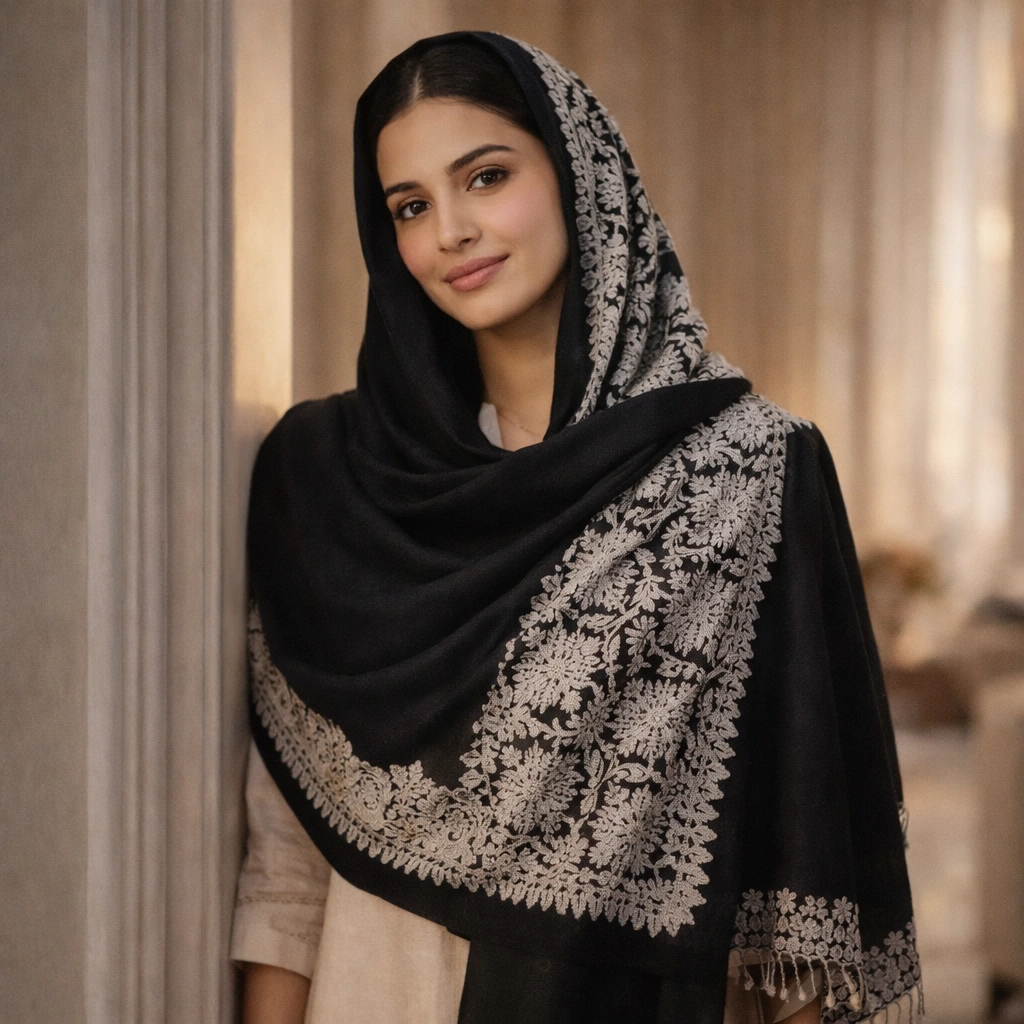
5. The Head Wrap (for the Feel The Air Scarf)
Fold the scarf into a wide band and tie loosely at the nape of the neck or at one side for an off-centre knot. The lightweight wool-silk blend makes this practical, it won’t feel heavy on the head. The mint, sky, and peach colourways photograph particularly well against natural light in spring.
6. The Belt Substitute
Fold a longer scarf into a narrow band and thread through belt loops, or tie loosely at the waist over a tucked shirt or light dress. The Painted Dream Scarf in Sunflower or Flowers on Beige patterns was made for this, it turns the pattern into a focal point rather than a background detail.
How to Choose Spring Scarves That Last Beyond One Season
The best scarves for spring are the ones you’re still wearing three years from now. That requires thinking about the purchase slightly differently.
Ask three questions before buying:
1. Is the fibre composition honestly disclosed?
A brand that clearly states “80% wool, 20% silk” or “100% cashmere” is one that trusts its product. Vague descriptions like “satin-look” or “silky smooth fabric” are telling you what something resembles, not what it is. Kashmir Bloom labels every piece with full fibre transparency. That’s not marketing, it’s a baseline of respect for the customer.
2. Does the weight make sense for the season?
A 165-gram cashmere scarf sits perfectly in spring. A 350-gram winter weight does not. The spring collection has been selected with spring temperatures specifically in mind, pieces that bridge the gap between the last cold days and the warmth of early summer.
3. Is the pattern handmade or printed?
Printed patterns can fade and crack over time, particularly when washed. Handwoven Ikat patterns, like those in the Heritage Pashmina® range, are formed during the weaving process itself. The colour is in the yarn, not on the surface. That means it won’t degrade the same way.
Womens spring scarves at the £30-to-£140 range from Kashmir Bloom represent different points on this spectrum. The Feel The Air Scarf at £30 is the entry point to natural-fibre spring scarves. The Heritage Pashmina® Ikat pieces at £140 are the scarves you buy once and wear for years.
If you’d like to understand more about why natural-fibre scarves hold their value differently from synthetic alternatives, our guide to why cashmere is so expensive covers the full picture.
Spring Scarf Colours: What Works This Season
The spring collection is built around specific colourways rather than generic trend palettes, but those colourways align naturally with what works for the season.
Warm blush and rose tones
Rosewood Blush, Rose Bloom, Rosewood Mirage, and Fuchsia Blush Strata sit in the pink-to-rose spectrum. These are the colours that respond beautifully to natural spring light. They pair with white, ivory, cream, and camel without effort.
Saffron and amber
Saffron Mist, Saffron Smoke Lattice, and Amber Ash Horizon bring warm energy. These colourways work particularly well paired with navy or deep green, the contrast anchors the warmth without dulling it.
Orchid and amethyst
Orchid Haze and Amethyst Drift bring cooler, more distinctive tones. For anyone who finds pure pink too sweet, these carry sophistication while still reading as distinctly spring.
Blues and coastal tones
Azure Drift and Coastal Mist are the most versatile pieces in the collection for those who prefer cool neutrals. They sit naturally with white, grey, and charcoal, making them particularly useful for anyone building a wardrobe around a neutral base.
For anyone focused specifically on pink spring scarves for women, the pink scarf collection shows the full range of pink-toned options across all Kashmir Bloom’s pieces, not just the spring line.
How to Tie a Spring Scarf: The Quick Reference
For those who want a fast reference to the tying methods covered above:
Loose Neck Loop
Loop once, no tie, ends hanging forward equally. Best for: Feel The Air Scarf, lightweight colourways.
Parisian Knot
Fold scarf in half, loop around neck, pass both loose ends through the folded end, pull gently. Best for: Heritage Pashmina® Ikat Scarves, pattern reads clearly.
Shoulder Drape
Lay across both shoulders, no tying. Best for: Heritage Pashmina® Ikat Scarves, wide-width pieces.
Open Front
Drape across shoulders, both sides fall open. Best for: cool-toned Ikat Scarves worn over fitted outfits.
Belt Tie
Fold into narrow band, thread through belt loops or tie at waist. Best for: Painted Dream Scarf, patterned pieces.
Head Wrap
Fold into wide band, tie at nape or side. Best for: Feel The Air Scarf, lightweight colourways.
For a deeper look at more scarf styling techniques, our guide to different ways to style a scarf covers modern and classic approaches across all seasons.
Spring Scarf Care: How to Keep Them Looking Right
Buying well only delivers if you care for the piece correctly. Spring scarves made from cashmere, wool, or wool-silk blends all follow the same basic rules.
Wash in lukewarm water, never hot. Hot water causes natural fibres to shrink and felt. Use a gentle detergent, ideally one formulated for delicate fibres. Do not wring or twist. Lay flat to dry, reshaping the scarf to its original dimensions while damp.
Do not bleach. Do not tumble dry. Do not dry-clean unless the label specifies it.
Store folded, not hanging. Hanging a cashmere or wool scarf long-term can stretch the fabric across the shoulders where it drapes. Folded and stored flat, or rolled gently, the piece retains its shape.
For more on caring for natural-fibre textiles, our guide to how to store scarves covers long-term storage approaches that protect your investment.
The Spring Collection, Simply Put
Spring is a short season. It deserves accessories that are actually built for it.
The scarves in Kashmir Bloom’s spring collection were chosen because they sit at the right weight, carry the right colours, and use materials that hold their quality through years of use rather than months. From the entry-level Pure Hue Scarf at £20 to the handwoven Heritage Pashmina® Ikat Scarves at £140, the collection covers different budgets without compromising on what actually matters: natural fibre, honest construction, and visual quality that doesn’t need a trend to justify it.
Browse the full spring collection and find the spring scarves worth reaching for every year.
Frequently Asked Questions
What are the best spring scarves for women?
The best spring scarves for women balance lightweight fabric with enough presence to make an impact. In natural fibres, the Feel The Air Scarf (wool-silk blend, £30) is the most accessible entry point. For a more significant piece, the Heritage Pashmina® Kashmiri Ikat Cashmere Scarves offer a handwoven quality in spring-appropriate colourways from blush and saffron to coastal blue.
Can you wear cashmere scarves in spring?
Yes. Lighter-weight cashmere, like the Heritage Pashmina® pieces at 165 grams, sits perfectly in spring temperatures, warm enough for cool evenings, not heavy enough for a mild afternoon. Cashmere is naturally temperature-regulating, which makes it more versatile across seasons than people expect.
What is the best way to wear a scarf in spring?
The shoulder drape and the loose neck loop are the most natural methods for spring. They keep the scarf in place without creating bulk or warmth you don’t need. The Parisian knot works well for longer scarves worn over a lighter jacket.
What makes Ikat scarves different from printed scarves?
Ikat is a resist-dyeing technique applied to the yarn before weaving. The pattern is formed during weaving, it’s in the fibre itself, not applied to the surface. This creates the characteristic soft, feathered edge of Ikat patterns. It also means the colour won’t crack, peel, or fade the same way printed patterns can.
Are there spring scarves suitable for men?
Yes. The Heritage Pashmina® Ikat Scarves in the cooler, more earthy colourways, Coastal Mist, Azure Drift, Amber Ash Horizon, Saffron Smoke Lattice, work naturally in men’s wardrobes. Draping one over a jacket or looping loosely around the neck is all it takes.
How do I tie a spring scarf so it stays in place?
The Parisian knot is the most secure method for a casual but polished spring look. Fold the scarf in half, loop it around your neck, and pass both loose ends through the folded loop. Pull gently and adjust. It holds throughout the day without needing any pinning or adjustment.
What is the difference between a spring silk scarf and a wool-silk blend scarf?
A pure silk scarf is lightweight and smooth but offers almost no warmth. A wool-silk blend, like the Feel The Air Scarf, adds just enough natural warmth from the wool to make it genuinely useful on cool spring days. The silk content still delivers the sheen and softness without making the piece purely decorative. For spring in the UK, a blend performs better than silk alone.