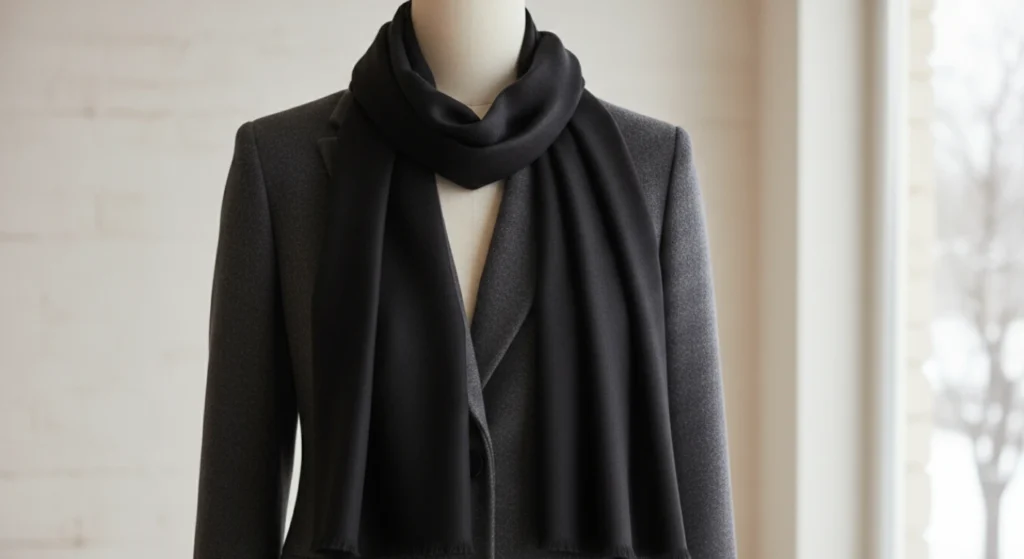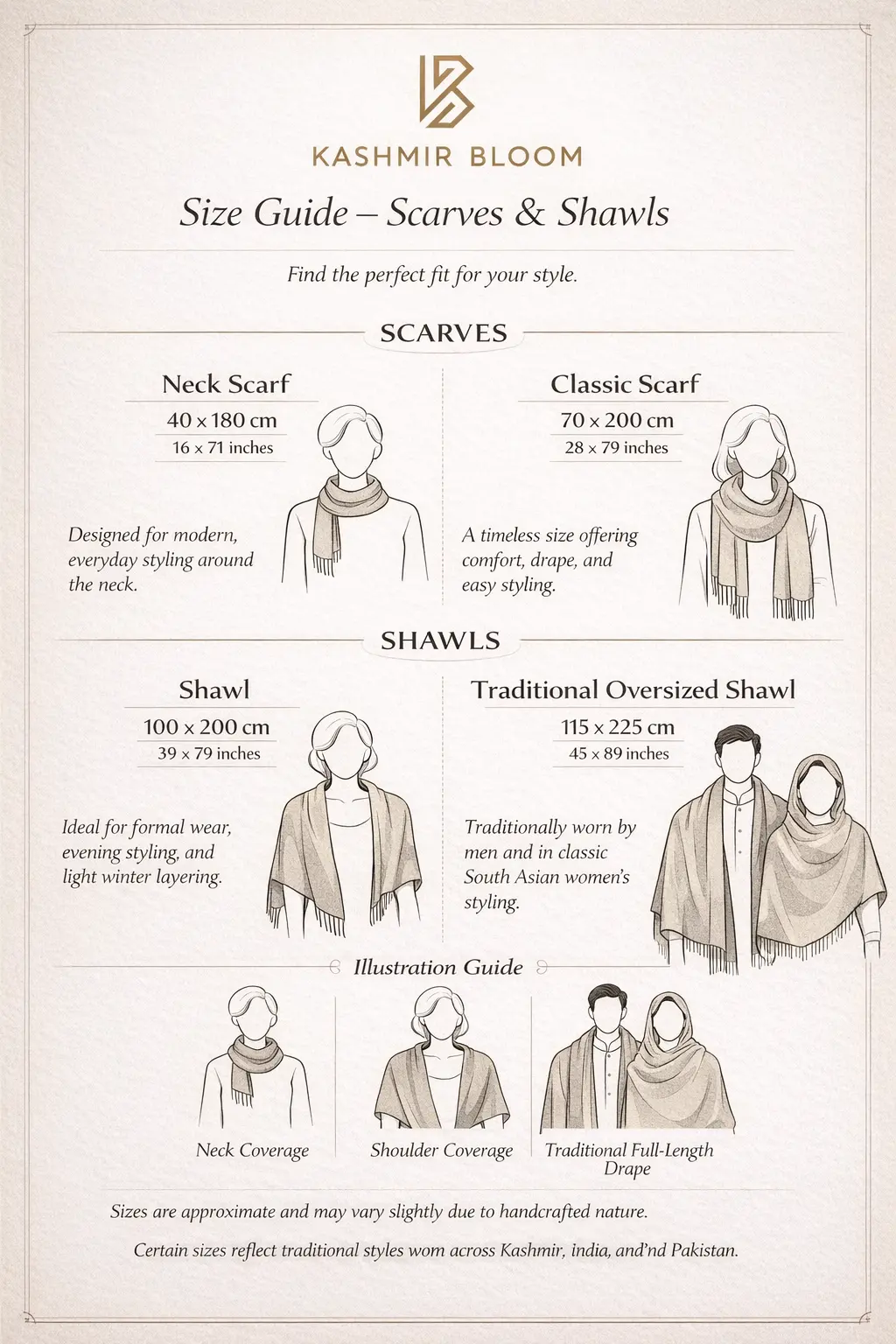

You drape a shawl over your shoulders and feel the difference immediately, one whispers against your skin like a secret, the other wraps you in quiet confidence. Both are called luxury, both promise warmth, yet one commands a price that makes you pause and wonder why.
Pashmina and Cashmere come from the same source but occupy different worlds of craftsmanship, rarity, and soul. This guide walks you through fiber origins, micron measurements, price drivers, authenticity tests, and how to choose the right piece for weddings, travel, or your own collection.
What is Pashmina And Cashmere?

Pashmina is the finest type of Cashmere, not a separate material, but the softest, rarest expression of it. Both come from the downy undercoat of goats, but Pashmina refers specifically to fibers from the Changthangi goat, native to the high-altitude plateaus of Ladakh in Kashmir.
Cashmere, on the other hand, is a broader term that includes wool from various Cashmere goat breeds raised across Mongolia, Scotland, China, and other regions.
Think of it this way: all Pashmina is Cashmere, but not all Cashmere is Pashmina. Pashmina sits at the top, the quietest luxury, the piece you save for moments that matter.
Pashmina vs Cashmere: Understanding the Luxurious Differences

Micron Thickness Explained
A micron equals one-millionth of a meter, the standard measurement for textile fibers. To give you context, human hair typically measures 50-70 microns in diameter, making Pashmina and Cashmere fibers incredibly fine by comparison.
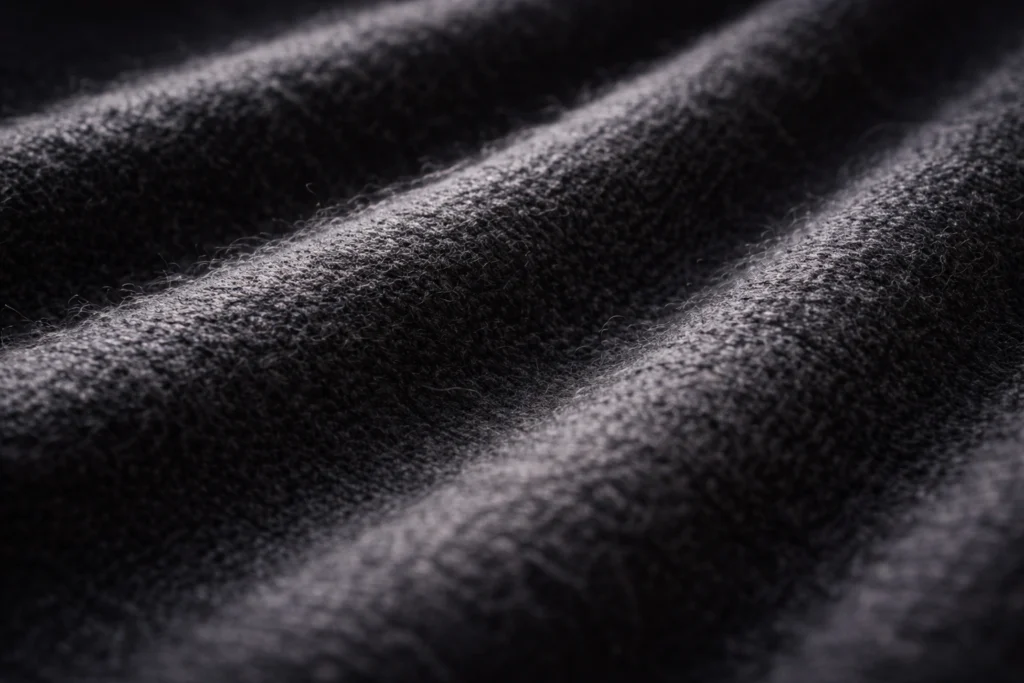
Pashmina fibers at 12-14 microns feel almost impossibly soft, creating fabric with a cloud-like quality that drapes beautifully without weight. Standard Cashmere at 16-18 microns still feels luxurious but has slightly more structure and less fluidity. The numerical difference seems small, but your fingers notice immediately.
Single Ply Vs Multiple Ply Yarn
Single-ply Pashmina yarn consists of one continuous strand of spun fiber, creating fabric with maximum softness and drape. This construction makes the textile delicate, it can snag or pill if handled roughly, but the sensory experience is unmatched.
Two-ply yarn, where two strands twist together, creates stronger fabric that better resists wear while maintaining considerable softness. Many high-quality Cashmere sweaters use two-ply construction as a practical compromise between luxury and durability.
Warmth Weight And Breathability
Pashmina is sometimes called “soft gold” because it delivers extraordinary warmth without bulk. A single Pashmina shawl, weighing just 100 to 150 grams, can provide as much insulation as a much heavier Cashmere wrap. This warmth-to-weight ratio makes Pashmina ideal for travel, layering, and elegant draping.
Cashmere is also warm, but its slightly thicker fibers mean it feels more substantial. This can be an advantage for everyday wear, Cashmere sweaters and scarves hold their shape well and withstand frequent use. Pashmina, meanwhile, is best saved for special occasions or as a cherished heirloom, where its delicacy is honored.
Travel-Friendly Packability
Despite their delicate appearance, quality Pashmina and Cashmere shawls fold compactly without damage. The natural elasticity of the fibers means they spring back to shape after being compressed in luggage, emerging relatively wrinkle-free.
A single Pashmina shawl can serve as a wrap on a chilly airplane, a scarf for evening outings, or an elegant layer over formal attire. The versatility combined with minimal luggage space makes them particularly valued by frequent travelers who appreciate multifunctional luxury.
Fibre Diameter And Softness Comparison Chart
The finer the fiber, the softer the fabric. Pashmina’s lower micron count means it feels almost like air against your skin, while Cashmere offers a bit more body and structure. Both are luxurious, but Pashmina occupies a space reserved for collectors and moments that deserve something extraordinary.

Pashmina vs Cashmere: The Exact Difference at Kashmir Bloom
There is no guesswork at Kashmir Bloom. Pashmina™ and Cashmere™ mean two very different materials, crafted through two very different processes.

Heritage Pashmina™ at Kashmir Bloom
Pashmina™ at Kashmir Bloom refers exclusively to the fibre that comes from the Changthangi goat of Ladakh, the only goat breed capable of producing true Pashmina. This fibre measures an ultra-fine 12–14 microns and grows as a dense undercoat in Ladakh’s extreme winters. Its rarity is real, a single goat produces only 80 to 170 grams of usable fibre a year, barely enough for one shawl after cleaning and processing.
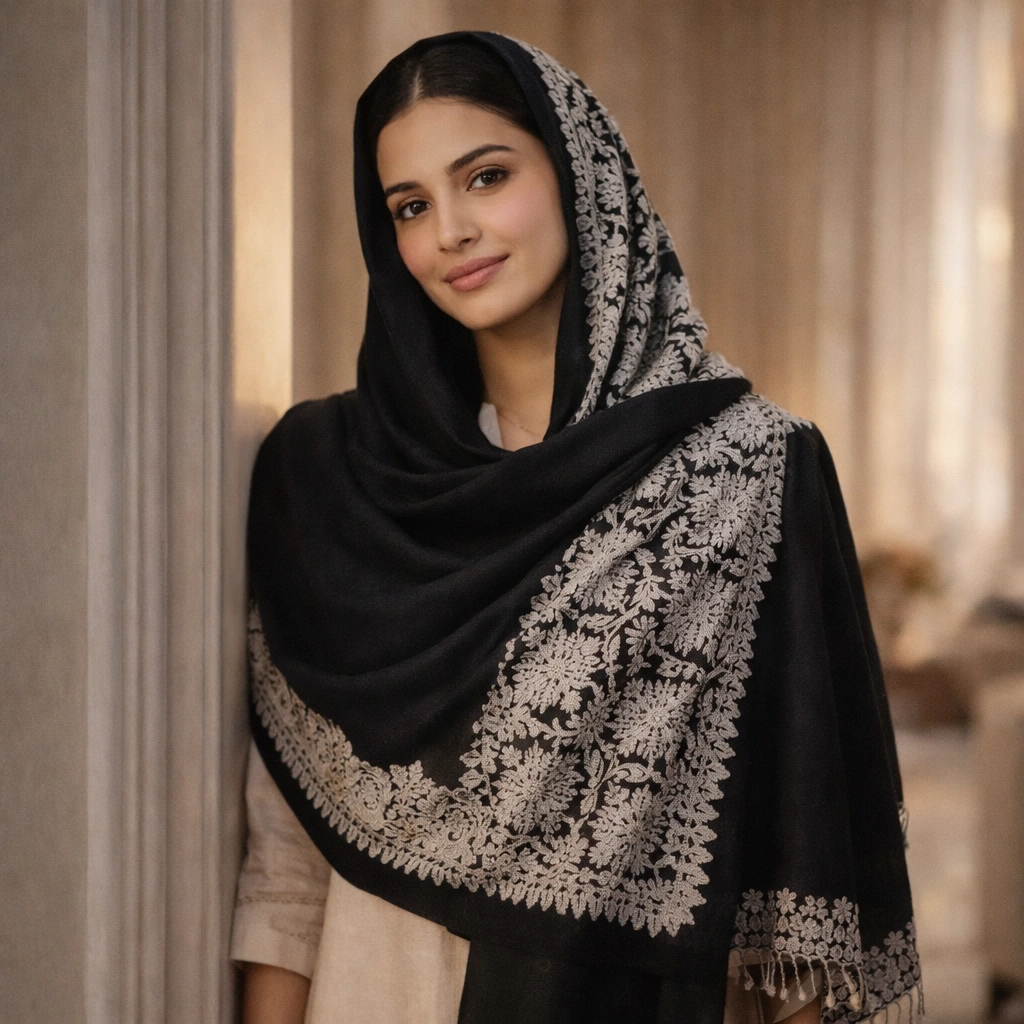
Every Heritage Pashmina™ piece is crafted entirely by hand. The fibre is hand-spun on the traditional charkha, a process that preserves its delicate structure, and then hand-woven on wooden Kashmiri looms by artisans trained through generations. Many pieces are further elevated through hand embroidery, executed with Pashmina thread so fine it is almost invisible. No machines are involved at any stage, and nothing is blended or diluted. This is Pashmina in its original, uncompromised form, exceptionally soft, naturally warm, and culturally significant.
Pure Cashmere at Kashmir Bloom

Cashmere™ at Kashmir Bloom refers to 100% pure Cashmere sourced from Mongolia and Inner Mongolia, regions known for producing consistently soft and warm undercoat fibres. With an average fineness of 15–18 microns, this fibre is still exceptionally luxurious but slightly sturdier than Pashmina, making it suitable for everyday wear, gifting, and travel.
Unlike mass-market products that mix Cashmere with viscose, polyester, or silk, our Pure Cashmere™ pieces contain only pure, premium-grade Cashmere. The yarn is loom-woven, allowing for precision, durability, and a uniform finish that stands up to regular use. Every piece is labelled with full fibre disclosure, leaving no ambiguity about what you are buying. Cashmere™ offers warmth, softness, and refinement, luxury you can wear often and confidently.
Origins Of The Fibers From Goat To Loom
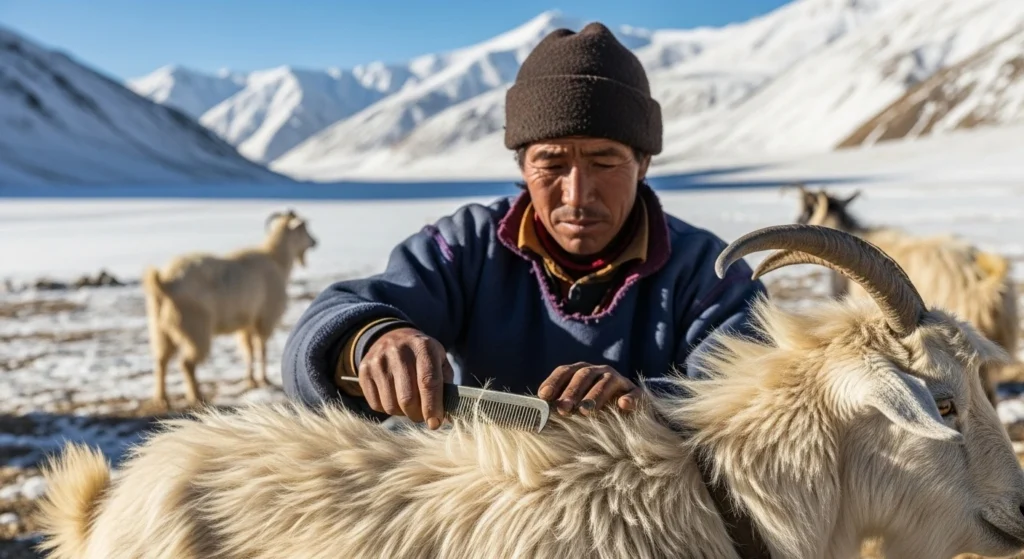
Pashmina begins its journey in Ladakh’s Changthang plateau, where Changthangi goats graze on sparse vegetation in one of the world’s harshest climates. The extreme cold isn’t just background; it’s what triggers these goats to grow the extraordinarily fine undercoat that becomes Pashmina.
Cashmere production spans a wider geography, from Mongolia’s Gobi Desert to the Iranian highlands. Each region produces Cashmere with subtle variations in texture and quality, shaped by altitude, temperature extremes, and local breeding practices. While all Cashmere goats develop soft undercoats, the fineness varies considerably based on where they live.
Changthangi Goats Of Ladakh
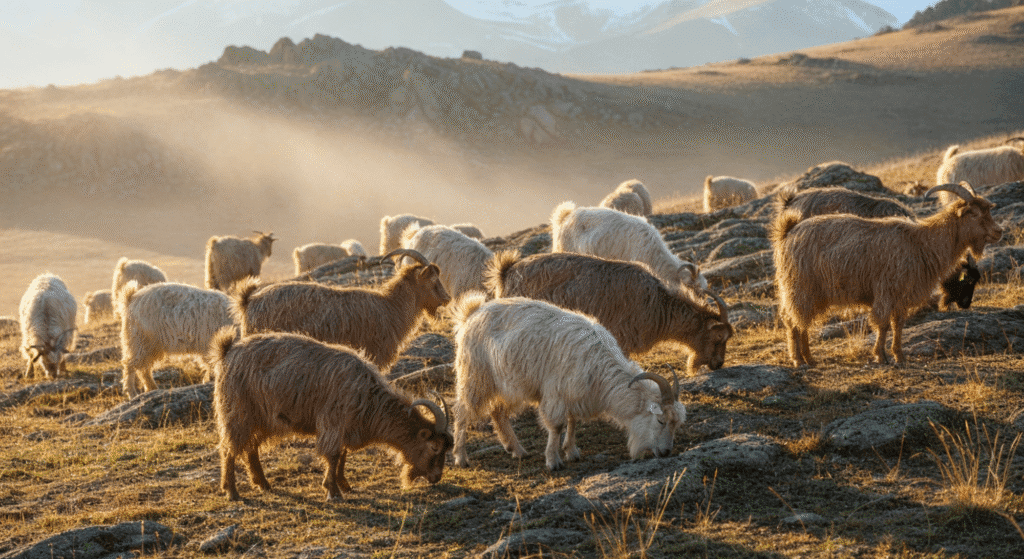
Changthangi goats live at altitudes where oxygen is thin and vegetation scarce. Their bodies adapt by growing a dense, ultra-fine undercoat beneath coarser outer guard hairs, a natural response to brutal winters that humans have harvested for centuries.
Collection happens during the spring molt, when goats naturally shed their winter undercoat. Herders gently comb or collect the shed fibers rather than shearing, respecting the animal’s natural cycle and preserving the finest fibers. A single goat yields only 80 to 170 grams of raw Pashmina each year, barely enough for one shawl after processing losses.
Mongolian And Himalayan Cashmere Sources
Mongolia produces significant quantities of Cashmere, particularly from the Gobi Desert where temperature swings encourage fine undercoat development. The Cashmere from this region typically measures between 15 and 18 microns, placing it in the higher-quality range of standard Cashmere.
Other Himalayan regions, including parts of Nepal and Tibet, also produce fine Cashmere that approaches Pashmina quality. Yet the specific combination of altitude, climate, and goat genetics in Ladakh creates conditions difficult to replicate elsewhere, which is why true Pashmina maintains its distinct status.
How Artisanal Craftsmanship Elevates Pure Pashmina
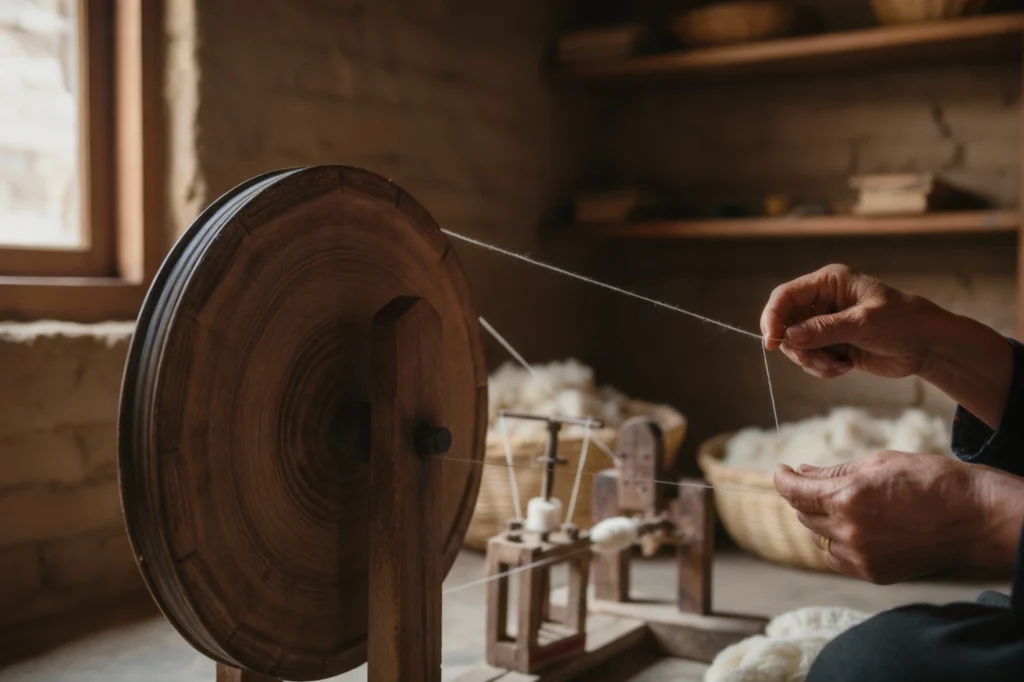
The transformation from raw fiber to finished shawl involves dozens of hands and hundreds of hours. Traditional Pashmina craftsmanship remains deliberately, beautifully slow, not from romantic nostalgia, but from technical necessity.
Machine processing damages the delicate fibers, shortening their length and diminishing the qualities that make Pashmina exceptional. Hand-processing preserves fiber integrity, resulting in textiles with superior drape, softness, and longevity that machines simply cannot replicate.
Hand-Combed Himalayan Fibre
Artisans gently comb the Changthangi goat’s ultra-fine undercoat during the natural molting season, collecting only the softest fibres without harming the animals. This ethical, manual method preserves the fibre’s natural purity, softness, and loft, qualities that machine-shearing cannot maintain.
Hand-Spinning On The Charkha
After cleaning and dehairing the raw fiber, artisans spin it into yarn using a traditional wooden spinning wheel called a charkha. The spinner’s fingers maintain consistent tension while drawing out the fibers, creating yarn so fine it’s almost translucent. Too much tension breaks the delicate fibers; too little creates uneven yarn.
Hand-spun Pashmina yarn is typically single-ply, meaning it consists of one strand rather than multiple strands twisted together. This creates fabric with exceptional softness and drape, though it requires expert handling during weaving to prevent breakage.
Heritage Hand-Weaving Techniques
Master weavers craft each shawl on traditional wooden looms, weaving it thread by thread with exceptional precision. Their ability to adjust tension and weave density by hand yields a breathable, long-lasting fabric that no machine can replicate in terms of softness or luxury.
Traditional Kani And Sozni Weaves
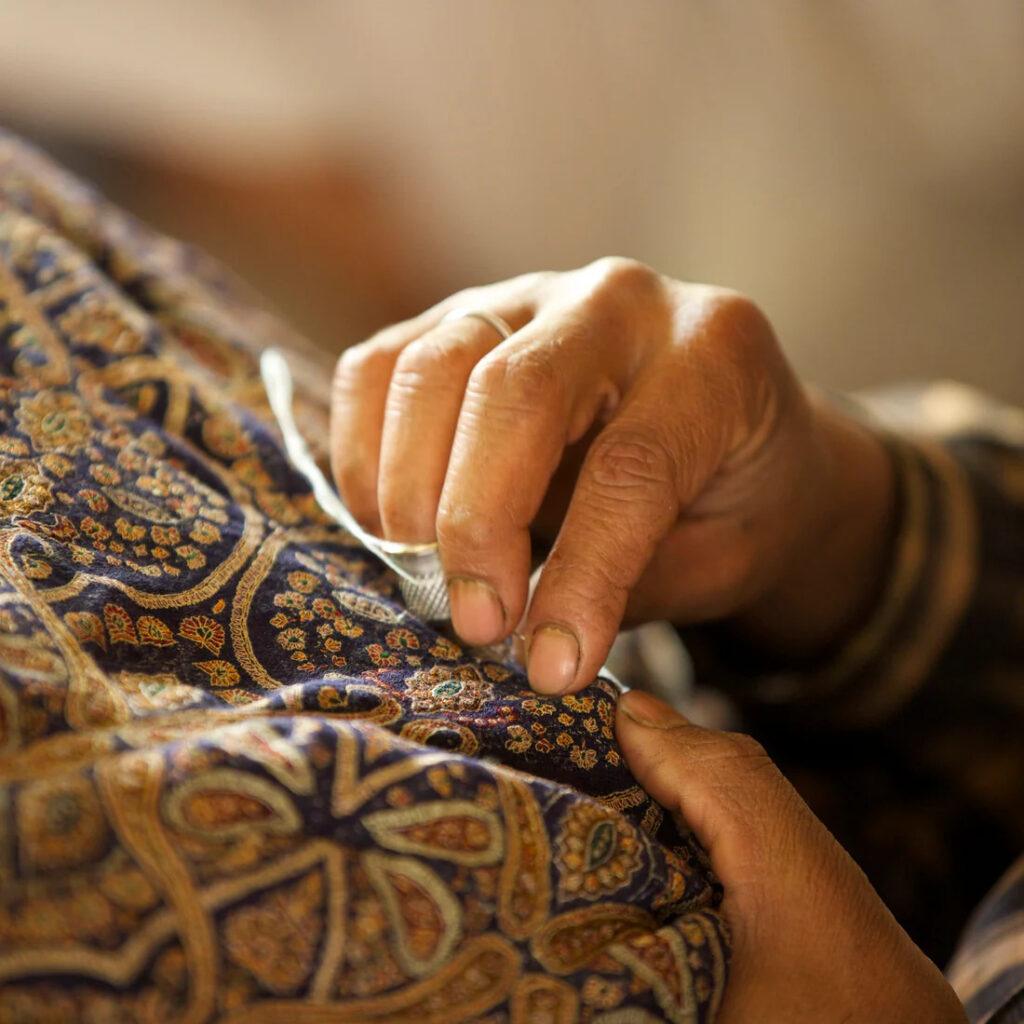
Kashmiri artisans employ several distinctive weaving and embroidery techniques, each with its own demands. Kani weaving uses small wooden spools to create intricate patterns directly in the fabric, a method so time-intensive that a single shawl can take six months to complete.
Sozni embroidery involves hand-stitching elaborate designs onto woven fabric using a fine needle and matching Pashmina thread. The stitches are so delicate they’re nearly invisible from the back, creating patterns that seem to float on the fabric’s surface rather than being applied to it.
Hours Of Embroidery Per Shawl
The most elaborate Pashmina shawls represent hundreds of hours of combined weaving and hand-embroidery work. An artisan might spend entire days perfecting a single paisley motif, ensuring the stitches follow the fabric’s natural drape and the design maintains perfect symmetry.
This investment of time transforms Pashmina from luxury material into wearable art. Each completed shawl carries not just warmth and beauty, but the dedication of multiple craftspeople who contributed their expertise to its creation.
Natural Loft and Lightweight Warmth
Because every stage, combing, spinning, and weaving, is done manually, the fibre’s natural loft stays intact. This gives Pashmina its feather-light feel, exceptional insulation, breathability, and the ability to become even softer with time.
Artisan-Verified Authenticity
Generational expertise allows Kashmiri artisans to identify and reject even the slightest impurity by sight and touch. Combined with slow-made, sustainable production, this ensures each piece is genuinely pure, ethically crafted, and heirloom-quality.
How Artisanal Craftsmanship Elevates Pure Cashmere
Most Cashmere, especially for mass-market sweaters, is spun in industrial mills. This produces uniform, consistent yarn quickly, but it lacks the character and airiness of hand-spun Pashmina.
Rare raw fibre harvested by hand
The finest Cashmere comes from the undercoat of goats raised in extreme climates like Mongolia, where they grow a dense fleece to survive harsh winters. Producers often use hand‑combing during the spring moult to preserve the down fibre’s length and fineness, a method practiced by brands like Monticelli Cashmere and Italian Artisan.
Each goat produces only 150–200 grams of usable fibre per year, making it a rare and precious material. This careful, artisanal harvesting ensures the quality and rarity of Cashmere, setting it apart from mass-produced fibres.
Manual sorting and fibre selection
After combing or collection, the raw Cashmere contains a mix of fine down, coarser guard hairs, debris, and natural oils. Skilled artisans sort the fibres by hand to separate the ultra‑fine down, ensuring only the highest quality material is used for luxury Cashmere.
Fibre grading, which considers length, diameter, and colour, is often done manually or semi‑manually. This careful selection ensures that only the best fibres proceed to the next stages, preserving the softness, durability, and luxurious feel of the final product. Poor fibre selection, on the other hand, could lead to a coarser texture, pilling, or a shorter lifespan.
Skilled spinning / yarn‑making
Many top Cashmere producers emphasize traditional spinning techniques, often involving hand‑spinning or artisan-supervised spinning to carefully turn the fibres into yarn with the right twist, strength, and consistency. Even when machinery is used, skilled artisans oversee the process to ensure proper tension, fibre alignment, and prevent any damage to the fine Cashmere.
This meticulous attention to detail ensures the yarn becomes the foundation of a luxurious Cashmere piece. Finely spun yarn results in a smoother finish, better drape, fewer defects, and a longer lifespan for the final garment.
Heritage weaving/knitting and finishing
Once the yarn is spun, artisans weave or knit the fabric using traditional looms or specialized machines, with manual interventions throughout the process. In Italian production, methods like hand-threading and manual loom setup are key, ensuring that each piece of Cashmere is crafted with care. The finishing process, including washing, steaming, brushing, and hand-linking seams, requires skilled artisans to manage the fibre’s natural flexibility and adapt to its unique properties.
In high-end Mongolian operations, over 150 steps are taken from raw fibre to finished garment, many involving human craftsmanship. This ensures that the final product is not only made of fine yarn but also showcases subtle refinements in softness, drape, stitch quality, and minimal pilling, qualities that reflect the care, heritage, and expertise of artisans. The result is a Cashmere piece that feels luxurious, with a long-lasting, refined finish that highlights the artistry behind its creation.
Authenticity, traceability and slow‑fashion ethos
Craft-based Cashmere production often involves smaller batches and local artisans, which ensures higher quality, better traceability, and often reflects ethical and heritage values. By investing in artisan craftsmanship, producers preserve traditions, uphold high standards, and distinguish their products from mass-market blends or lower-quality alternatives.
For the consumer, a piece made with artisanal methods is more than just Cashmere, it carries heritage, authenticity, and a premium feel, connecting the wearer to the skill and care of the maker.
Subtle qualities you can sense
The combination of fine fibre and artisan craftsmanship creates subtle qualities that can be felt: a lighter, more comfortable feel (requiring less bulk for warmth), excellent drape, natural resilience, and a gentle texture against the skin. The artisan finishing process is gentler, avoiding harsh machine treatments, allowing the Cashmere to retain its natural luster and luxurious feel.
From the first wear, you’ll immediately notice the difference between a well-crafted Cashmere piece and a mass-produced one, this is the true “elevation” that craftsmanship brings.
Price Drivers Why Pashmina Often Costs More Than Cashmere
Authentic Pashmina shawls command prices ranging from several hundred to several thousand dollars, while Cashmere scarves might cost anywhere from fifty dollars to several hundred. This price difference reflects multiple factors beyond the fiber itself.
The gap widens dramatically for pieces featuring traditional hand embroidery or complex weaving patterns, where the artisan’s time investment becomes the dominant cost factor.
Raw Fiber Rarity
A single Changthangi goat produces only 80-170 grams of fine undercoat annually, roughly enough for one shawl after processing losses. By contrast, Cashmere goats in Mongolia or China often yield 150-300 grams per year, and the larger global population of Cashmere goats creates greater overall supply.
Geographic limitation matters too. Changthangi goats thrive specifically in Ladakh’s extreme conditions, and attempts to relocate them to more accessible regions have consistently failed to produce equivalent fiber quality.
Labor And Time Investment
Hand-spinning Pashmina takes approximately three to four times longer than machine processing, and traditional weaving adds weeks or months depending on pattern complexity. When you factor in specialized skills like Kani weaving or Sozni embroidery, a single shawl might represent 300-500 hours of combined artisan labor.
This human investment in each piece stands in stark contrast to industrial Cashmere production, where automation handles most processing steps. The price reflects not just material costs but the preservation of artisan skills and traditional techniques.
Brand Prestige Factors
Established luxury brands command premium prices partly through reputation, but also through quality control, ethical sourcing verification, and customer service. A Pashmina shawl from a respected house offers assurance of authenticity that street market purchases cannot match.
Buyers benefit from distinguishing between brands that genuinely support artisan communities and traditional techniques versus those simply marking up standard Cashmere with Pashmina labels. Transparency about sourcing, processing methods, and artisan relationships indicates authentic commitment to the craft.
Styling Guide Choosing The Right Wrap For Season And Occasion
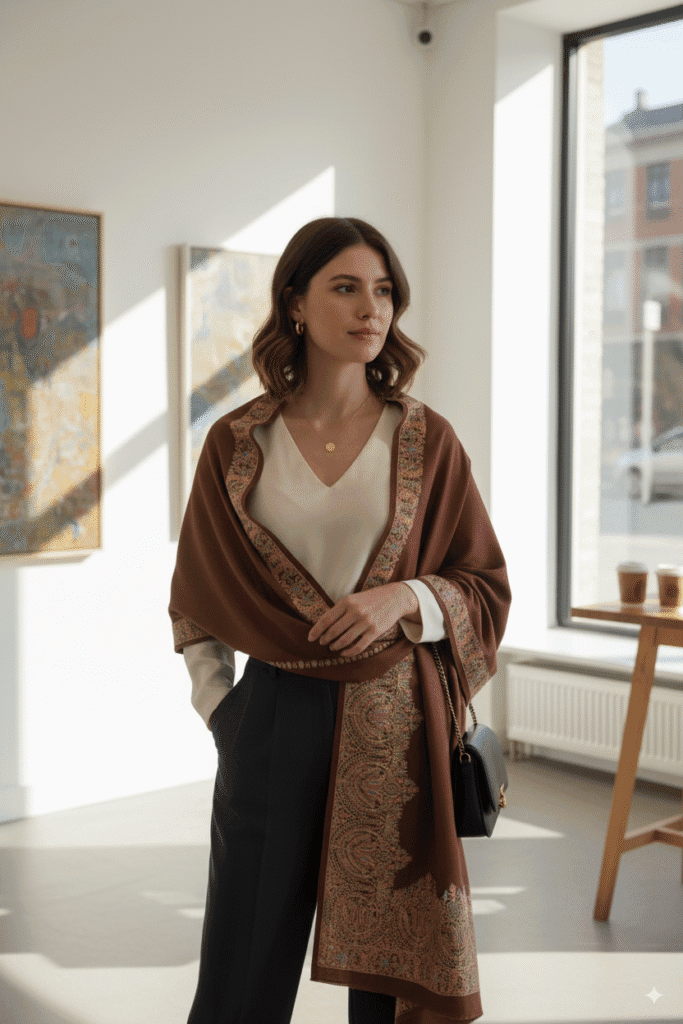
Pashmina and Cashmere each weave their own story of softness and warmth, inviting you to experience their elegance in a way that only true luxury can.
Bridal And Heirloom Gifting
For weddings, anniversaries, or milestone moments, Pashmina is unmatched. Its rarity and cultural significance make it a gift that transcends fashion, it becomes a keepsake, a story, a thread connecting generations. A hand-embroidered Pashmina shawl speaks of thoughtfulness and reverence.
Cashmere, while beautiful, is more common. It’s a wonderful gift, but it doesn’t carry the same weight of legacy.
Travel-Light Layers
Pashmina’s warmth-to-weight ratio makes it ideal for travel. A single shawl folds into a small pouch yet provides warmth on chilly flights, evening dinners, or mountain retreats. It’s the ultimate versatile layer.
Cashmere scarves and wraps are also travel-friendly, though slightly bulkier. They’re excellent for everyday adventures where durability matters more than rarity.
Everyday Elegance
For daily wear, commutes, meetings, casual Fridays, Cashmere is practical and polished. It withstands frequent use, holds its shape, and pairs effortlessly with tailored clothing. Save Pashmina for moments that deserve something extraordinary.
Care And Storage Tips To Preserve Luxury Fibres
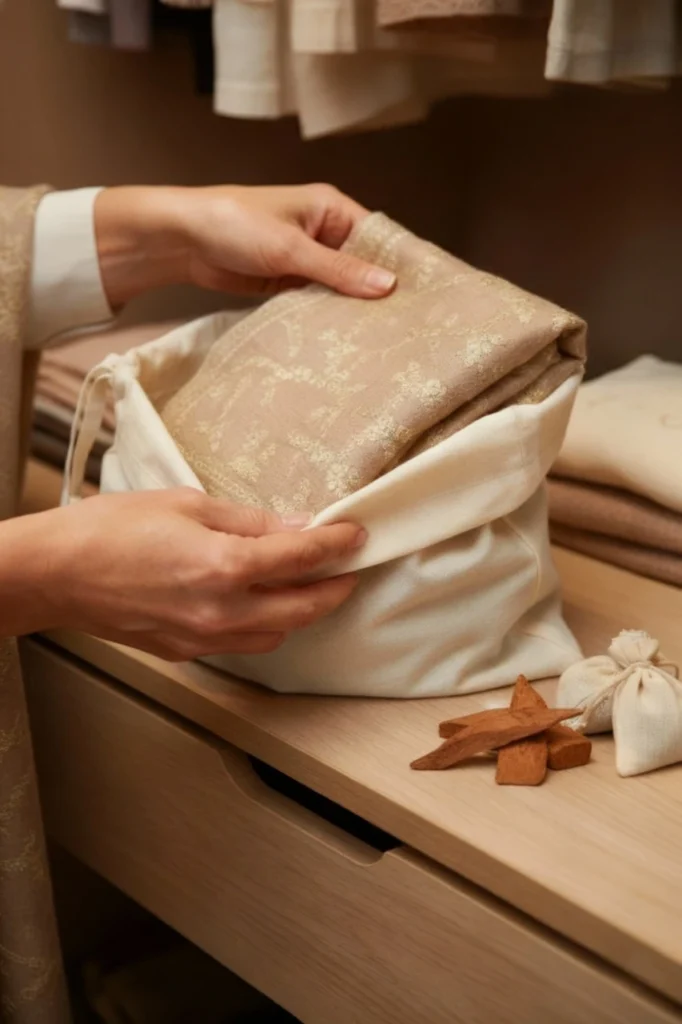
Both Pashmina and Cashmere flourish with the tenderest care, allowing their beauty and elegance to endure for years to come.
Gentle Hand Washing
Wash in cool water with a pH-neutral detergent or baby shampoo. Submerge the shawl, swish gently, and rinse without wringing. Hot water and harsh soaps can felt the fibers, causing irreversible damage.
Flat Drying And Blocking
Lay the shawl flat on a clean towel, reshape gently, and let it air dry away from direct sunlight or heat. Never hang wet Cashmere or Pashmina, it will stretch and lose its shape.
Moth-Safe Storage
Store in breathable cotton bags with cedar blocks or lavender sachets. Avoid plastic, which traps moisture and invites mildew. Moths are attracted to natural fibers, so vigilance pays off.
Sustainability And Ethical Sourcing
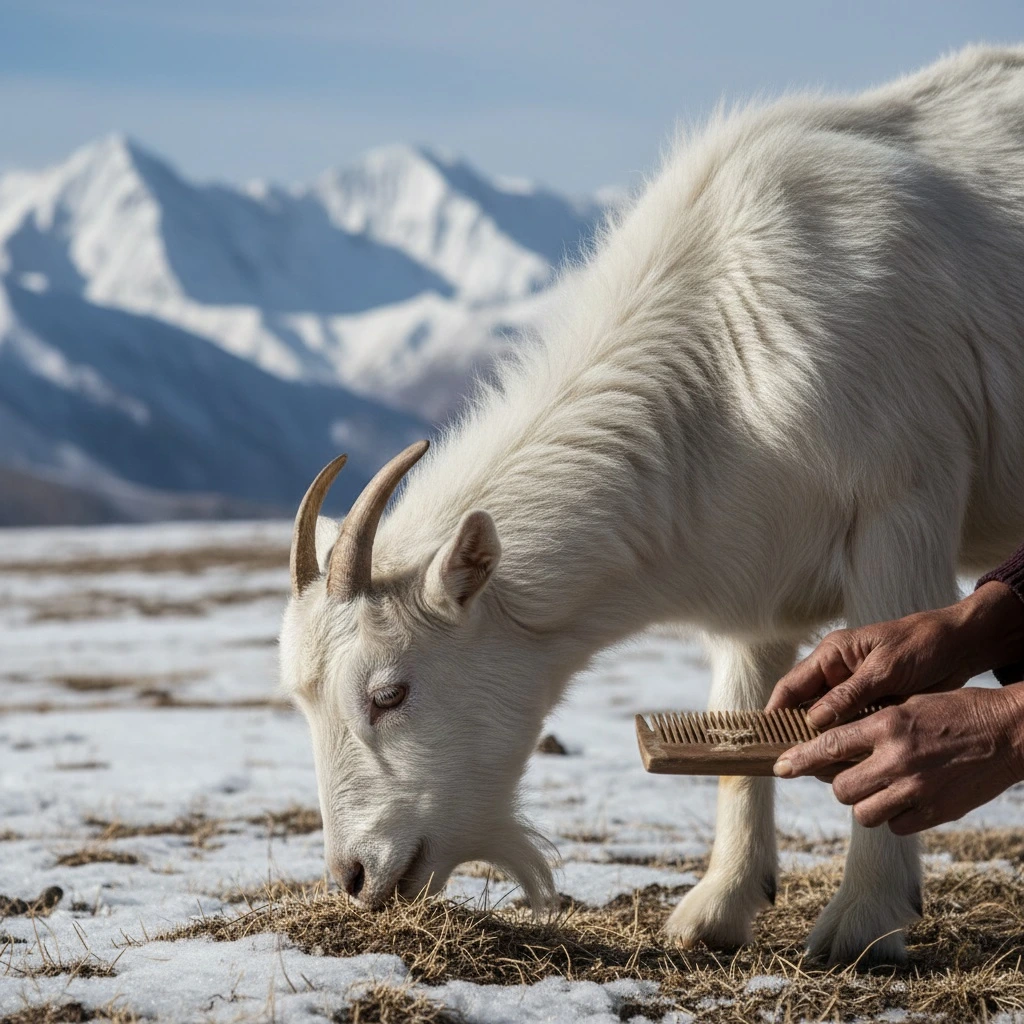
Traditional Pashmina and Cashmere production, when practiced with respect for animals and ecosystems, represents one of the more sustainable luxury textile options. The key phrase is “when practiced with respect”, industrial-scale Cashmere production has created environmental problems in some regions, while authentic artisan Pashmina maintains traditional sustainable practices.
Pasture Management And Animal Welfare
Traditional Changthangi goat herding in Ladakh follows patterns established over centuries, moving animals seasonally to prevent overgrazing and maintain pasture health. The goats graze on native vegetation that can survive at extreme altitudes, and herders collect the shed undercoat during natural molting rather than shearing.
This contrasts with some industrial Cashmere operations where overgrazing has contributed to desertification in parts of Mongolia and China. The pressure to increase production has led to larger herd sizes than fragile grassland ecosystems can sustainably support.
Low-Impact Dyes And Hand Loom Energy Savings
Traditional hand-processing uses no electricity beyond perhaps lighting in the workshop. Hand-spinning wheels, hand looms, and embroidery needles require only human energy, creating textiles with minimal carbon footprint compared to industrial textile production’s substantial energy demands.
Natural dyes derived from plants, minerals, and insects provide color without the chemical pollution of synthetic dyes, though modern eco-friendly synthetic dyes offer good alternatives when properly managed.
Your Next Heirloom Awaits At Kashmir Bloom
At Kashmir Bloom, we honor the centuries-old artistry of Kashmir by offering only what is real, rare, and rooted in tradition. Our Heirloom Edit features Pashmina shawls, each handwoven, hand-embroidered, and never to be repeated. We believe luxury is not about what’s loud, but what lasts. If you’re searching for a gift that carries story, soul, and significance, we invite you to explore our collection or book a private appointment to experience what heritage feels like in your hands.
Frequently Asked Questions About Pashmina And Cashmere
How can I spot a viscose blend in a Pashmina scarf?
Viscose, a synthetic fiber, feels smoother and less breathable than pure Pashmina. It often has a slight sheen and doesn’t regulate temperature as well. The burn test helps here, viscose melts and smells chemical, while Pashmina smells like burning hair.
Is Grade A Mongolian Cashmere softer than average Pashmina?
Even premium Mongolian Cashmere, graded for fineness, typically measures 15 to 16 microns at best. True Pashmina from Changthangi goats can reach 12 to 14 microns, making it softer still.
Is Pashmina illegal to import into the USA?
Pashmina itself is not illegal to import into the United States. The confusion sometimes arises from endangered species regulations concerning Tibetan antelope (chiru) wool, which is called “shahtoosh” and is indeed illegal internationally.
Authentic Pashmina comes from domesticated Changthangi goats and faces no import restrictions, though buyers benefit from purchasing from reputable dealers who comply with all trade regulations and can provide proper documentation.
Can men wear Pashmina shawls?
Absolutely, Pashmina shawls are appreciated by discerning individuals regardless of gender. Throughout history, men in Kashmir, Central Asia, and Persia wore Pashmina shawls as symbols of status and refinement. Contemporary men often choose understated colors like charcoal, navy, or camel in classic draping styles that complement formal and business attire.
Will Pashmina pill like Cashmere sweaters?
High-quality Pashmina rarely pills when properly cared for, thanks to its long, fine fibers and expert hand-spinning techniques that align fibers smoothly. Pilling typically occurs with shorter fibers, machine processing that damages fiber structure, or friction from rough surfaces. A well-made Pashmina shawl, worn gently and stored properly, can remain smooth for decades.
: